
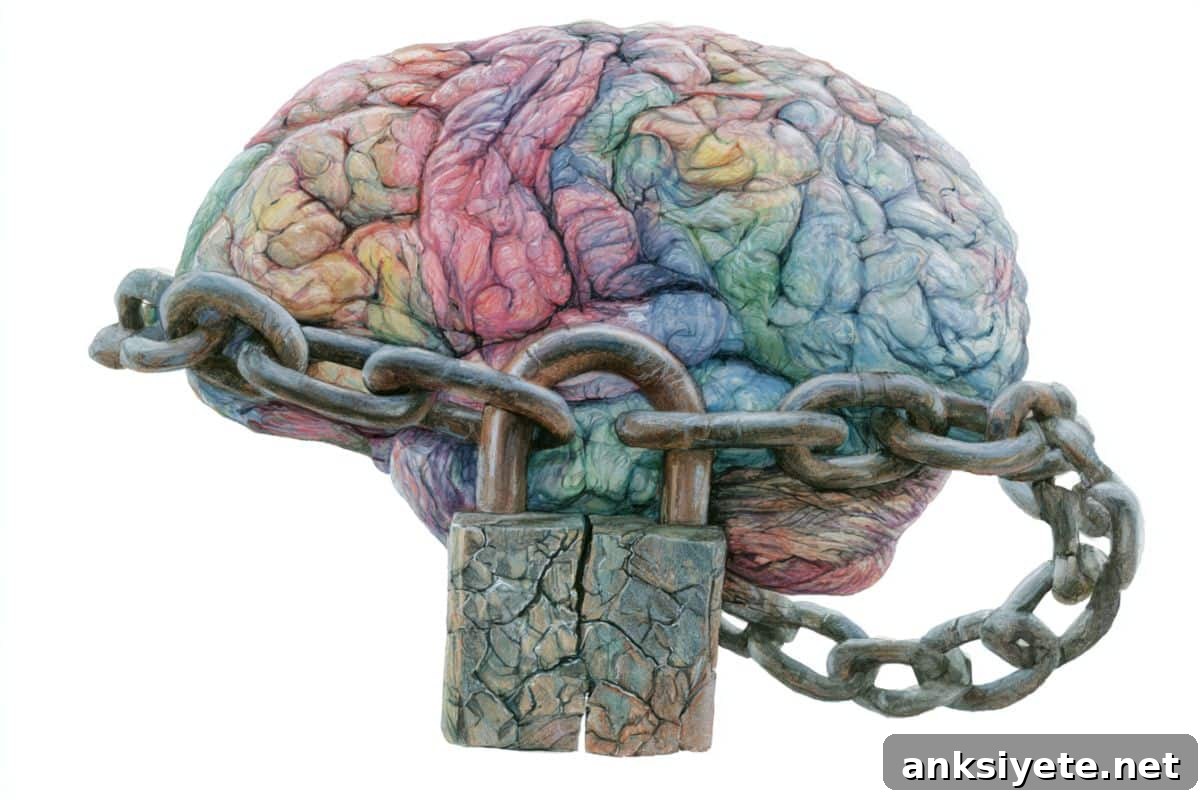
Summary: Researchers have identified a structural mechanism in the cerebellum that controls large-scale social behavior circuits often disrupted in autism spectrum disorder (ASD). This work shifts attention from a strictly cortical view of ASD to the extracellular matrix and subcortical circuitry, revealing how changes in local scaffolding can silence broad brain networks essential for social interaction.
Using two complementary mouse models that represent environmental and genetic risk—prenatal valproic acid (VPA) exposure and Chd8 gene mutation—the international team found a convergent and severe reduction of perineuronal nets (PNNs) in the deep cerebellar nuclei. Loss of these PNNs destabilized neuronal excitability and altered downstream signaling, producing marked deficits in social behavior.
When PNN support was removed, an upstream rise in the transcription factor ARNT2 pushed cerebellar output neurons into a suppressed, non-responsive state. That silencing reduced activity in midbrain and thalamic targets and produced robust social impairments in the animals. Restoring normal ARNT2 levels reversed neuronal suppression and recovered social behavior, highlighting a potentially reversible molecular pathway.
Key Facts
- The cerebellum’s role in social networks: This study reinforces the cerebellum’s influence beyond motor control, positioning cerebellar output as an active regulator of higher-order cognitive and social networks rather than a secondary player.
- Perineuronal nets as structural shields: PNNs are specialized extracellular matrix assemblies that wrap around certain neurons. They stabilize electrical excitability, protect synaptic architecture, and help preserve mature circuit function.
- Shared deficit across models: Two distinct ASD models—environmental (prenatal VPA) and genetic (Chd8 haploinsufficiency)—both showed a striking, matching loss of PNNs around neurons in the deep cerebellar nuclei.
- Causal demonstration by enzymatic removal: Selectively degrading intact PNNs in healthy mice using a targeted enzyme induced classic ASD-like social deficits, proving that PNN integrity is necessary for normal social behavior.
- Network-wide silencing: In healthy animals, social stimuli cause rapid cerebellar activation that transmits to the midbrain and thalamus. When PNNs are disrupted, this subcortical gateway fails to respond, producing widespread reductions in connectivity across social brain networks.
- ARNT2 as a molecular mediator: Loss of PNNs led to abnormal overexpression of the transcription factor ARNT2, which changes gene expression patterns and locks neurons into a hypoactive state.
- Reversibility: Reducing ARNT2 activity restored normal firing in deep cerebellar neurons and rescued social behavior, pointing to a promising molecular target for future interventions.
Source: Kanazawa University
Overview
Autism spectrum disorder (ASD) is a neurodevelopmental condition defined by social communication challenges and restricted or repetitive behaviors. Modern evidence suggests ASD reflects alterations distributed across neural circuits rather than a single localized lesion. The cerebellum, historically linked to motor control, is increasingly recognized for its role in cognition, emotion, and social function. Yet the cellular and molecular steps by which cerebellar changes contribute to ASD-related social deficits were not fully defined—until now.
Research Highlights
The research team examined cerebellar changes common to two ASD-relevant mouse models: prenatal valproic acid exposure and Chd8 haploinsufficiency. They discovered that neurons in the deep cerebellar nuclei—the major output hubs of the cerebellum—showed strongly reduced expression of perineuronal nets in both models. These mesh-like extracellular matrix structures normally regulate neuronal excitability, stabilize synaptic inputs, and support circuit maturity.
To test function, investigators enzymatically degraded PNNs in the deep cerebellar nuclei of control mice. Those animals developed clear social deficits, including diminished interest in unfamiliar peers, indicating that intact PNNs are necessary for normal social interaction. In usual conditions, social stimuli evoke increased activity in these output neurons and trigger downstream activation in distant regions such as the midbrain and thalamus. PNN disruption abolished that activation and broadly reduced activity in cerebellum-linked networks.
Molecular analysis showed that ARNT2, a transcription factor that regulates neuronal gene programs and excitability, was abnormally upregulated in neurons lacking PNNs. This elevated ARNT2 corresponded to a baseline suppression of neuronal responsiveness. Crucially, targeted reduction of ARNT2 restored neuronal firing patterns and rescued social behavior, identifying ARNT2 as a key mediator between PNN loss and circuit dysfunction.
Significance
These results shift attention to the cerebellar microenvironment—specifically extracellular matrix structures like PNNs—as critical regulators of neural circuits that support social behavior. By demonstrating that local structural loss in cerebellar nuclei can alter brain-wide connectivity and behavior, the study opens new avenues for understanding ASD mechanisms and for developing interventions that target circuit stability rather than solely synaptic components.
Future directions
Future research will assess whether similar PNN and ARNT2 alterations occur in the human brain and explore how manipulating cerebellar circuits or ARNT2 activity might influence social behavior. Clarifying how cerebellar networks interact with broader brain systems could provide critical insights into ASD pathophysiology and therapeutic opportunities.
Funding information
This work used shared research equipment supported by the MEXT Project for Promoting the Public Utilization of Advanced Research Infrastructure. Additional support came from the Hokuriku Bank Research Grant for Young Scientists, Kanazawa University research grants for the “HOZUMINE” and “JIKOCHOKOKU” projects, and a grant from the Daiichi Sankyo Foundation of Life Science.
Key Questions Answered:
A: The cerebellum functions as a fast integrator that coordinates and optimizes large-scale brain networks. Its output regions connect directly to emotional and cognitive centers such as the midbrain and thalamus. If the cerebellum’s output gates are structurally or chemically compromised, it cannot broadcast stabilizing signals across the brain, causing widespread network disruption that impairs social responsiveness.
A: Perineuronal nets (PNNs) are specialized, mesh-like assemblies of proteins and sugars in the extracellular space that encase certain neurons. They stabilize electrical excitability, protect synaptic architecture, and help maintain mature circuit function. When PNNs degrade, neurons lose this structural and chemical buffering, which can destabilize excitability and render them less responsive to incoming social cues.
A: ARNT2 emerged as a direct molecular link between PNN loss and neuronal suppression. Loss of PNNs triggered abnormal ARNT2 upregulation, which shifted neurons into a hypoactive state. In the study, lowering ARNT2 levels restored normal neuronal activity and rescued social behavior in animal models, suggesting that ARNT2 or its downstream pathways could be targeted to reverse circuit dysfunction without rebuilding the extracellular matrix.
Editorial Notes:
- This article was edited by a Neuroscience News editor.
- The underlying journal paper was reviewed in full.
- Additional context was added by editorial staff.
About this autism and neuroscience research news
Author: Yuko Mitera
Source: Kanazawa University
Contact: Yuko Mitera – Kanazawa University
Image: The image is credited to Neuroscience News
Original research: Open access. Title: “Perineuronal nets in cerebellar nuclei neurons orchestrate social behaviour via regulation of neuronal activity in circuits innervated by the cerebellum.” Authors: Kyota Fujita, Hong Zhu, Chiharu Tsuji, Atsuki Kawamura, Masaaki Nishiyama, Haruhiro Higashida & Shigeru Yokoyama. Journal: Translational Psychiatry. DOI: 10.1038/s41398-026-03952-4
Abstract
Perineuronal nets in cerebellar nuclei neurons orchestrate social behaviour via regulation of neuronal activity in circuits innervated by the cerebellum
Certain neurons in the central nervous system are encased by extracellular matrix complexes known as perineuronal nets (PNNs). Although PNNs are known to influence synaptic plasticity and neuronal activity, their pathophysiological roles in psychiatric conditions have been incompletely understood.
This study shows that PNN expression is reduced in the deep cerebellar nuclei of ASD-associated mice, including animals exposed prenatally to valproic acid and Chd8 haploinsufficient mice. Pharmacological disruption of PNNs in the deep cerebellar nuclei, produced by injection of the enzyme chondroitinase ABC (ChABC), impaired social interaction compared with sham-treated controls. In large glutamatergic neurons, social behavior normally increased intracellular calcium dynamics and phosphorylation of CREB1, indicating heightened neuronal activity.
ARNT2, a transcription factor that influences neuronal excitability, was elevated in ChABC-treated and ASD-model mice under baseline conditions, even without activity-dependent stimulation. Measurements of activity markers such as c-Fos in downstream regions, including the red nucleus and ventromedial thalamic nuclei, showed reduced induction after social interaction when PNNs were degraded. Reducing ARNT2 expression by AAV-delivered shRNA in the deep cerebellar nuclei alongside ChABC treatment rescued social interaction deficits and restored c-Fos induction in distal regions compared with scrambled-shRNA controls.
Overall, these results suggest that PNNs in cerebellar nuclei help regulate neuronal activity in circuits innervated by the cerebellum and play a functional role in orchestrating social behavior.