
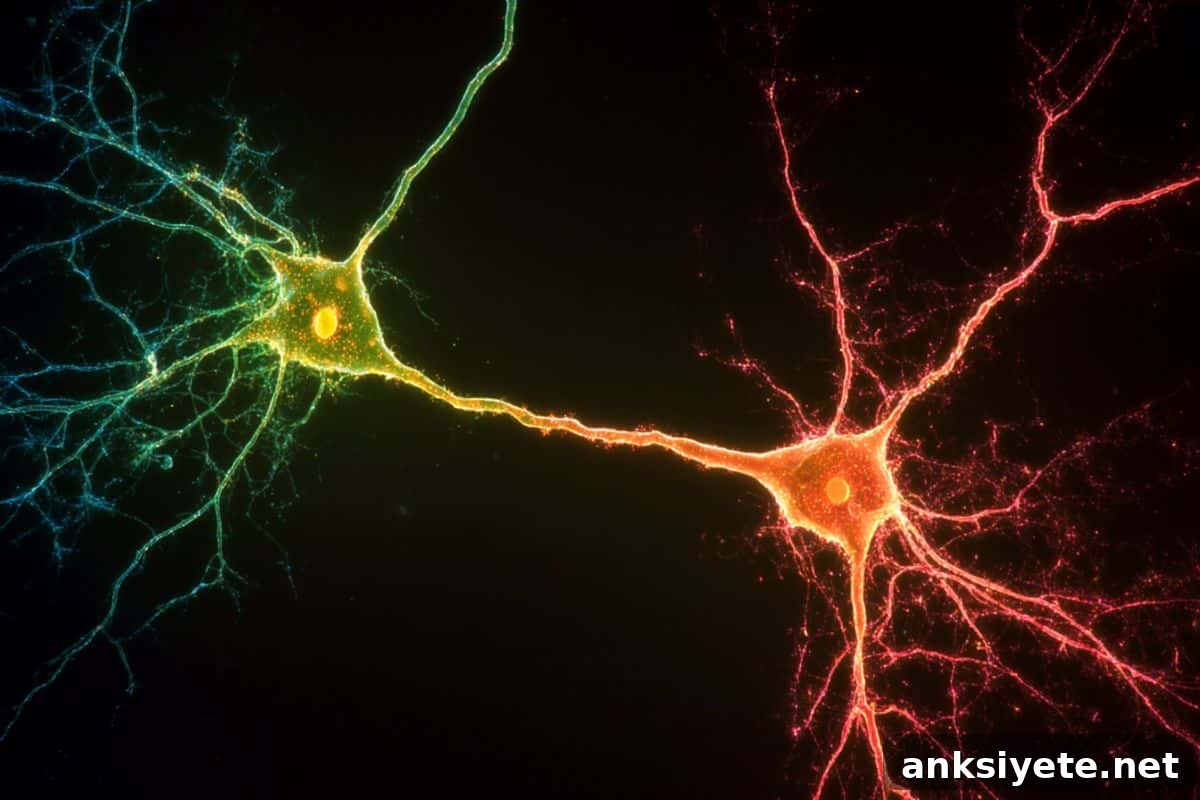
Summary: Researchers built a high-resolution spatial map of how selective serotonin reuptake inhibitors (SSRIs) alter gene expression within the brain’s primary serotonin hub. Using spatial transcriptomics, the team traced molecular changes in the Dorsal Raphe Nucleus after both short- and long-term treatment with fluoxetine.
These findings challenge the long-standing notion that the serotonin system is homogeneous. Instead, the study shows two distinct serotonin neuron populations react in opposite ways to the same SSRI exposure. That divergence at the cellular level mirrors the clinical timeline of antidepressant therapy, where early, sometimes worsening symptoms precede later therapeutic benefit.
Key Facts
- The Serotonin Homogeneity Fallacy: Although antidepressants are widely prescribed—SSRI use exceeds 10% of the population in some countries like Sweden—the detailed molecular impact of these drugs on serotonin neurons has been incompletely characterized.
- High-Resolution Spatial Mapping: The investigators focused on fluoxetine and applied spatial transcriptomics to the Dorsal Raphe Nucleus, the brain’s main serotonin-producing center, enabling gene-expression profiling with spatial and single-cell resolution rather than averaging different cell types together.
- The Transient Phase (Group 1): After short-term fluoxetine exposure, one serotonin neuron subpopulation showed a sharp, temporary rise in the neuropeptide prodynorphin (Pdyn). Because Pdyn pathways have been linked to stress-related depressive symptoms, this acute increase provides a plausible molecular basis for the anxiety or transient worsening of mood that some patients experience during the first days of SSRI treatment.
- The Delayed Therapeutic Phase (Group 2): A different serotonin subpopulation increased expression of thyrotropin-releasing hormone (TRH) only after prolonged, chronic treatment. TRH signaling has been associated with antidepressant-like effects in prior studies, aligning with the multi-week delay typically required for SSRIs to produce clinical relief.
- Next-Generation Drug Discovery: Identifying these opposing molecular pathways offers a blueprint for developing more selective therapies. Targeting the late-acting, therapeutically relevant TRH pathway while avoiding the early Pdyn-driven stress response could reduce initial side effects and speed effective relief.
Source: Stockholm University
Antidepressants are among the most widely prescribed medications worldwide. In Sweden, more than one in ten people take an antidepressant, and SSRIs are the most common class.
“Despite how commonly they are used, we still know surprisingly little about what SSRIs do at the molecular level inside serotonin neurons. Our goal was to map the gene-expression changes these drugs cause in their primary cellular targets,” explains Iskra Pollak Dorocic, Assistant Professor at the Department of Biochemistry and Biophysics, Stockholm University.
Mapping changes
The research centered on fluoxetine and examined its effects in the Dorsal Raphe Nucleus. By applying spatial transcriptomics, the team recorded gene-activity changes across intact brain tissue after acute and chronic drug exposure. This approach preserved each cell’s spatial context and revealed cellular diversity that would be lost in bulk analyses.
“Treating the serotonin system as a single uniform population hides important variation,” says Dorocic. “Spatial transcriptomics lets us read gene activity with high spatial and cellular precision, showing that different serotonin neuron types within the same region respond in fundamentally different ways to SSRI treatment.”
Two different paths
The study uncovered widespread transcriptional responses to SSRI treatment and identified two opposing molecular trajectories among serotonergic neurons:
- One population exhibited a rapid, short-lived increase in prodynorphin (Pdyn) expression following acute fluoxetine exposure. Pdyn-related signaling has previously been associated with stress-induced negative affect. The transient nature of this response suggests it may underlie the early adverse effects some patients report when starting SSRIs.
- The other population showed a slow, sustained increase in thyrotropin-releasing hormone (TRH) expression only after chronic treatment. TRH has been implicated in antidepressant-like mechanisms in other contexts, consistent with the delayed onset of clinical benefit that typically appears after several weeks on an SSRI.
Good and bad effects
These complementary responses illustrate how a single drug can simultaneously trigger both unfavorable and beneficial processes by acting on different cell types. One set of neurons appears to drive an early stress-linked response, while another set gradually activates pathways associated with relief from depressive symptoms.
“We observed two distinct serotonin neuron populations being pushed in opposite directions by the same compound—one rapidly and transiently, the other slowly and sustainably. That cellular-level split mirrors the clinical course of SSRI treatment and provides concrete molecular targets for follow-up research,” Dorocic notes.
The genes, signaling pathways and cell types identified here offer concrete leads for understanding depression’s biology and for designing antidepressant therapies that maintain efficacy while minimizing early adverse effects.
Key Questions Answered:
A: Short-term SSRI exposure can cause a rapid, temporary rise in prodynorphin (Pdyn) in a specific group of serotonin neurons. This stress-linked neuropeptide spike can worsen anxiety or mood briefly before other, slower adaptive processes take hold.
A: Therapeutic pathways appear to activate on a delayed timescale. A different serotonin neuron population increases production of thyrotropin-releasing hormone (TRH) only after prolonged treatment, and this change aligns with the later emergence of antidepressant effects.
A: Spatial transcriptomics shows that “serotonin neurons” are heterogeneous. By mapping distinct cell types and their molecular responses, researchers can aim for drugs that selectively activate beneficial pathways (like TRH-expressing cells) while avoiding cell types that trigger early adverse effects (like Pdyn-expressing cells).
Editorial Notes:
- This article was edited by a Neuroscience News editor.
- The journal paper was reviewed in full.
- Additional context was added by staff to clarify key points.
About this neuroscience and SSRI research news
Author: Press Office
Source: Stockholm University
Contact: Press Office – Stockholm University
Image: The image is credited to Neuroscience News
Original Research: Open access. “Effects of SSRIs on the spatial transcriptome of dorsal raphe serotonin neurons” by Charlotta Henningson, Jakub Mlost & Iskra Pollak Dorocic. Molecular Psychiatry
DOI: 10.1038/s41380-026-03644-x
Abstract
Effects of SSRIs on the spatial transcriptome of dorsal raphe serotonin neurons
SSRIs target the serotonin system to treat depression, but their precise cellular mechanisms are not fully understood. To examine how SSRIs alter transcription within serotonin neurons, the researchers applied spatial transcriptomics, a method that performs spatially resolved RNA sequencing on intact brain tissue.
Mouse brain sections containing the Dorsal Raphe Nucleus and neighboring midbrain areas were analyzed. The work revealed six distinct serotonergic subpopulations with unique molecular profiles and spatial locations. Both acute and chronic fluoxetine treatment produced numerous gene-expression changes across the Dorsal Raphe Nucleus.
Notably, expression of Htr1a rose after acute treatment but fell with chronic exposure, consistent with earlier findings on 5-HT1A autoreceptor regulation. Enrichment and network analyses highlighted modulation of Ras, MAPK and cAMP signaling as well as axonal guidance pathways.
The authors also observed opposing, treatment-dependent changes in neuropeptide expression—particularly Trh (TRH) and Pdyn (prodynorphin)—with distinct spatial localization in the Dorsal Raphe. Together, transcriptomic and in situ hybridization data reveal spatially and cell-type-specific heterogeneity in SSRI action, offering new molecular insights into how these drugs affect serotonin circuits.