
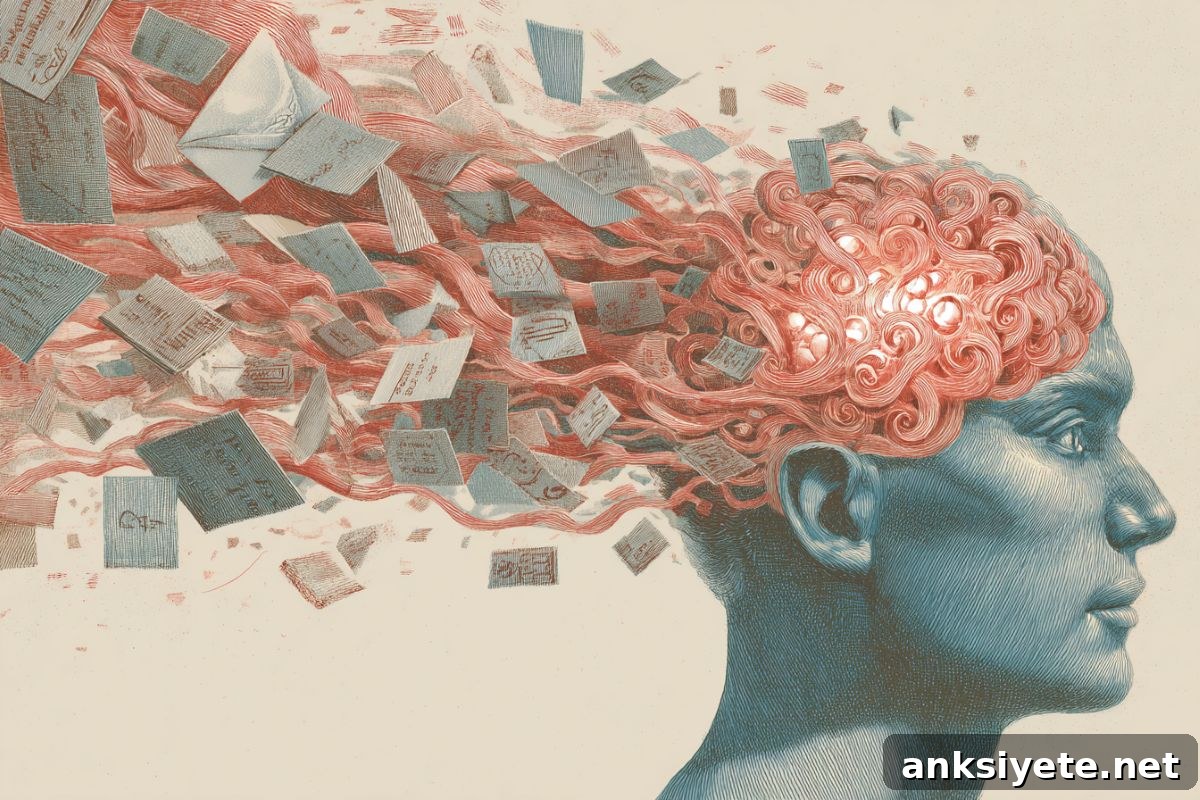
Summary: For decades neuroscientists treated the brain like a passive computer: it inspects an object, matches that input to a stored template, then decides what to do. A provocative new review argues this picture is backwards.
The authors propose that categorization is built into the brain’s design as a predictive mechanism. Rather than neutrally recognizing a “dog” and then choosing whether to pet it, your brain prepares an action plan (to pet, to retreat, or to freeze) before you fully perceive the animal. In this framework, categorization is a real-time signal-processing event that shapes perception to serve the body’s immediate needs and goals.
Key Facts
- Action Precedes Perception: The brain is primarily predictive. Motor plans and expectations are prepared first, and perception is shaped afterward to confirm or correct those plans.
- Anatomical Funnel: Cortical architecture compresses rich sensory detail into abstract categories, allowing the system to ignore irrelevant information and prioritize what matters for behavior.
- Feedback Dominance: Anatomical studies indicate that up to 90% of synapses in parts of the visual cortex are feedback connections—carrying memories and goals—rather than purely feedforward sensory signals.
- Neural Rhythms Coordinate Processing: Research shows that slower beta rhythms (related to goals and plans) regulate faster gamma rhythms (encoding sensory detail), preventing sensory overload.
- Mental Health Implications: This perspective reframes disorders: depression may involve overly broad, threat-focused categories, while autism may reflect insufficient compression and generalization across experiences.
Source: Picower Institute at MIT
In a new review titled “Categorization is Baked into the Brain,” cognitive scientists Lisa Feldman Barrett (Northeastern) and Earl K. Miller (MIT) argue that categorization is an intrinsic, predictive process the brain uses to meet bodily needs in a complex, rapidly changing sensory world.
Their paper, published in Nature Reviews Neuroscience, challenges long-standing assumptions about how the brain reduces the flood of sights, sounds, smells and touches into actionable meaning.
A category groups items or events that are similar enough to be treated as functionally equivalent. When you walk down a street and spot a furry, barking animal, you automatically register it as a “dog.” The classical view holds that this label arises after the brain accumulates sensory features (shape, size, sound, behavior), compares them to stored prototypes, and finally decides how to act—usually after hundreds of milliseconds of processing.
Barrett and Miller contend that this sequence is reversed. They propose that the brain arrives ready with predicted motor plans and needs-driven expectations. These predictions act as transient categories that organize and compress incoming sensory input from the outset, steering processing toward the most useful response. If you are in an unfamiliar area, the constructed category might bias perception toward danger and trigger a cautious retreat. If you are in a familiar place with a known dog, the category will favor approach and friendly interaction.
In this view, the category “dog” is not a neutral label produced after sensation; it is a context-dependent, goal-directed construct that selects the best action from a repertoire of learned plans. If the brain operated solely by passive feature comparison, you would be slower to respond and more vulnerable when the environment demands rapid action.
“One of the main things your brain has to do is predict the world,” said Miller, noting that sensory processing takes time while the world keeps changing. Anticipation lets the brain act in time. Barrett adds that preparing potential plans tied to current needs is the most efficient strategy: correct predictions let you act immediately; incorrect ones generate surprise signals that drive learning and improve future predictions.
“The stimulus–cognition–response model is misleading,” Barrett said. “The brain prepares an action and then perceives the stimulus. It’s not reactive; it’s predictive. Planning comes first; perception follows as shaped by the plan.”
Anatomical and functional evidence
Barrett and Miller support their argument with converging evidence from neuroanatomy, electrophysiology and imaging. They describe how cortical circuits broadcast memories and goals back toward sensory regions, actively filtering and compressing incoming signals to make them meaningful for action selection.
As signals ascend from sensory receptors (for example, the retina) toward higher cortical areas (visual cortex to prefrontal regions), they move from many small, weakly connected neurons to fewer, larger, and more strongly connected neurons. This hierarchical funnel compresses detail into abstract representations that group diverse features into actionable categories.
An important anatomical feature is the predominance of feedback connections. Far more synapses deliver contextual information from higher-level regions back to sensory cortex than carry raw sensory data forward. Barrett and Miller report that in some parts of visual cortex, as much as 90% of synapses are feedback, consistent with a system that uses memory and goals to filter perception.
Electrophysiological work from Miller’s lab further shows that beta-frequency activity—carrying goal and plan information—constrains gamma-frequency activity—carrying sensory detail—allowing the brain to prioritize behaviorally relevant patterns and avoid being overwhelmed by raw input.
When predictions are wrong, mismatches produce “surprise” signals that update memories and refine future predictions—what scientists term learning.
Implications for thought and disease
Reframing categorization as a predictive, allostatic function shifts how we think about cognition and clinical conditions. A category becomes less a static mental representation and more a dynamic signal-processing event that constrains interpretation of complex sensory arrays in service of goals.
Humans possess extensive neural machinery for abstraction, enabling us to group experiences functionally as well as perceptually—so metaphorical or symbolic categorizations (for example, equating “career advancement” with climbing a ladder) can emerge naturally from shared action plans.
This model also offers new ways to understand psychiatric and neurodevelopmental disorders. Depression could reflect a tendency to impose overly broad, negative categories—interpreting many experiences as “threat” or “failure.” Autism might involve reduced compression and generalization, making it harder to recognize when a new situation is similar enough to past ones to apply the same adaptive plan.
Funding: Research and support for the paper were provided by the National Institutes of Health, the U.S. Army Research Institute for the Behavioral and Social Sciences, the Office of Naval Research, the Unlikely Collaborators Foundation, the Freedom Together Foundation and the Picower Institute for Learning and Memory.
Key Questions Answered:
A: In effect, yes. The brain continuously forecasts a few hundred milliseconds ahead to stay adaptive. It often creates a short-lived category (for example, “approachable dog”) based on current goals, then filters incoming sensory data to confirm or revise that expectation.
A: Learning occurs when predictions fail. Unexpected outcomes generate error or surprise signals that update memory and future predictions, refining the brain’s categories and action plans.
A: Our brains are built for abstraction. They group situations by shared functions—not just by appearance—so actions that require similar effort or strategy can be categorized together, allowing metaphorical mappings between physical and social domains.
Editorial Notes:
- This article was edited by a Neuroscience News editor.
- The journal paper was reviewed in full.
- Additional context was provided by editorial staff.
About this neuroscience research news
Author: David Orenstein
Source: Picower Institute at MIT
Contact: David Orenstein – Picower Institute at MIT
Image: The image is credited to Neuroscience News
Original Research: Closed access.
“Categorization is Baked Into the Brain” by Lisa Feldman Barrett and Earl K. Miller. Nature Reviews Neuroscience
DOI: 10.1038/s41583-026-01036-2
Abstract
Categorization is Baked Into the Brain
Categorization—the grouping of objects, organisms, actions or events into equivalence clusters—is central to adaptive behavior. Traditional models assume categorization starts with feature detection and ends with matching to stored representations.
This review synthesizes evidence from neuroanatomy, electrophysiology, imaging and cognitive science to propose an alternative: categorization operates throughout signal processing, beginning at the earliest stages. It is a core computational strategy implemented by predictive feedback signals that organize feedforward sensory processing. The review discusses theoretical implications, directions for future research and relevance to neuropsychiatric disorders.