
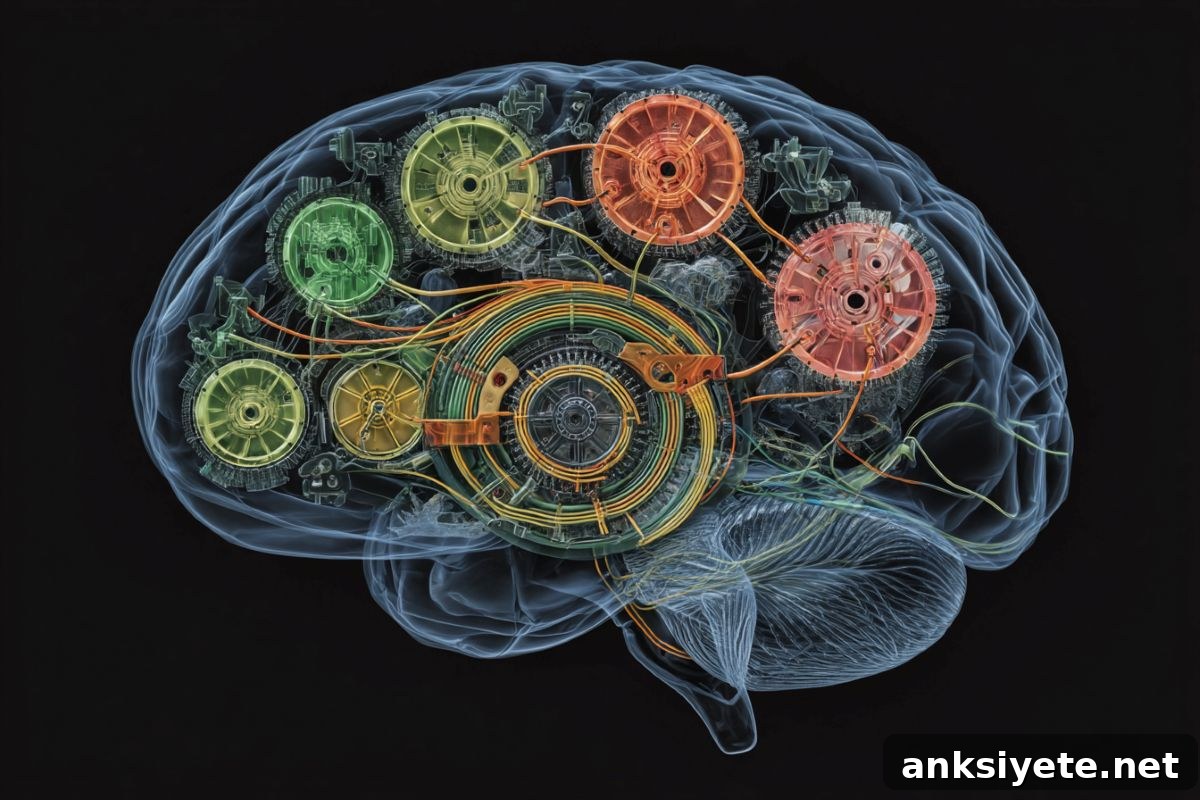
Summary: From a tennis player timing a 100 mph serve to a driver deciding whether to stop at a yellow light, the brain is continuously computing duration. A new study has, for the first time, traced a cortical “stopwatch” that converts raw sensory input into the subjective sense of time.
Using high-field functional MRI, researchers found that time perception is not a single instant processed in one spot. Instead, it unfolds as a staged transformation across the cortex, where visual signals are progressively reformatted into precise duration readouts and finally into subjective judgments of “short” or “long.”
Key Facts
- The Three-Stage Relay: Time perception unfolds through three distinct phases:
- Occipital (visual) cortex: Encodes physical duration in a monotonic fashion—longer stimuli produce stronger neural responses.
- Parietal and premotor cortices: Transform that signal into selective, tuned representations. Distinct neuron populations respond preferentially to particular durations (for example, a half-second group versus a one-second group), enabling a precise readout.
- Frontal cortex and anterior insula: Perform subjective categorization, shaping whether a duration is perceived as “too short,” “right,” or “too long.”
- Mechanistic model: Beyond locating timing-related activity, the study proposes a concrete processing pathway that explains how a simple sensory trace becomes a categorical decision.
- Subjective distortions: Emotional state and attention can bias the final categorization stage, explaining why time can feel sped up or slowed down in high-stress or highly engaging situations.
- Precision timing in experts: The parietal/premotor readout stage likely underlies the millisecond-level precision observed in elite athletes.
Source: SISSA
How can an athlete like Jannik Sinner strike the ball at precisely the right instant, and how do we routinely judge the length of everyday events?
A team led by Valeria Centanino, Gianfranco Fortunato, and Domenica Bueti used ultra-high-field (7T) fMRI to examine how the human brain represents brief visual durations. Their results, published in PLOS Biology, show that temporal information enters the system as a graded visual signal and is then mapped, refined, and categorized across a hierarchy of cortical regions.
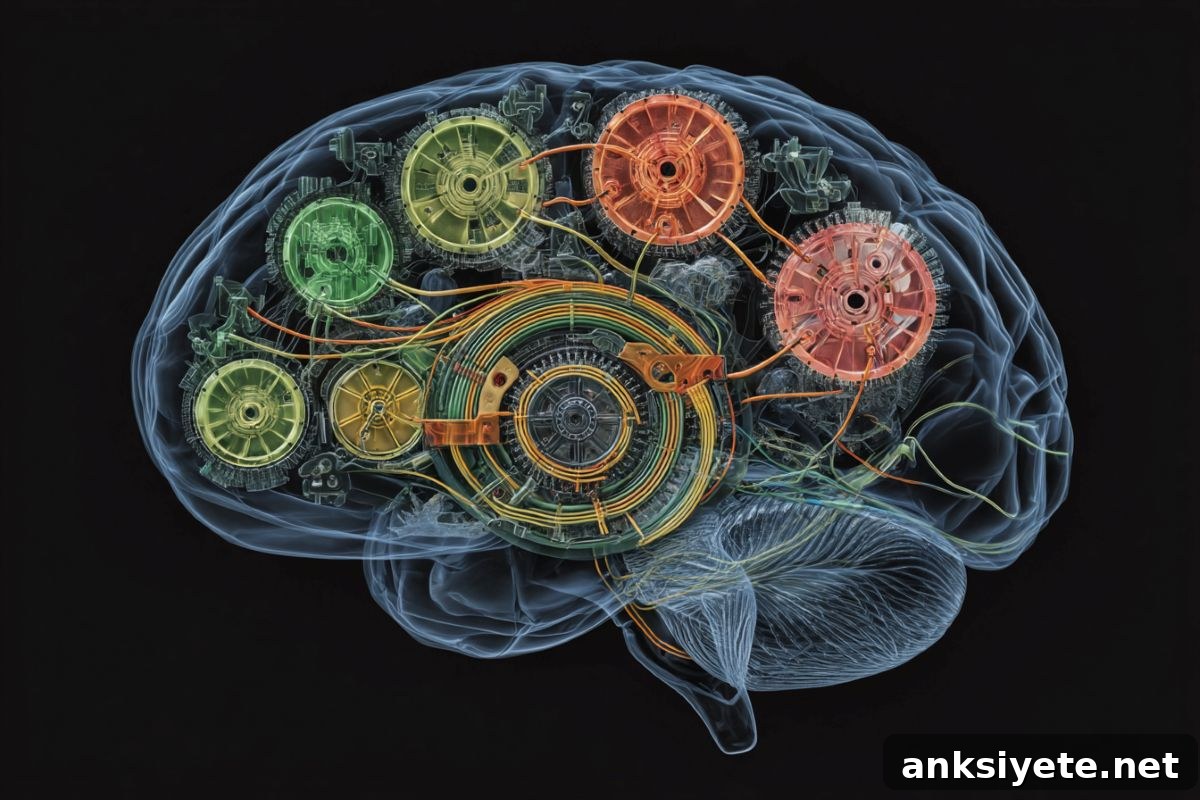
In the first stage, occipital visual areas encode physical duration by producing a monotonic response: as a stimulus persists, neural activity grows accordingly. That signal is not yet selective for a specific duration but preserves the physical timing information.
Next, parietal and premotor regions transform these monotonic responses into sharply tuned, unimodal representations. There, distinct neuronal populations are selectively responsive to particular durations, effectively providing a readout that can discriminate fine temporal differences.
Finally, higher-order regions—including parts of the frontal cortex and the anterior insula—translate those readouts into categorical, subjective judgments. This final stage is where attention, expectation, and emotion can bias perception, producing the familiar sense that time passes faster or slower under different conditions.
The study’s emphasis on a processing sequence clarifies not only where duration information appears in the brain but also how that information is transformed. By documenting monotonic encoding, selective tuning, and subjective categorization across cortical regions, the researchers provide a mechanistic framework for duration perception.
That framework has practical implications: it suggests why athletes may achieve exceptional timing precision (through refined tuning in parietal and premotor readout circuits), why training can improve timing skills, and why emotional or attentional states distort time at the final categorical stage.
Key Questions Answered:
A: The study identifies the frontal cortex and anterior insula as critical for subjective categorization. These regions are linked to emotional state and attention, so changes in mood or focus can alter how the same physical duration is categorized and experienced.
A: Possibly. The parietal and premotor areas contain selective neural populations that provide the precise readout of duration. In experts, these populations may be more finely tuned, enabling discrimination of small timing differences that most people would miss.
A: The separation of encoding versus categorization suggests timing is a skill. Repetitive training that repeatedly engages the readout circuits could sharpen selective tuning in premotor and parietal areas, improving internal timing accuracy.
Editorial Notes:
- This article was edited by a Neuroscience News editor.
- The journal paper was reviewed in full by staff editors.
- Additional context was provided by the editorial team.
About this sleep and neuroscience research news
Author: Donato Ramani
Source: SISSA
Contact: Donato Ramani – SISSA
Image: Image credit to Neuroscience News
Original Research: Open access.
“Neuronal populations across the cortex underlie discrete, categorical, and subjective representations of visual durations” by Valeria Centanino, Gianfranco Fortunato, and Domenica Bueti. PLOS Biology
DOI: 10.1371/journal.pbio.3003704
Abstract
Neuronal populations across the cortex underlie discrete, categorical, and subjective representations of visual durations
Processing subsecond visual durations engages a broad cortical network. Although unimodal tuning has been reported in several of these areas, how these tuned responses relate to perception was unclear.
Using 7T functional MRI while participants performed a visual duration categorization task, the authors characterized unimodal responses across the cortical hierarchy.
They identified topographically organized neural populations tuned to the range of presented durations in parietal and premotor cortices and in the caudal supplementary motor area (SMA).
By contrast, rostral SMA, inferior frontal cortex, and anterior insula showed neural preferences clustered around the mean duration; these preferences correlated with the boundary durations participants used during categorization.
These distinctions indicate specialized roles across cortical regions, from discrete duration tuning to categorical and subjective representations, and reveal a hierarchical organization of duration tuning.
Together, the findings provide a mechanistic framework for how the brain constructs perceived time from visual input.