
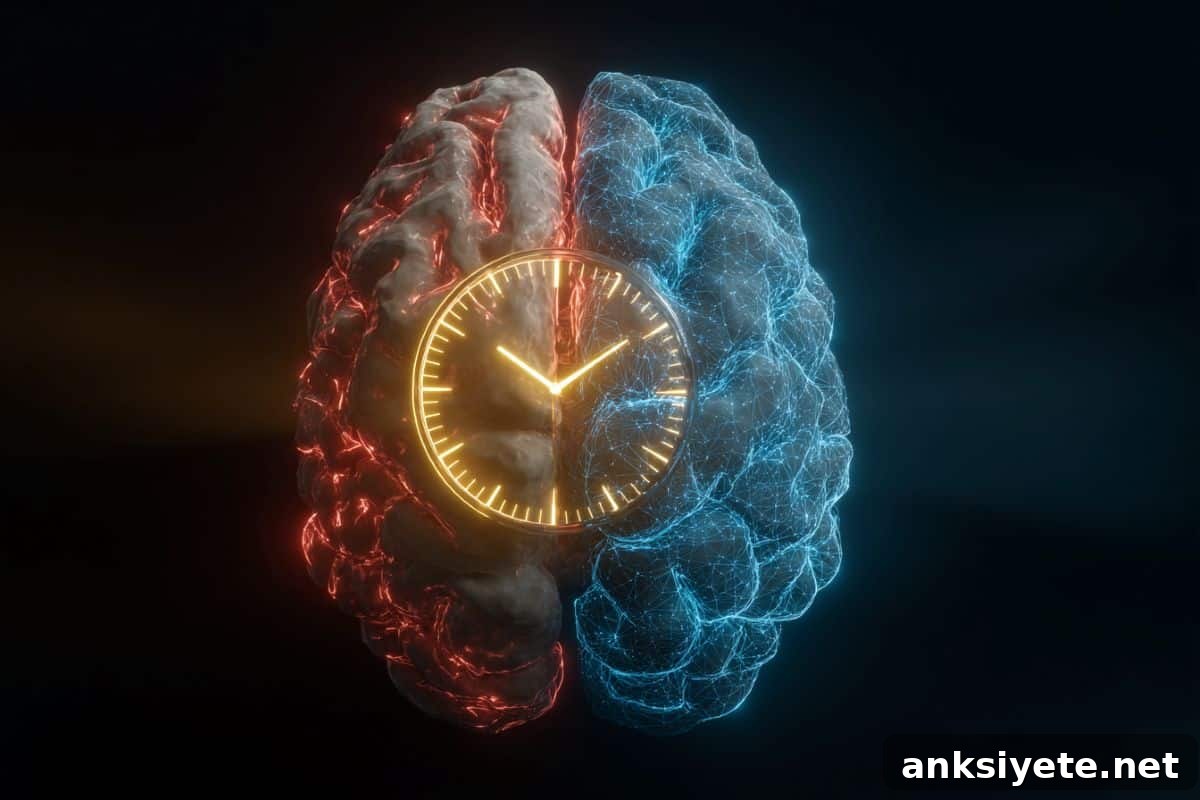
Summary: Psychological resilience is less about immediate toughness and more about how the brain reorganizes after a stressful event. A new human study identifies a distinct “resilience window” that peaks roughly 60 minutes after acute stress, offering a precise timeframe when the brain shifts from alarm to reflection.
Using simultaneous fMRI and EEG, researchers found that while peripheral measures such as heart rate and cortisol often return to baseline quickly, higher-order brain recovery—specifically a handover from threat-detection systems to reflective networks—unfolds over the course of an hour.
Key Findings
- One-hour resilience peak: Individual differences in psychological resilience were best predicted by neural activity observed around 60 minutes after exposure to acute stress, not by immediate reactions.
- Network transition: Resilient individuals showed a clear decrease in the Salience Network (involved in threat detection) and an increase in Default Mode Network activity (involved in internal reflection and processing).
- EEG marker of recovery: A pronounced drop in high-beta EEG power—an indicator of neural arousal—appeared in resilient participants at the one-hour mark, signaling the nervous system’s “settling.”
- Timing for intervention: The one-hour window suggests a practical moment for brief psychological support or non-invasive brain stimulation to steer the brain toward a more adaptive recovery trajectory.
Source: Kochi University of Technology
Psychological resilience is frequently misunderstood as mere toughness. In reality, resilience is a process: the brain’s capacity to recover and reorganize after stress.
Researchers from Kochi University of Technology (KUT) and the Shizuoka Institute of Science and Technology (SIST) tracked nearly 100 adults after an acute stress challenge (the cold-pressor test). Combining functional MRI with scalp EEG and peripheral physiological measures, the team mapped how recovery unfolds across body and brain.
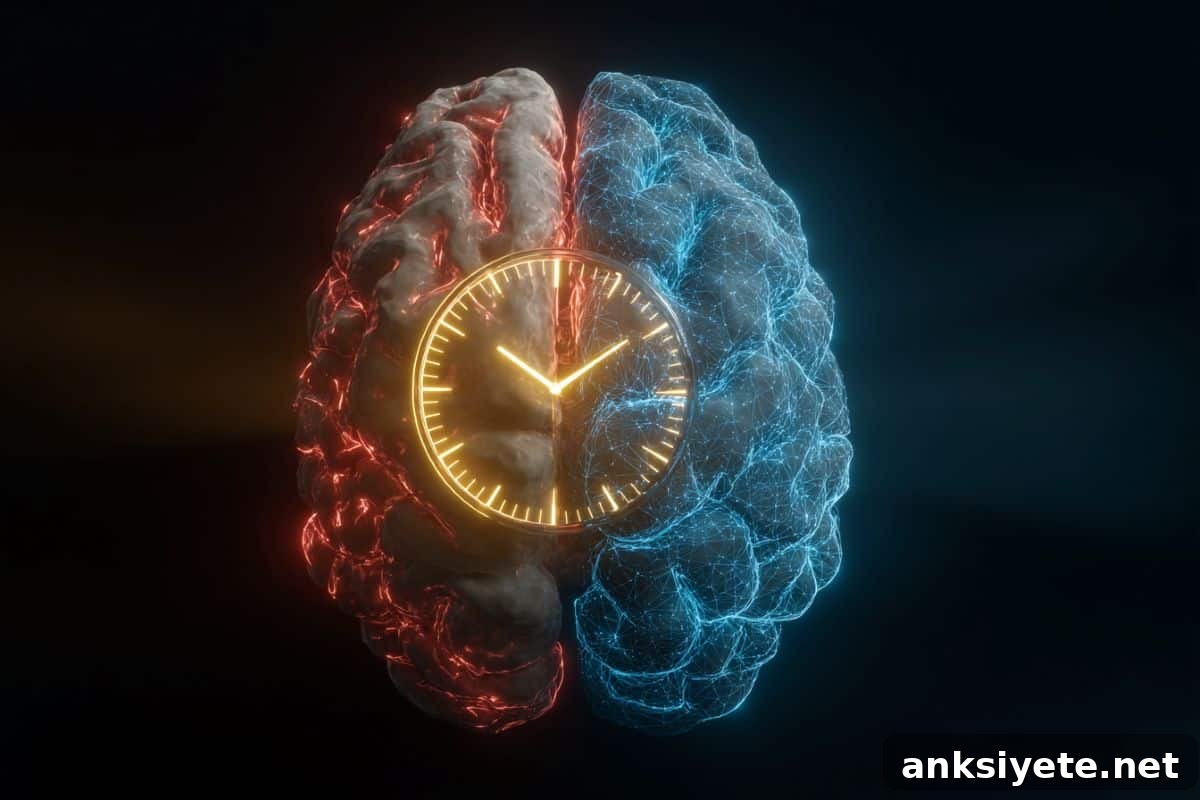
Published in the Proceedings of the National Academy of Sciences (PNAS), the study revises assumptions about the timing of recovery. While heart rate and cortisol commonly normalize shortly after stress exposure, the brain’s large-scale network reconfiguration that supports adaptive coping emerges later—around one hour post-stressor.
Capturing the brain’s slow unfolding
Most prior resilience research relies on animal models and focuses on absence of depression-like behavior. The authors emphasize that human resilience also depends on higher-order functions—self-efficacy, persistence, and reflective processing—that require direct human measurement. To capture these dynamics, the team measured brain activity and peripheral physiology continuously for 90 minutes following the stressor.
From alarm to reflection
About 60 minutes after the stress challenge, participants rated as more resilient on validated psychological scales displayed a distinct neural pattern: reduced activity in the Salience Network (the brain’s alarm system) alongside increased activation in the Default Mode Network (a network linked to internal reflection and memory-based processing). At the same time, high-beta EEG power—a proxy for heightened neural arousal—fell substantially in the more resilient group.
According to the study’s senior authors, these delayed, nonconscious neural shifts explain individual differences in adaptive recovery far better than immediate physiological responses. In short, resilience emerges not in the heat of the moment but in the hour after.
Clinical and practical implications
Identifying a one-hour resilience window has practical implications for time-sensitive interventions. Brief psychological support, guided breathing, a short mindfulness exercise, or carefully timed non-invasive brain stimulation delivered during this window may help nudge the brain toward more adaptive network organization. The authors also propose that these neural signatures—salience and default mode network dynamics, high-beta and gamma EEG power, and hippocampal activity—could become objective biomarkers to inform treatment for conditions such as PTSD and depression.
Frequently Asked Questions
A: Not necessarily. Peripheral recovery can be quick, but the brain’s high-level recovery unfolds more slowly. This study shows that the most important neural reorganization often peaks about an hour after the stressor.
A: The Default Mode Network is active during internal thought, self-reflection, and memory processing. Resilient individuals appear better able to shift away from the Salience Network’s alert state and return to this reflective, integrative mode once danger has passed.
A: Possibly. The hour after stress may be an optimal time for supportive interventions—brief mindfulness, calm conversation, or paced breathing—to align with the brain’s natural reorganization and promote recovery.
Editorial Notes
- This article was edited by a Neuroscience News editor.
- The journal paper was reviewed in full by the editorial team.
- Additional context and clarifications were added by staff writers.
About this research news
Author: Masaki Takeda
Source: Kochi University of Technology
Contact: Masaki Takeda, Kochi University of Technology
Image: Image credit: Neuroscience News
Original Research: Closed access. “Neural signatures of human psychological resilience driven by acute stress” by Noriya Watanabe, Shinichi Yoshida, Ruedeerat Keerativittayayut, and Masaki Takeda. Published in PNAS. DOI: 10.1073/pnas.2524075123
Abstract
Neural signatures of human psychological resilience driven by acute stress
Neurophysiological mechanisms of psychological resilience have been well studied in animals, but human resilience involves additional higher-order cognitive functions—such as self-confidence, persistence, and a positive approach to challenges—that require direct human investigation. To clarify these human-specific mechanisms, the authors recorded multimodal responses after an acute stressor over 90 minutes using fMRI, EEG, and peripheral physiological measures. They report that individual resilience is indexed by multiple neural changes that become most predictive around one hour after stress exposure.
Specifically, less resilient individuals showed increased activity in the cortical Salience Network and elevated high-beta and gamma oscillations, while more resilient individuals displayed greater Default Mode Network activity and increased spontaneous activity in the posterior hippocampus. Machine learning analyses indicated that, at the one-hour mark, functional connectivity in the Salience Network was the strongest predictor of resilience, followed by Default Mode Network connectivity, gamma power, high-beta power, and hippocampal activity. These findings suggest that the neurophysiological dynamics underlying resilience occur with a time lag after stress exposure, highlighting a targetable timeframe for interventions aimed at promoting recovery.