
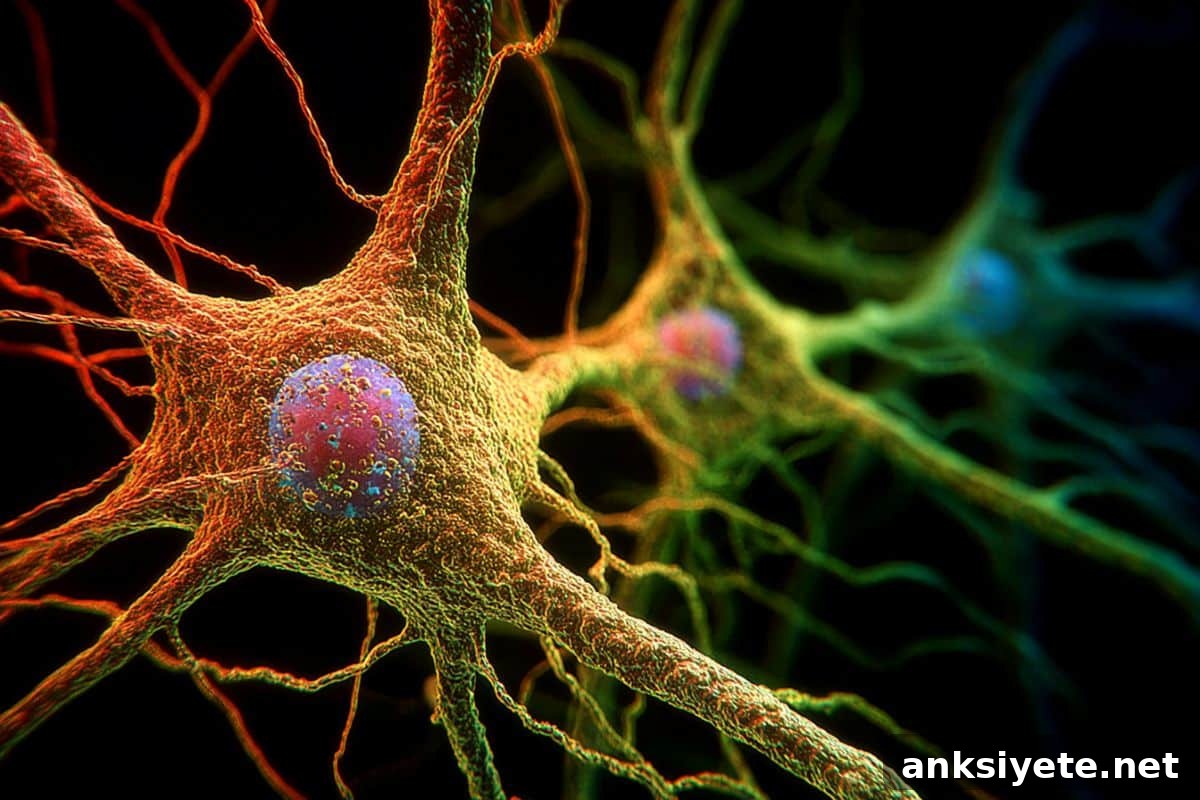
Summary: For decades, neuroscientists thought that learning made the brain more efficient by forcing neurons to act more independently—reducing redundant signals to clarify information. A new study overturns that view.
Researchers found that as we master a skill, sensory neurons become more coordinated, sharing information instead of acting in isolation. This coordinated activity helps the brain combine incoming sensory data with internal expectations, producing perception that is both more robust and more flexible.
Key Facts
- The Coordination Shift: Learning increases shared activity among neurons, especially during active decision-making.
- Predictive Inference: Sensory areas do more than passively encode inputs — they integrate incoming data with expectations formed from past experience.
- Active Engagement Required: Increased coordination appears only during active tasks; it disappears during passive viewing.
- Flexible Mechanisms: These changes are transient and appear to be guided by feedback from higher-level brain regions, allowing on-the-fly adjustment.
- AI Implications: The findings suggest AI could become more human-like by adding generative feedback loops that let systems learn faster from smaller datasets.
Source: University of Rochester
When you improve at a skill—recognizing a familiar face in a crowd, spotting a typo instantly, or predicting a move in a game—sensory neurons in your brain tend to coordinate more, sharing information rather than becoming more independent.
That is the conclusion of a study by researchers at the University of Rochester and the Del Monte Institute for Neuroscience, published in Science. The study challenges the long-standing assumption that learning enhances efficiency by reducing redundancy across neural signals.
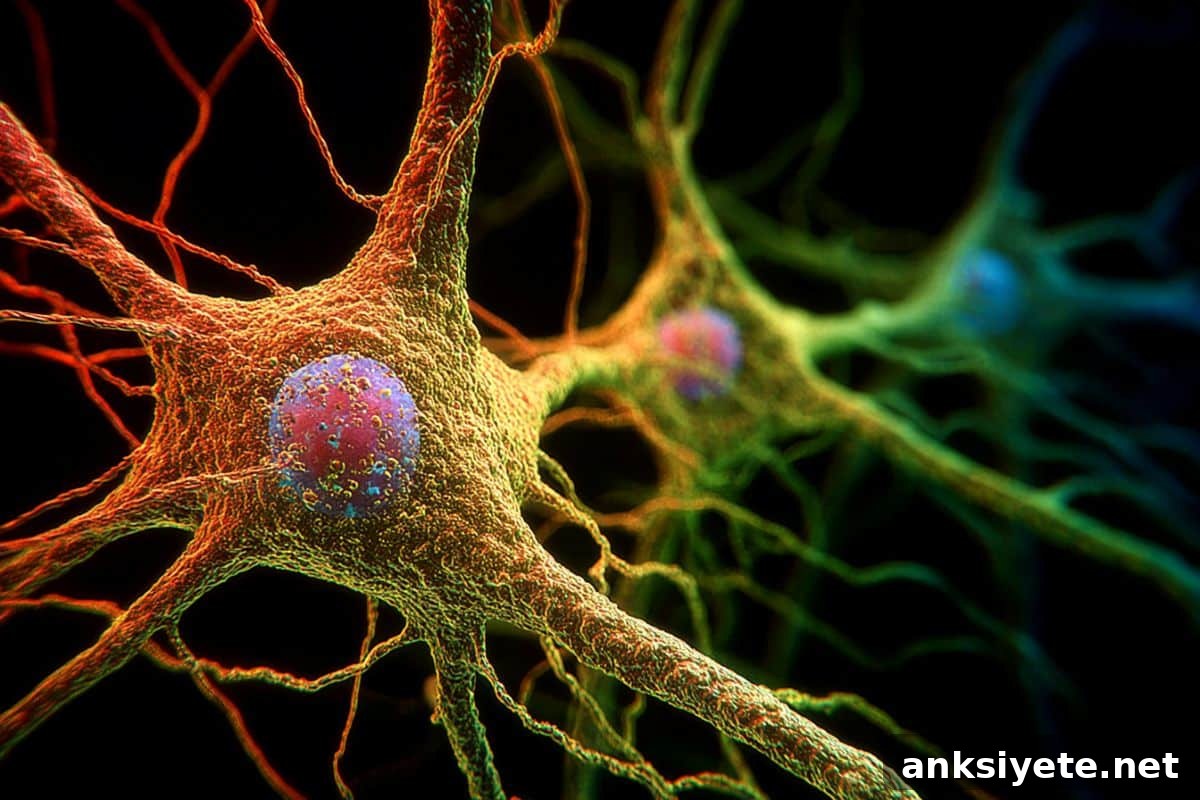
Led by Shizhao Liu, a graduate student working with Ralf Haefner and Adam Snyder in the Department of Brain and Cognitive Sciences, the team demonstrated that learning increases shared neural activity. Their results offer new perspectives on perceptual learning, potential causes of learning difficulties, and design principles for more adaptable artificial intelligence.
“The dominant view has been that learning makes the brain more efficient by making neurons act independently so information can be read out more clearly,” Liu explains. “Our results support a different idea: sensory areas actively combine incoming signals with learned expectations to perform inference.”
How learning reshapes neural teamwork
For many years, the prevailing belief held that learning streamlined sensory processing by reducing correlations among neurons, which would improve coding efficiency. This new work points to an alternative mechanism. Instead of reducing overlap, learning appears to increase coordination across neurons, especially at times when the brain is making decisions.
As training progresses, feedback from higher-level brain regions appears to influence how sensory neurons respond. The result is a system that blends sensory evidence with prior expectations, using coordinated neural patterns to form more reliable perceptual judgments.
Tracking neurons during learning
The team recorded activity from the same small populations of neurons in visual cortex over several weeks as subjects learned to discriminate visual patterns. Early in training, neurons behaved largely independently. As proficiency increased, neurons began to share more task-related information, coordinating their activity much like members of a well-practiced team.
“Think of it like a group solving a problem,” Snyder says. “Instead of everyone working in isolation, learning encourages communication. That shared information can make each unit better informed and the network more adaptable.”
Crucially, this coordination appeared only during active engagement: when subjects were required to make decisions based on stimuli. When the same images were viewed passively, without a task requirement, the coordinated pattern largely vanished. Neurons most important to task performance showed the strongest increases in shared activity, particularly at decision moments.
These coordination changes are not permanent rewiring; they are flexible and likely guided by feedback signals from higher-level regions, enabling neurons to change their responses based on current demands.
Collectively, the findings support a view of cortical processing as bidirectional inference: sensory areas combine incoming data with expectations formed by prior experience, and this integration relies on groups of neurons acting together.
Implications for health and artificial intelligence
Understanding how learning alters neural coordination could shed light on developmental and perceptual disorders where these mechanisms may be disrupted. It also points to design strategies for AI: rather than relying solely on feedforward discriminative models, incorporating generative feedback—where internal models shape sensory representations—may improve learning speed, robustness to uncertainty, and adaptability to new tasks.
“Most current AI maps inputs directly to outputs,” Haefner says. “Our study suggests that adding feedback loops—internal models that influence how new data are represented—could let systems generalize from less data and handle ambiguous situations more like humans do.”
Frequently asked questions
A: The older efficiency model assumed redundancy is wasteful. But redundancy here acts like teamwork: shared signals make the system more tolerant of uncertainty and help maintain reliable representations under noisy or ambiguous conditions.
A: The study found that coordination increases only during active engagement. If you passively view stimuli without making decisions, the coordination effect is not observed.
A: Current AI is often feedforward. Incorporating feedback or generative components that let internal models shape sensory representations could improve learning efficiency and robustness.
Editorial notes
- This article was edited by a Neuroscience News editor.
- The journal paper was reviewed in full.
- Additional context was added by editorial staff.
About this research
Author: Lindsey Valich
Source: University of Rochester
Contact: Lindsey Valich – University of Rochester
Image credit: Neuroscience News
Original research: Task learning increases information redundancy of neural responses in macaque visual cortex. DOI: 10.1126/science.adw7707. The study is open access.
Abstract
Task learning increases information redundancy of neural responses in macaque visual cortex
Introduction
How does the brain convert sensory input into perception and behavior? The classic model treats perception as largely feedforward: signals flow from early sensory areas to higher regions where behaviorally relevant information becomes explicit. Feedback was viewed as a modest tuning mechanism. In contrast, generative inference proposes that sensory processing is bidirectional: neurons represent beliefs about causes in the world that are constantly updated by combining sensory evidence with prior expectations.
Rationale
Generative inference predicts that learning should increase the sharing of task-related information among sensory neurons—raising redundancy—whereas the classic model predicts that learning and attention should reduce redundancy to improve coding efficiency. To test these opposing predictions, the study recorded neural activity chronically from area V4 in macaques learning orientation discrimination tasks and measured changes in information redundancy over weeks.
Results
At the start of training, redundancy was near zero, indicating largely independent responses. With training, redundancy rose so that approximately half of each neuron’s information was shared with other recorded neurons. Redundancy also increased dynamically within trials, consistent with the gradual accumulation and sharing of information. These increases did not reduce total population information; individual-neuron information also grew. Learning-related increases were stronger during active task performance than during passive viewing.
Conclusion
Learning a perceptual task increases information redundancy among sensory neurons, challenging the traditional view that learning removes correlated variability. Instead, learning redistributes information across neurons through feedback and recurrent interactions, enabling consistent inferences about the world. These results support a model of cortical processing as dynamic inference that integrates prior expectations with sensory evidence.