
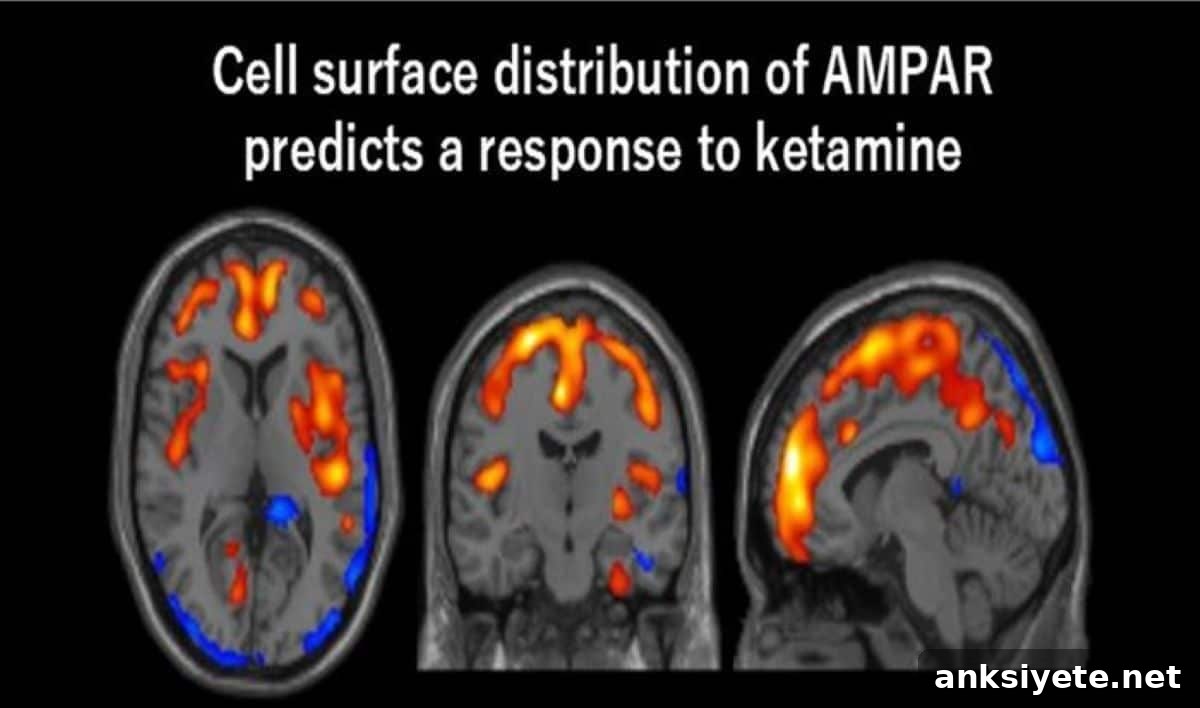
Summary: Ketamine has been recognized for years as a rapid-acting treatment for depression, yet its precise action in the human brain remained unclear. A new study using a world-first PET imaging tracer now reveals how ketamine produces swift antidepressant effects by altering AMPA receptor dynamics and restoring synaptic plasticity in specific brain regions.
Researchers directly visualized AMPA receptors (AMPARs) in living patients and showed that ketamine’s therapeutic effects come from region-specific redistribution of these receptors. The findings tie molecular changes to clinical improvement and point toward AMPAR PET imaging as a potential biomarker for personalized treatment of treatment-resistant depression (TRD).
Key facts
- AMPAR mechanism: Ketamine modulates the density and surface availability of AMPA receptors, proteins essential for synaptic communication, plasticity, and mood regulation.
- The [¹¹C]K-2 PET tracer: A novel radiotracer, [¹¹C]K-2, enabled the first in vivo visualization of cell-surface AMPARs in the human brain, linking preclinical findings to patients.
- Region-specific effects: Ketamine increases AMPAR density in cortical regions involved in cognition while reducing AMPAR availability in subcortical reward-related areas, notably the habenula, a structure associated with negative valuation and disappointment.
- Treatment-resistant depression: The study focused on patients who had not improved with standard antidepressants, supporting ketamine’s role as an effective option for a significant subgroup of TRD patients.
- Precision psychiatry: AMPAR PET imaging could become a predictive biomarker for ketamine response, opening the door to more targeted, individualized treatment strategies.
Source: Yokohama City University
Background: Major depressive disorder (MDD) is a leading cause of disability worldwide, and roughly 30% of people with depression develop treatment-resistant depression (TRD), failing to respond to standard antidepressant therapies. Ketamine has emerged as a fast-acting alternative for many of these patients, but its exact molecular mechanism in humans has been uncertain, limiting efforts to optimize dosing and select patients most likely to benefit.
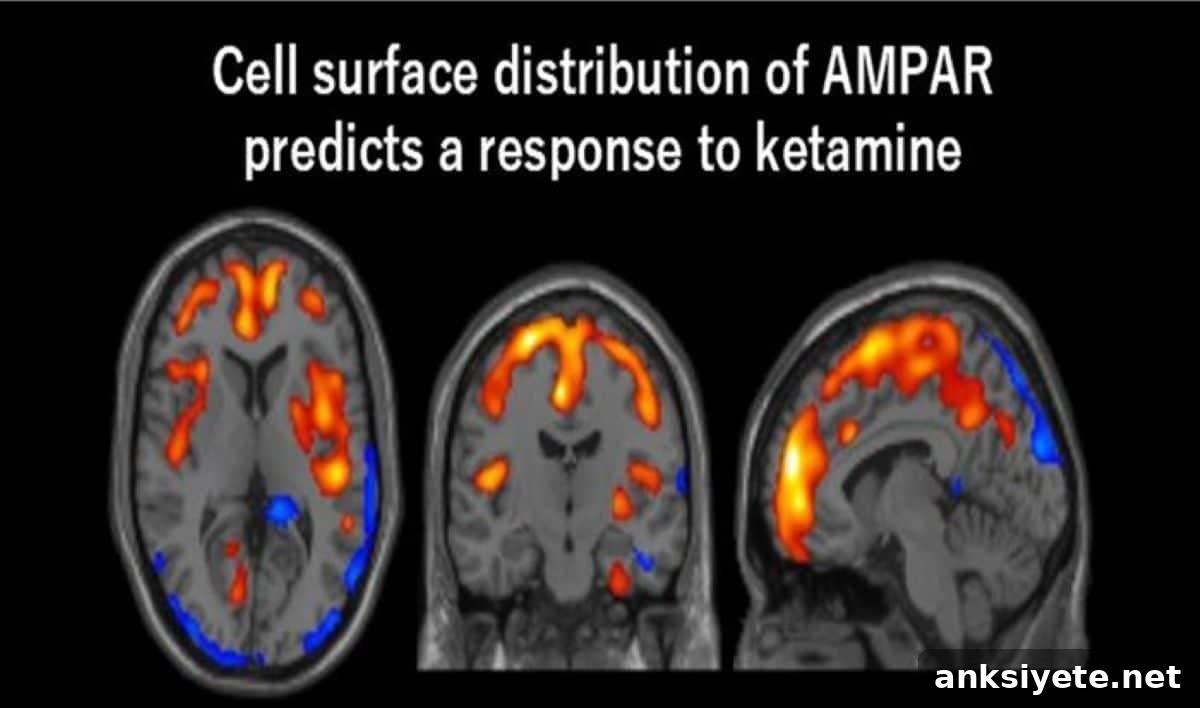
In research published in Molecular Psychiatry on March 5, 2026, Professor Takuya Takahashi and colleagues from Yokohama City University used an innovative PET imaging approach to measure changes in glutamate AMPA receptor (AMPAR) density in patients treated with ketamine. The study provides the first direct human evidence that AMPAR dynamics underlie ketamine’s rapid antidepressant effects.
“Although ketamine has shown rapid antidepressant effects in patients with treatment-resistant depression, its molecular mechanism in the human brain has remained unclear,” Prof. Takahashi noted. The team’s previously developed PET tracer, [¹¹C]K-2, makes it possible to visualize cell-surface AMPARs in vivo and directly test hypotheses that were previously limited to animal models.
The analysis combined data from three registered clinical trials in Japan, including 34 patients with TRD and 49 healthy control participants. Patients received intravenous ketamine or placebo across a two-week treatment period. PET scans were taken before starting treatment and after the final infusion, allowing the team to compare baseline AMPAR distribution and ketamine-induced changes.
Key results showed that patients with TRD had widespread, region-specific AMPAR alterations compared with healthy controls. Importantly, ketamine did not produce uniform increases or decreases across the brain. Instead, clinical improvement correlated with dynamic, region-specific modulation: AMPAR density rose in multiple cortical regions while falling in reward-related areas such as the habenula. These localized shifts in AMPAR availability correlated strongly with reductions in depressive symptoms.
“Ketamine’s antidepressant effect in patients with TRD is mediated by dynamic changes in AMPAR in the living human brain,” Prof. Takahashi explained. “Using the novel PET tracer [¹¹C]K-2, we were able to visualize how ketamine alters AMPAR distribution across specific brain regions and how these changes correlate with improvements in depressive symptoms.”
Translationally, the findings close a gap between laboratory models and clinical psychiatry by confirming that AMPAR modulation is central to ketamine’s therapeutic action. Clinically, AMPAR PET imaging has potential as a biomarker to evaluate and predict patient response to ketamine, which could guide clinicians toward more personalized, effective treatment plans for TRD.
Beyond ketamine, the identification of AMPARs as a core molecular target suggests avenues for novel therapeutics that directly engage AMPAR signaling, potentially delivering antidepressant benefits without ketamine’s dissociative effects.
Key questions answered
A: At controlled, clinical doses ketamine appears to act like a “fertilizer” for synapses. Depressed brains often show weakened synaptic connections; ketamine helps restore or redistribute AMPA receptors so neurons can reestablish effective communication, producing symptom relief within hours instead of weeks.
A: The [¹¹C]K-2 tracer functions like a high-definition camera for AMPARs, enabling direct observation of receptor distribution and movement in living human brains. That direct visualization validates mechanisms inferred from animal studies and sharpens our understanding of human antidepressant response.
A: Yes. By confirming AMPARs as a central player in rapid antidepressant effects, the study encourages development of drugs that target AMPAR signaling more selectively, which may avoid some side effects associated with ketamine.
Editorial notes
- This article was edited by a Neuroscience News editor.
- The full journal paper was reviewed for accuracy.
- Additional context was added by editorial staff.
About this ketamine and depression research news
Author: Public Relations Division
Source: Yokohama City University
Contact: Public Relations Division – Yokohama City University
Image: Credit to Professor Takuya Takahashi, Yokohama City University Graduate School of Medicine, and Dr. Hiroyuki Uchida, Keio University School of Medicine, Japan.
Original research: Open access. “The dynamics of AMPA receptors underlies the efficacy of ketamine in treatment resistant patients with depression” by Waki Nakajima et al., Molecular Psychiatry. DOI: 10.1038/s41380-026-03510-w
Abstract
The dynamics of AMPA receptors underlies the efficacy of ketamine in treatment-resistant patients with depression
Approximately 30% of patients with depression experience treatment-resistant depression (TRD). Ketamine has demonstrated antidepressant efficacy in TRD, but how ketamine alters AMPA receptor (AMPAR) dynamics in human patients has remained unclear. Using the PET tracer [¹¹C]K-2, which images AMPAR density in living human brains, the study found a negative correlation between AMPAR density and illness severity and distinct AMPAR distribution differences between TRD patients and healthy participants.
The research identified brain regions where ketamine-induced changes in AMPAR density significantly correlated with antidepressant benefit. In those regions the AMPAR alterations partially restored AMPAR characteristics toward healthier patterns, supporting the conclusion that AMPAR dynamics underlie ketamine’s antidepressant action in patients with TRD.