
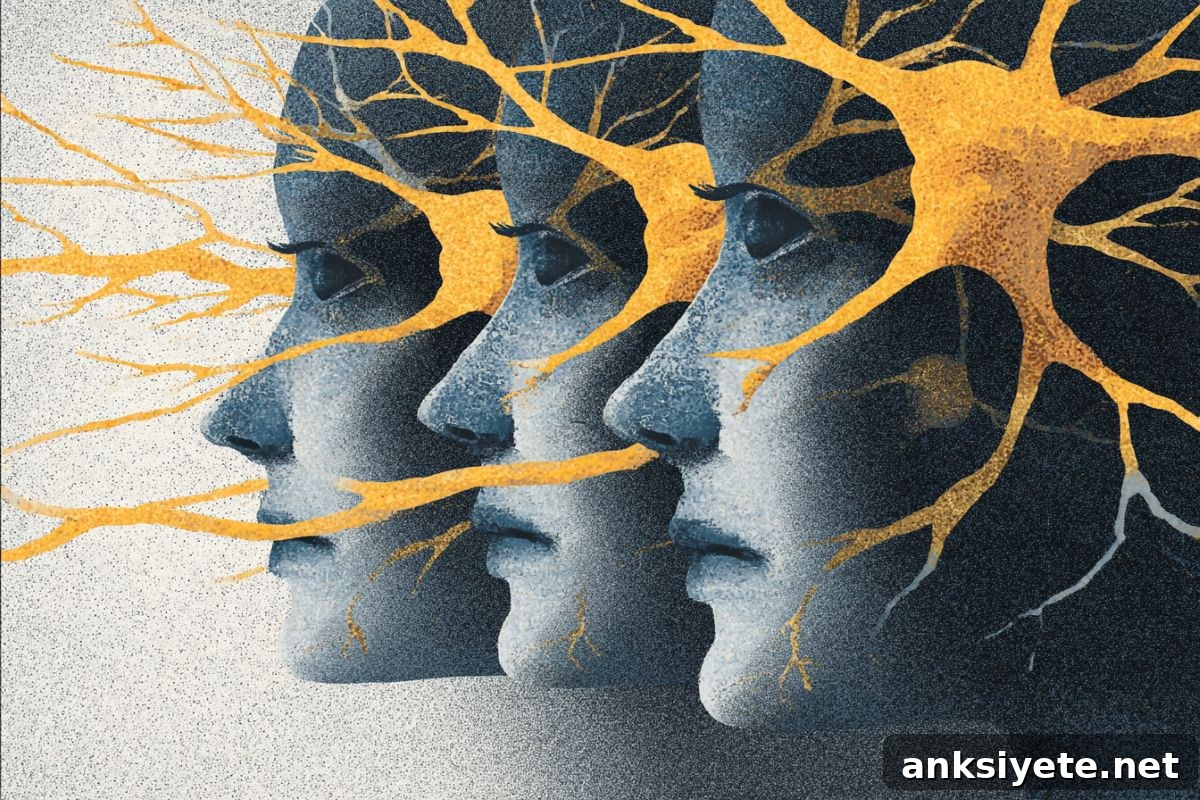
Summary: For decades, schizophrenia treatment has relied mainly on drugs that target dopamine, but these medications often fail to relieve the disorder’s most disabling cognitive and negative symptoms. A recent comprehensive review synthesizes advances in neurobiology and charts a path toward a new generation of therapies that aim to address underlying mechanisms rather than only suppressing positive symptoms.
Emerging strategies range from TAAR1 agonists such as Ulotaront and muscarinic M1/M4 modulators like KarXT, to NMDA receptor enhancers, anti-inflammatory approaches, and interventions that target the gut‑brain axis. Together, these lines of research move the field beyond symptom management toward treatments that target neurodevelopmental, immune, and circuit-level causes of schizophrenia.
Key Facts
- Beyond Dopamine: Traditional antipsychotics primarily block dopamine receptors. The review highlights promising alternatives such as TAAR1 agonists (for example, Ulotaront) and muscarinic M1/M4 modulators (for example, KarXT) that act on different neurotransmitter systems.
- Cognitive Focus: Cognitive impairment is a major driver of disability in schizophrenia. New agents that enhance NMDA receptor function, including molecules like Iclepertin, are being developed specifically to improve memory, attention, and executive function.
- Immune and Gut Connections: The review underscores immune dysregulation and the gut‑brain axis as important contributors. Anti‑inflammatory therapies and targeted probiotics are under investigation as adjuncts that may reduce systemic inflammation and improve psychiatric outcomes.
- Multimodal Precision: Advances in neuroimaging, electrophysiology, and multi‑omics are enabling more precise tracking of disease progression and the development of individualized treatment strategies.
- Holistic Mechanisms: Schizophrenia involves genetic vulnerability, disrupted neurodevelopment, and neurotransmitter imbalances. Effective future therapies will likely combine pharmacological, immunological, and psychosocial approaches tailored to each patient’s biology.
Source: Science China Press
Schizophrenia remains one of the most complex psychiatric disorders, affecting thinking, emotion, and social functioning.
In a recent, wide‑ranging review led by researchers at Peking University Sixth Hospital, investigators analyzed current evidence on the biology of schizophrenia and the implications for new treatments. The authors integrate findings across neurotransmitter systems, neurodevelopmental research, genetics, and immune studies to identify targets that could yield better outcomes for patients.
The review reiterates that while dopamine‑blocking antipsychotics remain essential for treating positive symptoms such as hallucinations and delusions, they often leave negative symptoms and cognitive deficits unaddressed. Persistent social withdrawal, reduced motivation, and impaired cognition are major sources of long‑term disability and require targeted interventions.
Highlighted therapeutic directions include TAAR1 agonists (which modulate monoaminergic signaling without direct dopamine receptor blockade), muscarinic M1/M4 receptor modulators (to rebalance cholinergic function), and NMDA receptor enhancers (to restore glutamatergic signaling implicated in cognition). The authors also discuss adjunct strategies such as anti‑inflammatory agents and microbiome‑focused treatments that aim to reduce systemic and neural inflammation.
Complementing pharmacology, the review emphasizes technological advances—high‑resolution neuroimaging, electrophysiological biomarkers, and multi‑omics profiling—that can identify subtypes of illness, monitor progression, and guide precision medicine approaches. These tools make it increasingly feasible to match treatments to the biological mechanisms operating in individual patients.
Taken together, these insights point to a future where schizophrenia care integrates early intervention, mechanism‑based pharmacology, immune modulation, microbiome interventions, and personalized psychosocial support to improve both symptoms and long‑term functioning.
Key Questions Answered:
A: Most current medications focus on dopamine blockade, which reduces positive symptoms like hallucinations but has limited impact on negative and cognitive symptoms such as social withdrawal, apathy, and impaired memory. The review argues that effective treatment will require targeting multiple receptor systems and biological pathways.
A: TAAR1 agonists are a newer class of drugs that modulate monoamine systems through trace amine‑associated receptor 1. They can influence neurotransmission indirectly and may offer antipsychotic benefits with a lower risk of side effects like metabolic change or movement disorders.
A: Research increasingly links gut microbiota and intestinal inflammation to brain function via immune signaling and metabolic pathways. Modifying the gut microbiome with probiotics or other interventions could reduce systemic inflammation and indirectly improve mood, cognition, and psychiatric symptoms.
Editorial Notes:
- This article was edited by a Neuroscience News editor.
- The journal paper was reviewed in full.
- Additional context was provided by editorial staff.
About this psychopharmacology and schizophrenia research news
Author: Bei Yan
Source: Science China Press
Contact: Bei Yan – Science China Press
Image: Image credit: Neuroscience News
Original Research: Closed access. Title: “Schizophrenia: from mechanism to therapy” by Zhe Lu, Junyuan Sun, Guorui Zhao, Yunqing Zhu, Rui Yuan, Jingying Zhou, Dai Zhang & Weihua Yue. Published in Science China Life Sciences. DOI: 10.1007/s11427-025-2990-0
Abstract
Schizophrenia: from mechanism to therapy
Schizophrenia is a complex psychiatric condition marked by hallucinations, delusions, cognitive impairment, and social dysfunction. Its causes reflect an interplay among neurochemical dysregulation, altered neurodevelopment, genetic risk factors, and immune system changes.
Although significant research has advanced understanding, the precise origins and progression of schizophrenia remain incompletely defined. Neurochemical hypotheses emphasize disturbances in dopamine and glutamate signaling that correlate with core symptoms. Neurodevelopmental models implicate prenatal and perinatal events that disrupt maturation of prefrontal and hippocampal circuits.
Genome‑wide studies and family data point to heritable risk, while a growing body of evidence links immune dysfunction and inflammation to disease onset and course. Current therapies still rely largely on dopamine‑targeting antipsychotics, which vary in effectiveness and frequently fail to address negative and cognitive deficits.
Progress in delineating the multifactorial biology of schizophrenia is essential to create more effective, mechanism‑based treatments. The review highlights opportunities for early intervention, personalized medicine, and novel pharmacological and psychosocial strategies that together could improve long‑term outcomes for people living with schizophrenia.
This study synthesizes recent neurobiological findings and discusses their implications for next‑generation treatments and precision psychiatry approaches to psychotic disorders.