
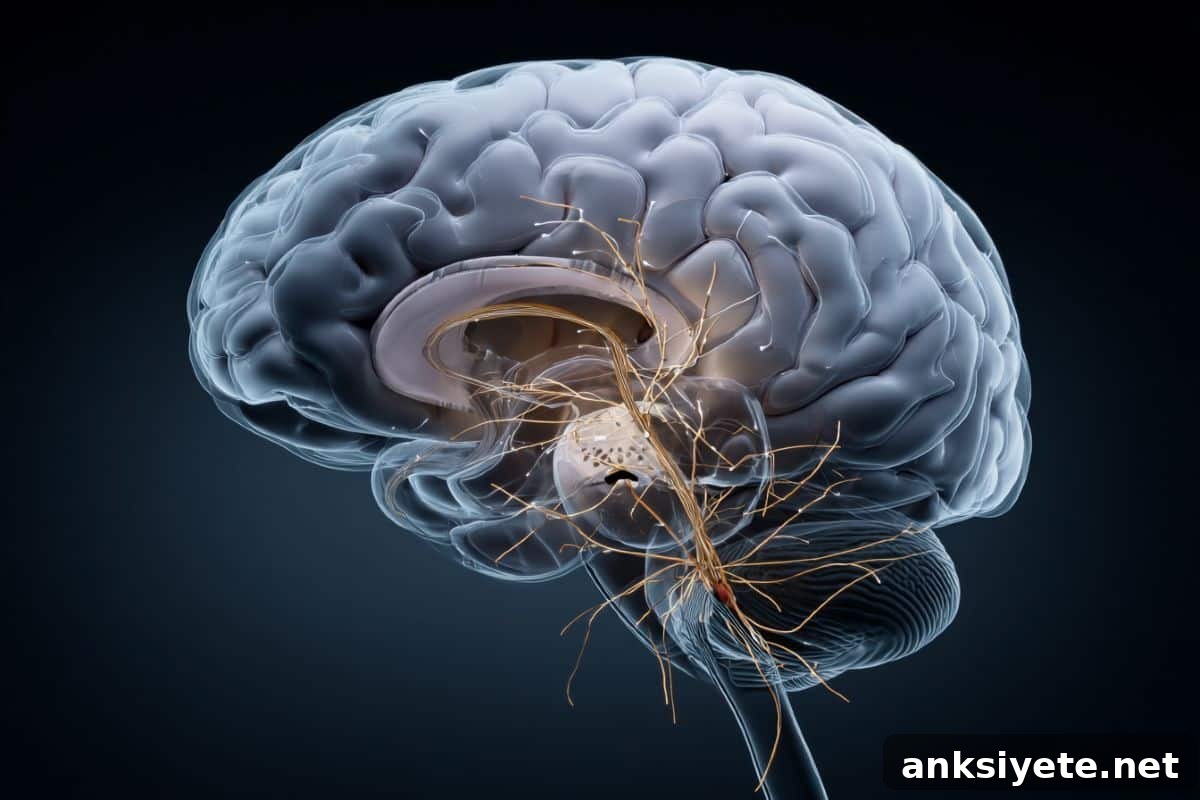
Summary: Researchers have discovered a reliable pattern of high-frequency activity in the anteromedial orbitofrontal cortex (amOFC) that strongly correlates with compulsive behaviors in people with obsessive-compulsive disorder (OCD). In three individuals with severe, treatment-resistant OCD, brief, targeted deep brain stimulation (DBS) disrupted this signal and produced rapid symptom relief.
These results support the idea that OCD symptoms can be driven by abnormal frontal-cortex circuitry and point toward more precise, responsive DBS systems that activate only when pathological signals arise.
Key facts
- Frontal-cortex signal: Abnormally elevated high-frequency (low-gamma) activity in the right anteromedial orbitofrontal cortex (amOFC) tracks with compulsive symptoms.
- Rapid symptom relief: Targeted stimulation of deep brain regions reduced that pathological activity and quickly eased compulsive behaviors in three patients who had not improved with standard treatments.
- Path to responsive DBS: The identified signal could be used to build next-generation DBS systems that monitor brain activity and deliver stimulation only when OCD-related biomarkers are detected.
Source: University of Pennsylvania
Overview
New intracranial monitoring in humans has revealed that a distinct pattern of elevated low-gamma power in the anteromedial orbitofrontal cortex is reliably present during symptomatic episodes of OCD. The amOFC is a frontal region implicated in evaluating risk and reward and guiding decision-making. Disruption of its normal activity appears to be associated with the intrusive thoughts and repetitive actions that characterize OCD.
What the study did
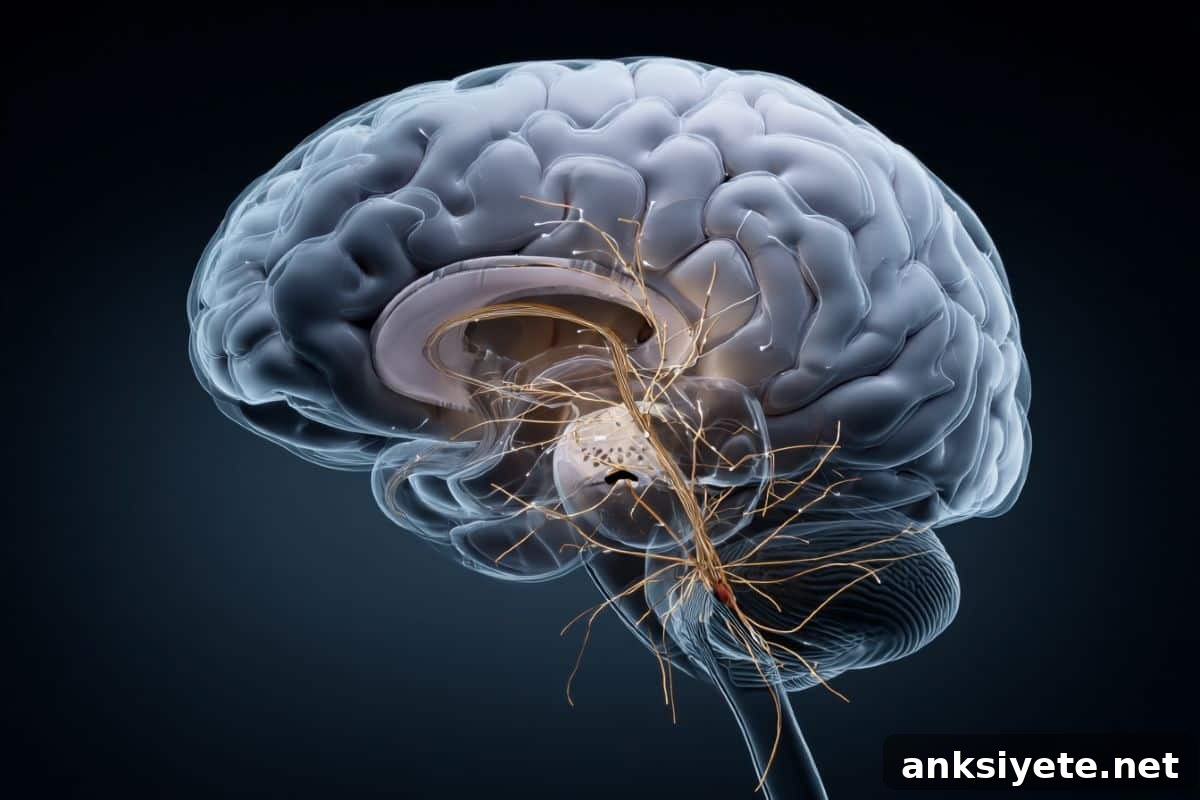
The research team implanted recording and stimulation electrodes in three patients with severe, treatment-resistant OCD who had not responded adequately to medication or psychotherapy. Electrodes targeted a deep brain region on the right side — the nucleus accumbens–ventral pallidum area — that is interconnected with frontal circuits involved in motivation, habit formation, and decision-making.
With probes in place, clinicians used symptom-provocation tasks, including verbal prompts and controlled exposure to triggers (for example, asking a contamination-sensitive participant to touch unclean objects). During these tasks the team recorded high-resolution brain activity across frontal regions and the implanted deep-brain sites.
Key findings
Across all three patients, heightened low-gamma power in the right amOFC tracked closely with moments when compulsive thoughts and behaviors emerged. When clinicians applied brief, targeted electrical stimulation to the ventral basal ganglia region, patients showed rapid reductions in both the amOFC low-gamma signal and their observable compulsive behaviors.
These results connect moment-to-moment fluctuations in orbitofrontal cortex activity with the expression of OCD symptoms and demonstrate that brief, focal stimulation can interrupt that pathological signal and relieve symptoms quickly.
Implications for treatment
OCD affects an estimated two percent of people in the United States and ranges from moderate to profoundly disabling. Standard treatments include selective serotonin reuptake inhibitors (SSRIs) and cognitive behavioral therapy (CBT), but roughly 30 percent of patients do not respond adequately to these approaches.
Since 2009, continuous deep brain stimulation has been available under a regulatory humanitarian exemption for severe, treatment-resistant OCD. Continuous DBS disrupts abnormal activity in circuits connecting the frontal cortex and basal ganglia and benefits many patients, but it delivers stimulation constantly rather than only when symptoms appear.
Identifying a reliable neural biomarker — the amOFC low-gamma signal — opens the possibility of responsive DBS: systems that monitor brain signals and provide stimulation only when pathological activity is detected. Such an approach could reduce unnecessary stimulation, improve side-effect profiles, and offer more personalized therapy tailored to each patient’s symptom dynamics.
The study’s authors emphasize their goal of refining electrode placement and developing signal-driven, closed-loop DBS devices that optimize efficacy while minimizing stimulation time.
Funding: National Institutes of Health (NCT05623306), the Foundation for OCD Research (FFOR), and AE Foundation.
Frequently asked questions
Q: Which brain region is linked to OCD compulsions?
A: Elevated low-gamma activity in the right anteromedial orbitofrontal cortex (amOFC) was consistently associated with compulsive symptoms during provocation tasks.
Q: How did deep brain stimulation affect symptoms?
A: Short, targeted stimulation of ventral basal ganglia regions reduced the amOFC signal and rapidly eased compulsive behaviors in the three patients studied.
Q: What is responsive DBS?
A: Responsive DBS refers to devices that continuously monitor neural activity and deliver stimulation only when a detected biomarker indicates a pathological state, rather than providing constant stimulation.
Editorial notes
- This article was edited by a Neuroscience News editor.
- Journal paper reviewed in full.
- Additional context added by staff.
About this research
Author: Kelsey Geesler
Source: University of Pennsylvania
Contact: Kelsey Geesler – University of Pennsylvania
Image credit: Neuroscience News
Original research (open access): “Human orbitofrontal neural activity is linked to obsessive-compulsive behavioral dynamics” by Young-Hoon Nho et al., published in Cell. DOI: 10.1016/j.cell.2025.12.037.
Abstract summary
The study sought neurophysiologic biomarkers that reflect moment-to-moment OCD symptom dynamics. Intracranial recordings identified consistently elevated low-gamma power in the anteromedial orbitofrontal cortex during high-symptom states. Electrical stimulation of the ventral basal ganglia that reduced symptoms also reduced amOFC gamma power, linking orbitofrontal activity to real-time expression of OCD behaviors and informing therapeutic strategies such as closed-loop DBS.