
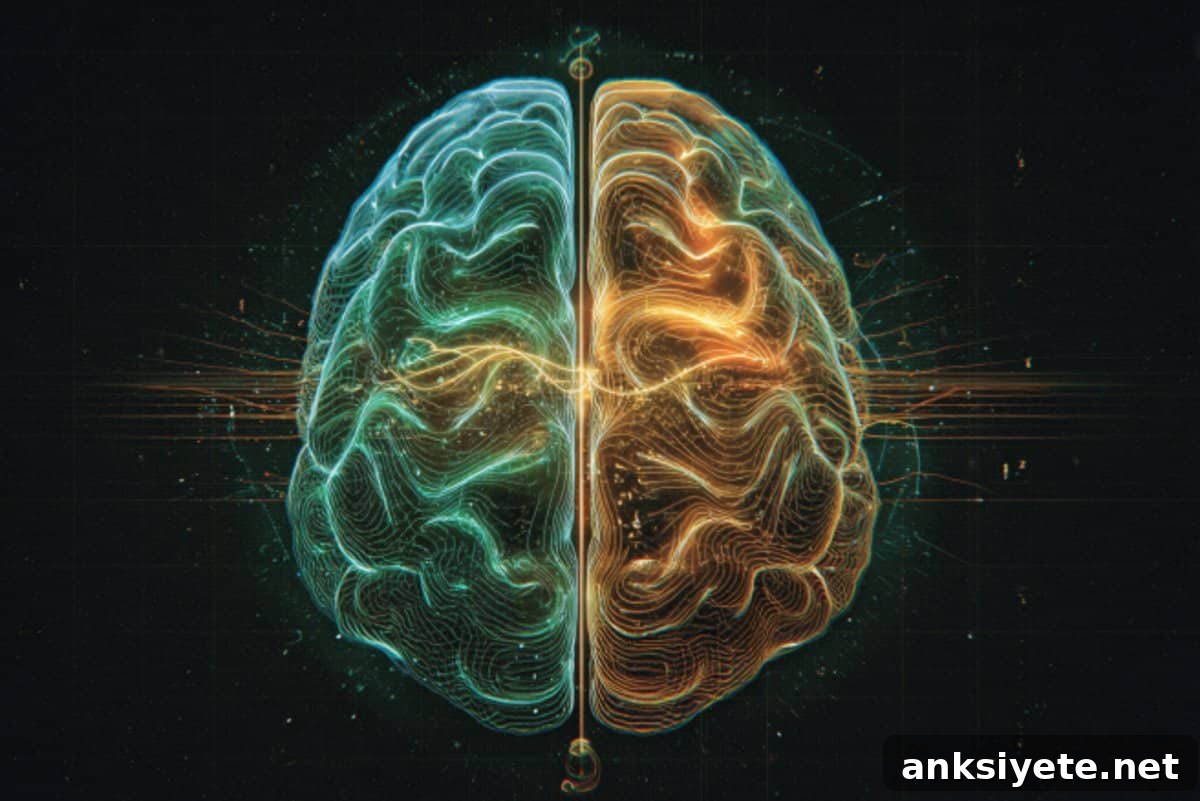
Summary: A new Picower Institute study reveals how the brain maintains a unified visual experience as objects move between the left and right visual fields. By recording individual neuron spikes and brain-wave frequencies, researchers found distinct oscillatory patterns that anticipate, execute, and confirm the transfer of object information between hemispheres.
High-frequency gamma and beta rhythms encoded the sensory details, while lower-frequency alpha waves rose just before the transfer and theta waves peaked afterward to signal completion. The findings show perception is actively coordinated across hemispheres rather than simply restarted on the other side, with implications for understanding disorders where interhemispheric coordination can fail.
Key Facts
- Wave coordination: Gamma and beta frequencies encode sensory information; alpha and theta waves orchestrate the handoff between hemispheres.
- Shared representation: Both hemispheres briefly represent the same object during the transfer, ensuring a seamless perceptual experience.
- Clinical relevance: The mechanisms described may help explain interhemispheric coordination problems reported in conditions such as schizophrenia, autism, dyslexia, depression, and multiple sclerosis.
Source: Picower Institute at MIT
How the brain keeps perception seamless across two hemispheres
Vision is split across the brain: stimuli in the left visual field are primarily processed by the right hemisphere and vice versa. Despite that division, our experience of moving objects—like a bird or bicycle crossing our view—feels continuous. Neuroscientists at The Picower Institute for Learning and Memory at MIT set out to discover how the brain coordinates that handoff.
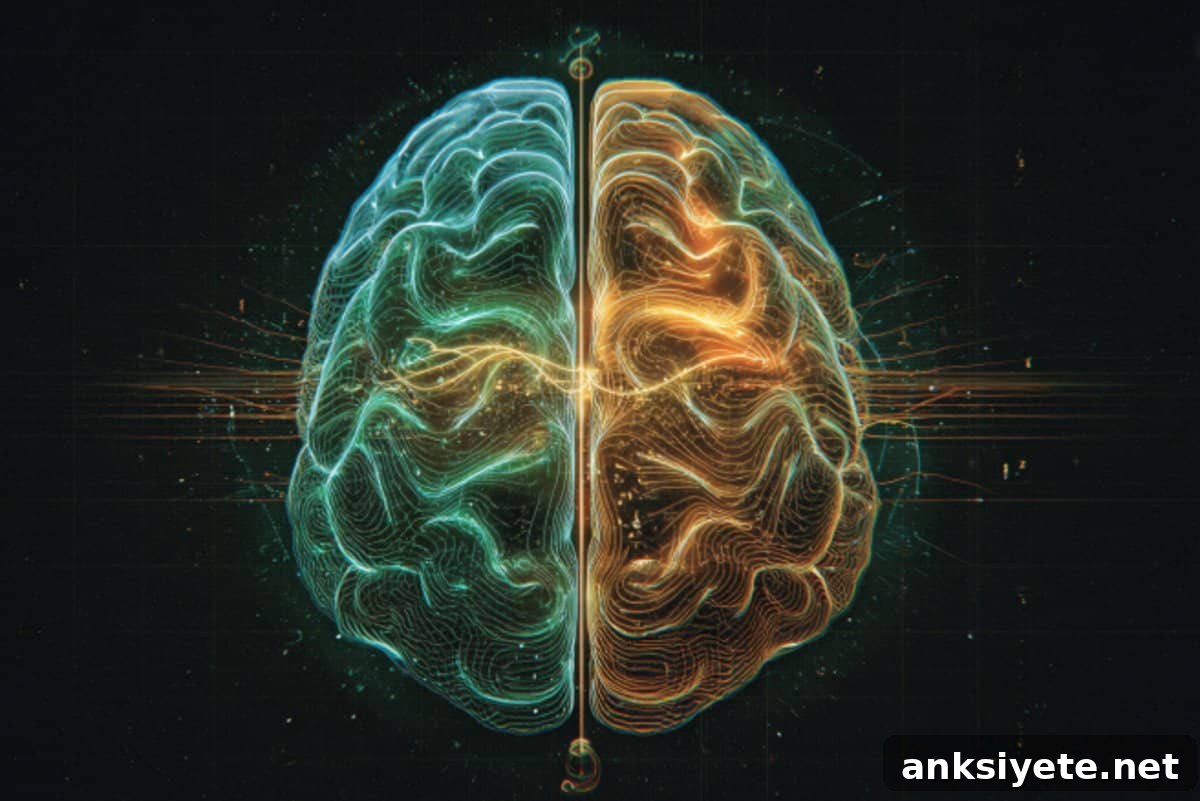
“Many people find it surprising that the hemispheres have some independence, because our conscious perception is unified,” said Earl K. Miller, Picower Professor in The Picower Institute and MIT’s Department of Brain and Cognitive Sciences. Prior work suggests separate processing has benefits—such as tracking multiple items at once—but this study explains how the brain ultimately creates a single perceptual stream.
The team, led by postdoctoral Picower Fellow Matthew Broschard and Research Scientist Jefferson Roy, recorded neural activity while animals tracked objects that crossed the midline of their visual field. They recorded both the spiking of individual neurons and the power changes across brain-wave frequency bands in the lateral prefrontal cortex bilaterally—regions associated with executive functions and attention.
Witnessing the handoff
The researchers designed trials in which a target object crossed from one visual hemifield to the other while a distractor appeared on the opposite side to ensure subjects were attending specifically to the target. Two kinds of measurements revealed the transfer process.
First, gamma (30–80 Hz) waves—linked to sensory encoding—rose in both hemispheres when the display appeared and again when the objects were shown. When the target was indicated (by a color change), gamma activity increased predominantly in the hemisphere opposite the target’s current position, the expected “sending” hemisphere. Beta waves (15–30 Hz), which help regulate gamma activity, varied inversely with gamma and were more prominent in ventrolateral prefrontal sites, reflecting sensory encoding dynamics.
Second, lower-frequency rhythms in dorsolateral prefrontal cortex tracked the handoff process. About a quarter of a second before the target crossed the midline, alpha waves (10–15 Hz) began to rise in both hemispheres and peaked just after the crossing. Theta (4–10 Hz) power then peaked in the “receiving” hemisphere after the cross—an apparent signal that the transfer had completed.
Spike-based decoding confirmed these wave-based signatures. Decoders showed the target representation first emerging in the sending hemisphere’s ventrolateral area after the cue. As the target approached the midline, the receiving hemisphere began to represent the same object, so both hemispheres encoded the target during the transfer. After the crossing, spiking patterns shifted fully to the new, receiving hemisphere, consistent with the theta peak that signaled successful handoff.
When targets did not cross the midline, these anticipatory alpha increases and post-cross theta peaks were absent, reinforcing that these dynamics specifically reflect interhemispheric information transfer.
Overall, the study shows that interhemispheric transfer is an active, coordinated process: the sending hemisphere encodes sensory details with beta–gamma interactions; a dorsolateral alpha ramp in both hemispheres anticipates and mirrors the encoding to prepare the receiving side; and a theta peak in the receiving hemisphere confirms completion of the handoff.
“These results suggest there are active mechanisms that transfer information between cerebral hemispheres,” the authors write. The coordinated “handshaking” limits information loss during transfer—analogous to how cellular towers or relay runners temporarily share a connection or baton until the handoff is secure.
Because failures in interhemispheric coordination have been reported in several neurological and developmental disorders, these findings may help identify the specific dynamics required for successful transfer and where they break down in disease.
In addition to Broschard, Roy and Miller, the paper’s authors include Scott Brincat and Meredith Mahnke.
Funding: Supported by the Office of Naval Research, the National Eye Institute of the National Institutes of Health, The Freedom Together Foundation, and The Picower Institute for Learning and Memory.
About this visual neuroscience research news
Author: David Orenstein
Source: Picower Institute at MIT
Contact: David Orenstein – Picower Institute at MIT
Image credit: Neuroscience News
Original research: Closed access. “Evidence for an active handoff between hemispheres during target tracking” by Earl K. Miller et al., Journal of Neuroscience. DOI recorded in the original publication.
Abstract
Evidence for an active handoff between hemispheres during target tracking
Human vision uses somewhat separate processing resources for left and right visual fields, yet perception is experienced as continuous. This study recorded bilateral lateral prefrontal cortex activity in two male non-human primates while they covertly tracked a target moving from one visual hemifield to the other. Beta (15–30 Hz), gamma (30–80 Hz), and spiking information reflected sensory processing of the target. In contrast, alpha (10–15 Hz), theta (4–10 Hz), and spiking patterns reflected an active handoff of attention as target information transferred between hemispheres. Specifically, alpha power and spiking information ramped up in anticipation of the hemifield cross, while theta power peaked after the cross, signaling its completion. These results support an active interhemispheric handoff mechanism that may minimize information loss during transfer, analogous to a handshake between mobile towers when handing off a call.