
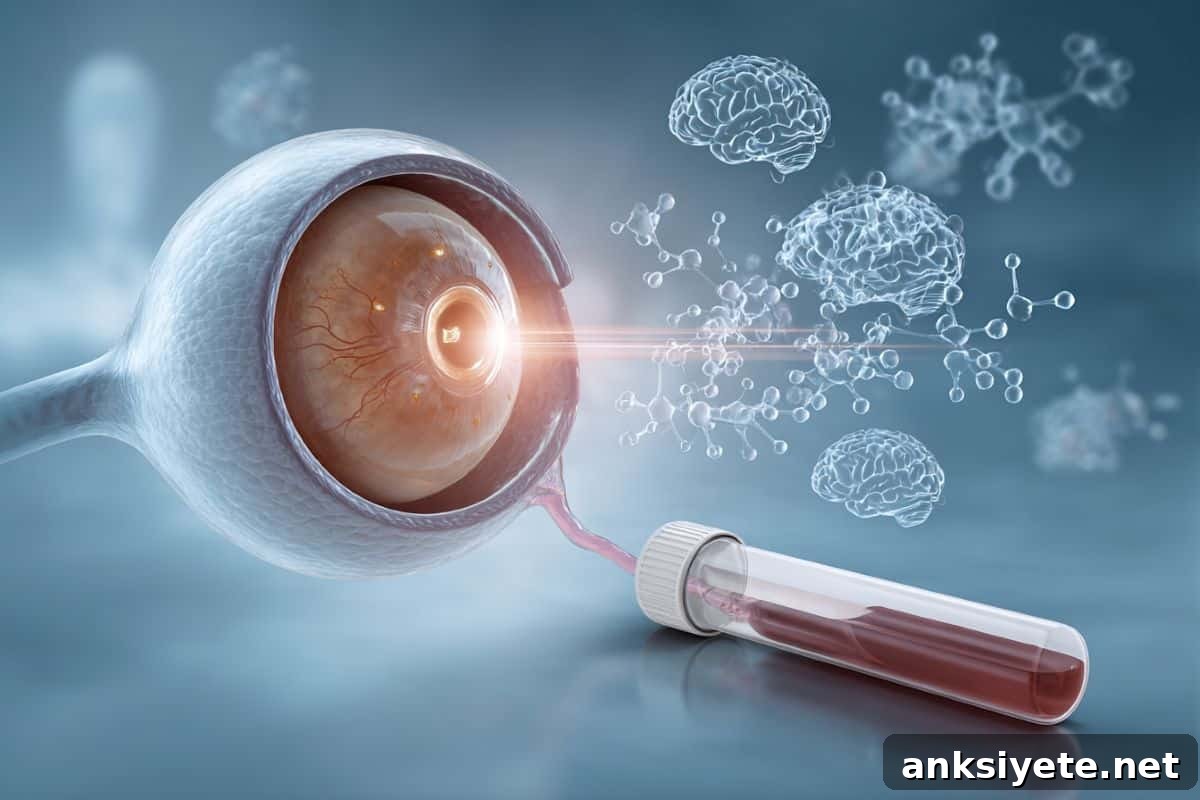
Summary: A new Boston University study finds that SLIT2 protein levels measured in the eye’s vitreous humor and in blood plasma are associated with cognitive performance in middle-aged adults. Specifically, lower SLIT2 in vitreous humor correlated with poorer memory and lower global cognitive scores, while higher SLIT2 in plasma also predicted worse cognitive outcomes. These results point to the potential of ocular biomarkers for early detection of dementia and Alzheimer’s disease.
Although the vitreous humor contained as much as seven times more SLIT2 than plasma, SLIT2 concentrations in the two fluids did not correlate with each other. The distinct patterns for eye and blood SLIT2 highlight the importance of fluid-specific measurements when evaluating biomarkers for neurodegenerative disease risk.
Key Facts
- Dual biomarker sources: SLIT2 measured in both vitreous humor and plasma showed relationships with cognitive test scores.
- Opposing directions: Lower SLIT2 in eye fluid and higher SLIT2 in plasma were both linked to poorer cognition.
- Diagnostic promise: Ocular fluids may offer a novel and sensitive route for early detection of mild cognitive impairment and dementia.
Source: Boston University
Context: Neurodegenerative diseases are characterized by pathological changes that can damage neural tissue, including abnormal protein accumulation. Identifying reliable, minimally invasive biomarkers that signal early cognitive decline is a major research priority.
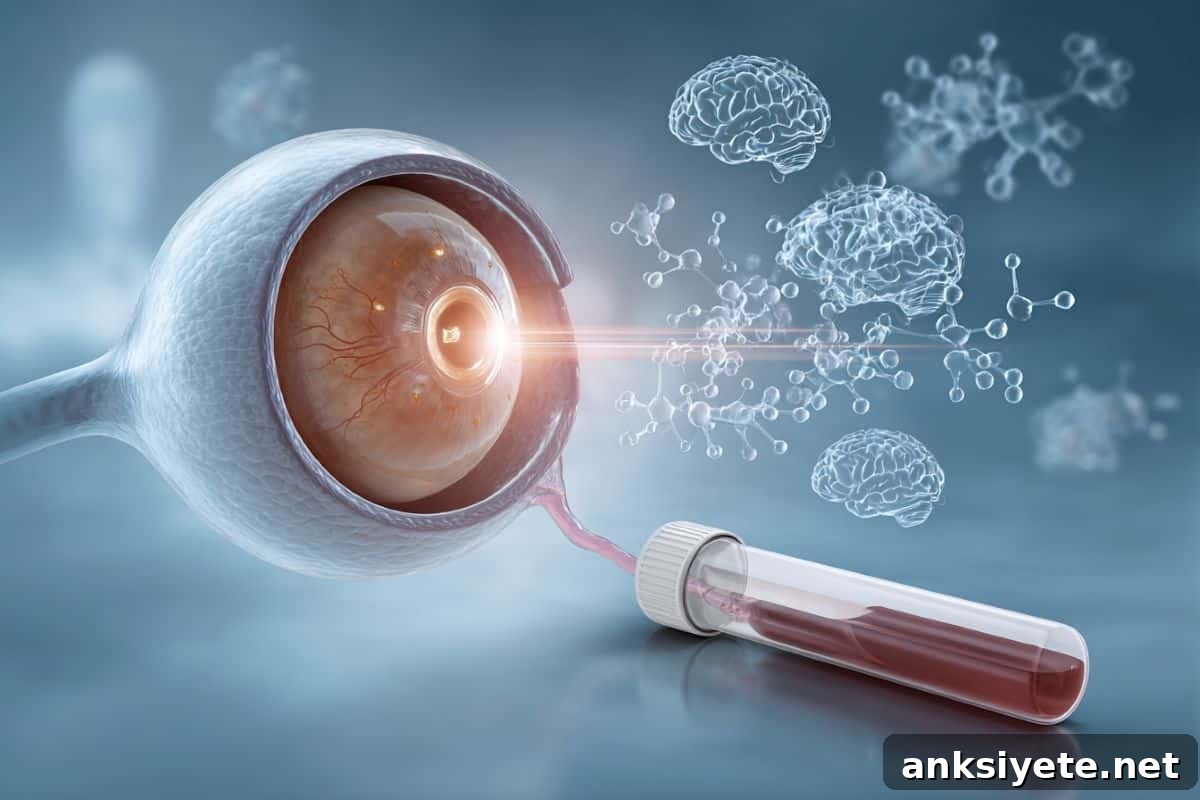
Researchers at Boston University Chobanian & Avedisian School of Medicine and Boston Medical Center analyzed SLIT2 protein levels in vitreous humor and plasma from middle-aged adults and compared those levels with neurocognitive test results. This is the first study to quantify SLIT2 in both fluids using a commercially adaptable, highly sensitive Meso Scale Discovery (MSD) electrochemiluminescence immunoassay and to link those measurements to cognitive performance.
“SLIT2 is highly expressed in the retina, but its relationship to cognitive status had not been explored in eye-derived fluids,” says Manju L. Subramanian, MD, associate professor of ophthalmology and co-corresponding author. “Our findings indicate that ocular fluid analysis may be a promising approach for earlier detection of neurodegenerative disease.”
The study enrolled 79 participants with an average age of about 56 years (mean 55.8 ± 12.0). Each participant underwent eye surgery during which vitreous humor was collected; blood samples were collected to obtain plasma. Neurocognitive performance was evaluated using standardized tests, including the Montreal Cognitive Assessment (MoCA) and measures of verbal memory such as the Immediate Recall Verbatim z-score.
Samples were assayed with a custom MSD SLIT2 immunoassay, which applies antigen–antibody electrochemiluminescence to quantify protein concentrations. Statistical analyses assessed associations between SLIT2 concentrations in each fluid and cognitive outcomes, controlling for demographic and clinical variables.
Key findings: Lower SLIT2 concentrations in vitreous humor were associated with lower MoCA scores and poorer immediate verbal recall, indicating a relationship with global cognition and memory. In contrast, higher plasma SLIT2 was associated with lower MoCA scores. Importantly, SLIT2 concentration was substantially higher in vitreous humor—up to sevenfold—compared with plasma, but levels in the two fluids did not correlate, suggesting distinct compartmental regulation or dynamics.
The observed associations persisted after adjusting for potential confounders including age, sex, race, diabetic status, diabetic retinopathy, glaucoma, and Apolipoprotein E (APOE) genotype, supporting the robustness of the findings.
The study is published in the Journal of Alzheimer’s Disease and the abstract was presented at the 2025 ARVO Annual Meeting. Funding sources included National Institutes of Health grants, a Department of Defense grant, Boston University internal awards, and institutional translational science support.
About this cognitive decline and genetics research news
Author: Gina DiGravio
Source: Boston University
Contact: Gina DiGravio, Boston University
Image credit: Neuroscience News
Original Research (open access): “The association between SLIT2 in human vitreous humor and plasma and neurocognitive test scores” by Manju L. Subramanian et al., Journal of Alzheimer’s Disease. DOI: 10.1177/13872877251374287
Abstract
The association between SLIT2 in human vitreous humor and plasma and neurocognitive test scores
Background
Slit Guidance Ligand 2 (SLIT2) interacts with ROBO guidance receptors to influence axon pathfinding and neuron migration during nervous system development. Prior genetic and expression studies have linked SLIT2 to dementia risk, but protein measurements in human eye and blood compartments and their relationship to cognition had not been reported using a sensitive commercial assay.
Objective
To evaluate associations between SLIT2 protein levels in human vitreous humor and plasma and neurocognitive test scores in a cross-sectional cohort, using a novel MSD electrochemiluminescence assay for accurate SLIT2 detection.
Methods
Seventy-nine participants (mean age 55.79 ± 12.03 years) provided vitreous humor and plasma samples during eye surgery and clinical visits. SLIT2 concentrations were measured by MSD electrochemiluminescence immunoassay. Associations with cognitive scores were analyzed using appropriate statistical models and adjusted for demographic and clinical covariates.
Results
Vitreous humor contained up to seven times higher SLIT2 than plasma. Lower vitreous SLIT2 was associated with lower MoCA scores and lower Immediate Recall Verbatim z-scores, while higher plasma SLIT2 was associated with lower MoCA scores. These associations remained significant after adjustment for age, sex, race, diabetic status, diabetic retinopathy, glaucoma, and APOE genotype.
Conclusions
SLIT2 protein levels in vitreous humor and plasma are significantly associated with cognitive measures in middle-aged individuals. The consistent associations, independent of common demographic and clinical risk factors, suggest SLIT2 could serve as a sensitive biomarker for mild cognitive impairment and early dementia, warranting further investigation in larger and longitudinal studies.