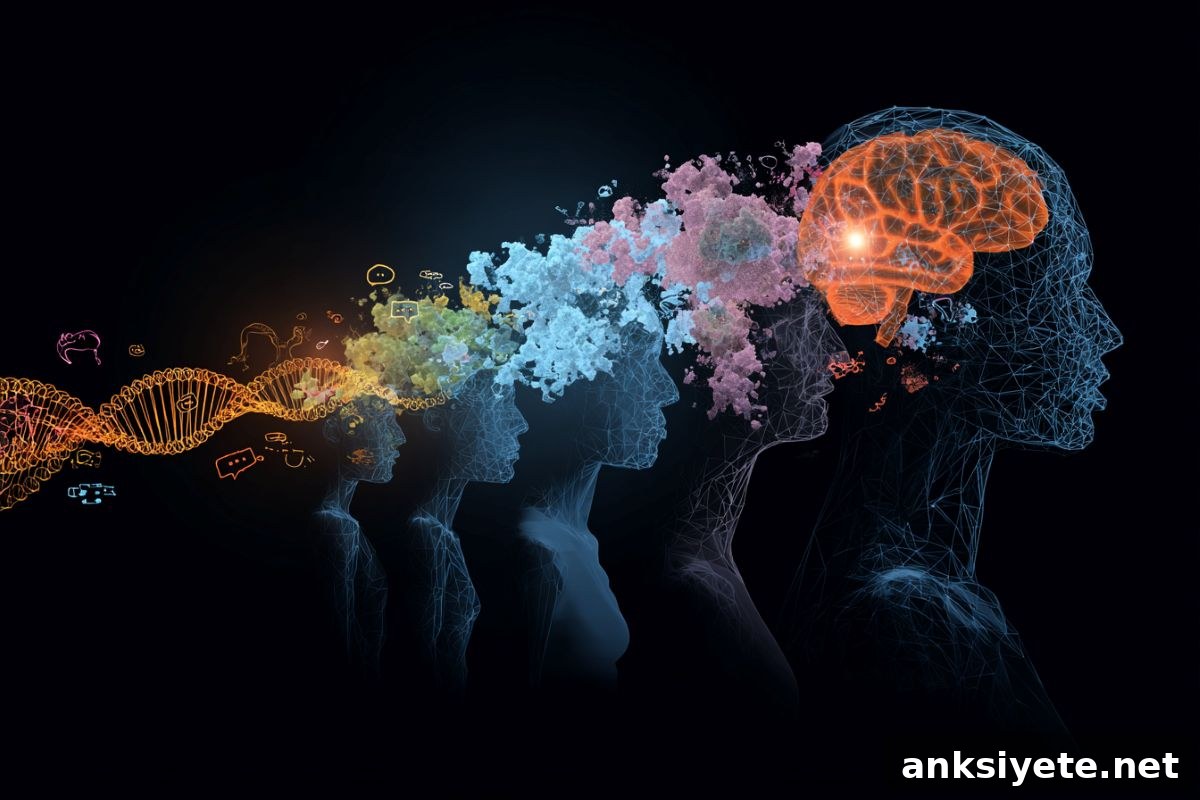
Summary: New research indicates that a fast phase of evolution in a specific class of human outer-layer brain neurons may help explain the relatively high prevalence of autism in humans. The study finds that layer 2/3 intratelencephalic (L2/3 IT) neurons in the human neocortex changed much faster than comparable neurons in other apes, with notable shifts in genes linked to autism.
Those human-specific genetic shifts show signs of positive selection and may have supported developmental and cognitive changes—such as prolonged postnatal brain maturation and advanced language abilities—while also increasing neurodiversity.
Key Facts
- Rapid neuronal evolution: Human L2/3 IT neurons show accelerated evolution compared with other apes.
- Autism gene changes: Genes associated with autism display dramatic, human-specific expression changes, particularly down-regulation in these neurons.
- Evolved trade-off: Selection that favored cognitive features like extended brain development and language may have also made certain neurons more vulnerable, increasing the prevalence of neurodevelopmental differences.
Source: Oxford University Press USA
A recent paper published in Molecular Biology and Evolution (Oxford University Press) suggests that the unusually high rate of autism-spectrum diagnoses in humans is tied to how certain neuronal cell types evolved in our lineage.
Autism Spectrum Disorder (ASD) affects a substantial portion of children: estimates indicate about 3.2% of U.S. children are identified with ASD, and global estimates from the World Health Organization put the prevalence around 1% of children. From an evolutionary viewpoint, many researchers note that behavioral traits characteristic of autism and schizophrenia are rarely observed in non-human primates and frequently relate to cognitive abilities—like language—where humans are distinctive.
Advances in single-cell and single-nucleus RNA sequencing have allowed scientists to classify and compare precise neuronal cell types across species. Large-scale datasets reveal that the mammalian brain contains a vast diversity of neuronal subtypes, and separate genomic surveys have uncovered many human-specific genetic changes in brain-related sequences—elements that shifted rapidly in humans relative to other mammals.
Previous work showed that some neuronal types remain highly conserved across species while others diverge more quickly, but the causes of these differences in evolutionary tempo were unclear. The authors of the new study analyzed recently released cross-species single-nucleus RNA-sequencing datasets drawn from three distinct neocortical regions to address that question.
Across more than one million individual neurons sampled from six species, they observed a consistent pattern: more abundant neuronal subtypes tend to maintain more similar gene expression profiles across species, implying greater evolutionary constraint. Yet an important exception emerged in the human lineage. The most abundant neocortical neuron class—layer 2/3 intratelencephalic excitatory neurons (L2/3 IT)—showed unusually rapid evolution in humans compared with other apes.
Remarkably, this acceleration coincided with pronounced down-regulation of genes that have been linked to autism. Population genetic analyses by the authors suggest these coordinated expression changes are not neutral drift but reflect polygenic positive selection unique to humans.
Why selection favored these changes remains an open question. The authors propose that many of the affected genes influence developmental timing, and their altered expression could have contributed to the extended postnatal brain maturation characteristic of humans. Slower brain development throughout early childhood may have provided a prolonged window for neural circuit refinement and learning, supporting more complex cognition and language—traits that distinguish humans from other apes.
Because speech production and comprehension are tightly linked to cortical circuits and are commonly impacted in autism and schizophrenia, it is plausible that selection for enhanced language and extended developmental plasticity indirectly increased sensitivity to perturbation in abundant cortical neurons. In other words, some of the same genetic changes that made our brains capable of advanced language and thought may also have increased neurodiversity.
“Our results suggest that some of the same genetic changes that make the human brain unique also made humans more neurodiverse,” said the study’s lead author, Alexander L. Starr.
About this autism and evolutionary neuroscience research news
Author: Daniel Luzer
Source: Oxford University Press USA
Contact: Daniel Luzer – Oxford University Press USA
Image: The image is credited to Neuroscience News
Original Research: Open access.
Title: A general principle of neuronal evolution reveals a human accelerated neuron type potentially underlying the high prevalence of autism in humans — Alexander L. Starr et al., Molecular Biology and Evolution. DOI: 10.1093/molbev/msaf189
Abstract
A general principle of neuronal evolution reveals a human accelerated neuron type potentially underlying the high prevalence of autism in humans
Multicellular organisms encode many distinct cell types from a single genome, and the mammalian brain in particular contains thousands of specialized neuronal subtypes. While some cell types are evolutionarily stable, others diverge substantially between species. The authors tested the idea that neuron abundance predicts evolutionary constraint: highly abundant neuronal subtypes should show greater conservation of gene expression than rarer types.
Using cross-species single-nucleus RNA-sequencing data from three regions of the neocortex spanning six species and over one million neurons, they confirmed a consistent relationship: more abundant neuronal subtypes exhibit stronger expression conservation. Building on this principle, the study identified layer 2/3 intratelencephalic excitatory neurons as exceptionally accelerated in the human lineage compared to other apes.
Unexpectedly, this rapid evolution in humans was accompanied by coordinated down-regulation of genes associated with autism. Population genetic evidence indicates these expression shifts were likely driven by polygenic positive selection in the human lineage. The authors propose that selection for traits such as extended postnatal brain development and improved language capacity may have provided fitness benefits while simultaneously increasing sensitivity of an abundant neuronal class to perturbation, offering a possible evolutionary explanation for the high prevalence of autism in humans.