
Key Questions Answered
Q: What did researchers discover about how we sense cool temperatures?
A: The study traced a complete neural pathway from the skin to the brain that specifically detects innocuous cool temperatures, and showed how that signal is amplified within the spinal cord before reaching higher centers.
Q: Why is this discovery important?
A: This is the first time a full temperature-sensing circuit has been mapped end to end. The finding clarifies basic mechanisms of thermal perception and suggests routes for developing treatments for conditions involving abnormal cold sensitivity, such as chemotherapy-induced cold pain.
Q: How does this pathway differ from cold pain signals?
A: The newly described circuit responds to harmless coolness and does not mediate painful cold; painful cold appears to rely on separate or more complex pathways.
Summary: Researchers have identified a dedicated skin-to-brain circuit that conveys innocuous cool signals. Molecular sensors in the skin activate primary sensory neurons, which relay information to spinal interneurons that amplify the signal and then engage projection neurons that carry cool-specific information to the brain.
This precise circuit explains how we sense nonpainful cool sensations—like stepping into an air-conditioned room—and distinguishes that process from circuits that produce cold pain. Mapping this pathway provides a foundation for future work to repair or modulate temperature perception in disease without disrupting normal sensation.
Key Facts:
- Dedicated pathway: A full neural circuit for innocuous cool sensing was identified, running from skin to brain.
- Spinal amplifier: Specialized spinal interneurons boost the cool signal so it can be clearly transmitted to the brain.
- Clinical relevance: Understanding this pathway may guide targeted therapies for cold-related pain while preserving normal thermal perception.
Source: University of Michigan
Researchers at the University of Michigan have mapped a complete sensory circuit that explains how the skin reports cool temperatures to the brain.
The work demonstrates that cool sensations follow a distinct neural route, suggesting evolution has produced separate circuits for sensing warmth and coolness. That separation supports precise thermal perception and appropriate behavioral responses to environmental changes, said Bo Duan, senior author of the study.
“The skin is the body’s largest organ and a primary detector of our environment,” said Duan, an associate professor of molecular, cellular, and developmental biology at the University of Michigan. “This study identifies one clear pathway for how the skin senses cool temperatures — the first time a full skin-to-brain temperature circuit has been delineated.”
Beyond advancing basic biology, the discovery may have practical implications. For example, more than 70% of people who undergo chemotherapy experience painful sensitivity to cool temperatures. The team found that the circuit they mapped carries harmless cool signals but does not drive that type of painful cold, which suggests different mechanisms underlie cold-induced pain.
By understanding how the cool-sensing circuit functions in healthy conditions, researchers hope to pinpoint how disease or injury alters sensation and to design therapies that restore normal feeling without impairing everyday temperature perception.
The research was funded by the National Institutes of Health and conducted in collaboration with Shawn Xu and his team in the University of Michigan Life Sciences Institute.
A cool amplifier discovery
Published in Nature Communications, the study used advanced imaging and electrophysiology to follow how mice convey cool sensations from skin to brain. The work was led by postdoctoral fellow Hankyu Lee and doctoral students Chia Chun Hor and Lorraine Horwitz.
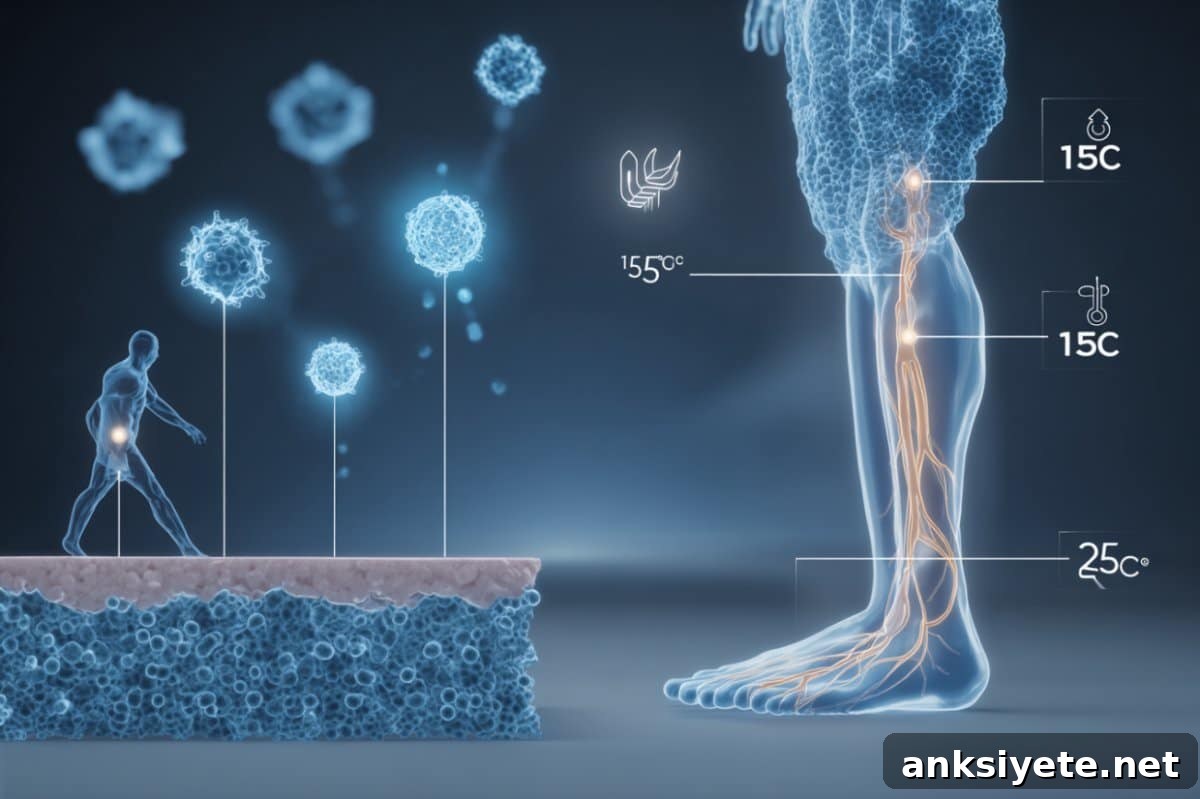
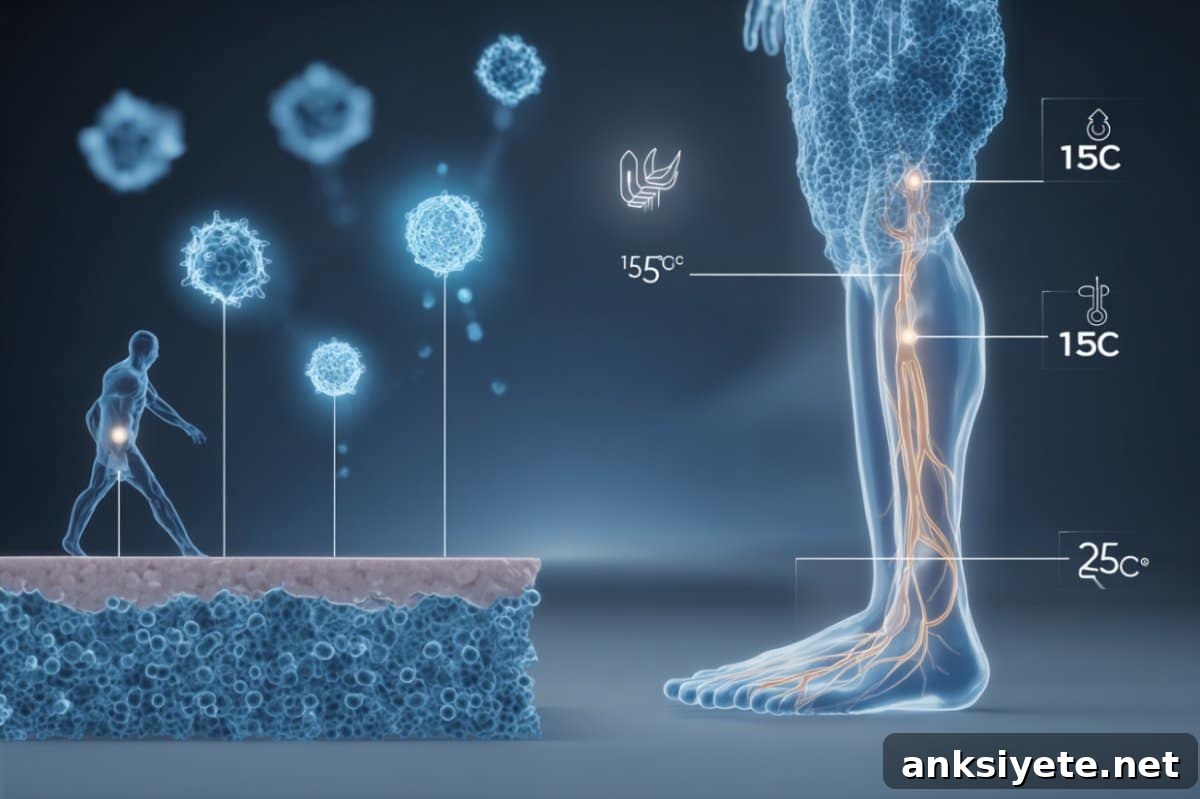
The team confirmed that molecular thermosensors in the skin detect temperatures roughly between 15 and 25 degrees Celsius (about 59 to 77 degrees Fahrenheit). Those receptors activate primary sensory neurons, which then signal to a specific group of excitatory interneurons in the spinal dorsal horn. These interneurons amplify the cool signal and engage projection neurons that transmit the information to brain regions involved in perception.
While molecular thermoreceptors such as TRPM8 were already known, the spinal “amplifier” formed by Trhr-expressing interneurons was previously unrecognized. When the researchers disrupted this amplification, cool signals failed to stand out from background activity, diminishing behavioral responses to innocuous cool.
Although the experiments were performed in mice, genetic data indicate corresponding circuit components exist in humans, making it likely that the same basic pathway contributes to everyday sensations such as the refreshing feeling of a cool breeze.
Next, the team plans to investigate the circuits that mediate acute or painful cold sensations, which Duan expects will be more complex and potentially involve multiple pathways. They are also exploring how the brain integrates different skin signals and links them with emotional and behavioral responses that protect the organism.
“I enjoy feeling a gentle breeze on summer walks by Lake Michigan,” Duan said. “That pleasant cool sensation likely relies on the pathway we’ve now characterized, while the brain’s responses to harsher cold may engage additional, more protective circuits.”
About this temperature perception and neuroscience research news
Author: Matt Davenport
Source: University of Michigan
Contact: Matt Davenport – University of Michigan
Image: The image is credited to Neuroscience News
Original Research: Open access. “A dedicated skin-to-brain circuit for cool sensation in mice” by Bo Duan et al., published in Nature Communications.
Abstract
A dedicated skin-to-brain circuit for cool sensation in mice
Perception of external temperature is essential for maintaining homeostasis and avoiding thermal injury. Although molecular thermosensors such as transient receptor potential melastatin type 8 (TRPM8) have been identified, the neural circuits that transmit cool signals remained unclear.
This study demonstrates that a spinal circuit in mice conveys cool signals from the skin to the brain. Excitatory interneurons in the spinal dorsal horn expressing thyrotropin-releasing hormone receptor (Trhr+) act as a central hub for cool sensation.
Trhr+ interneurons receive monosynaptic input from TRPM8+ sensory afferents and are selectively activated by innocuous cool stimuli. Ablation of Trhr+ interneurons eliminates behavioral responses to cool, without affecting responses to warm or noxious cold stimuli.
The authors also identify a population of calcitonin receptor-like receptor-positive (Calcrl+) spinal projection neurons that receive convergent input from both TRPM8+ afferents and Trhr+ interneurons, and transmit cool-specific signals to the lateral parabrachial nucleus (lPBN).
These results define a feedforward amplification circuit for innocuous cool sensation and reveal a modality-specific spinal pathway for thermal processing.