
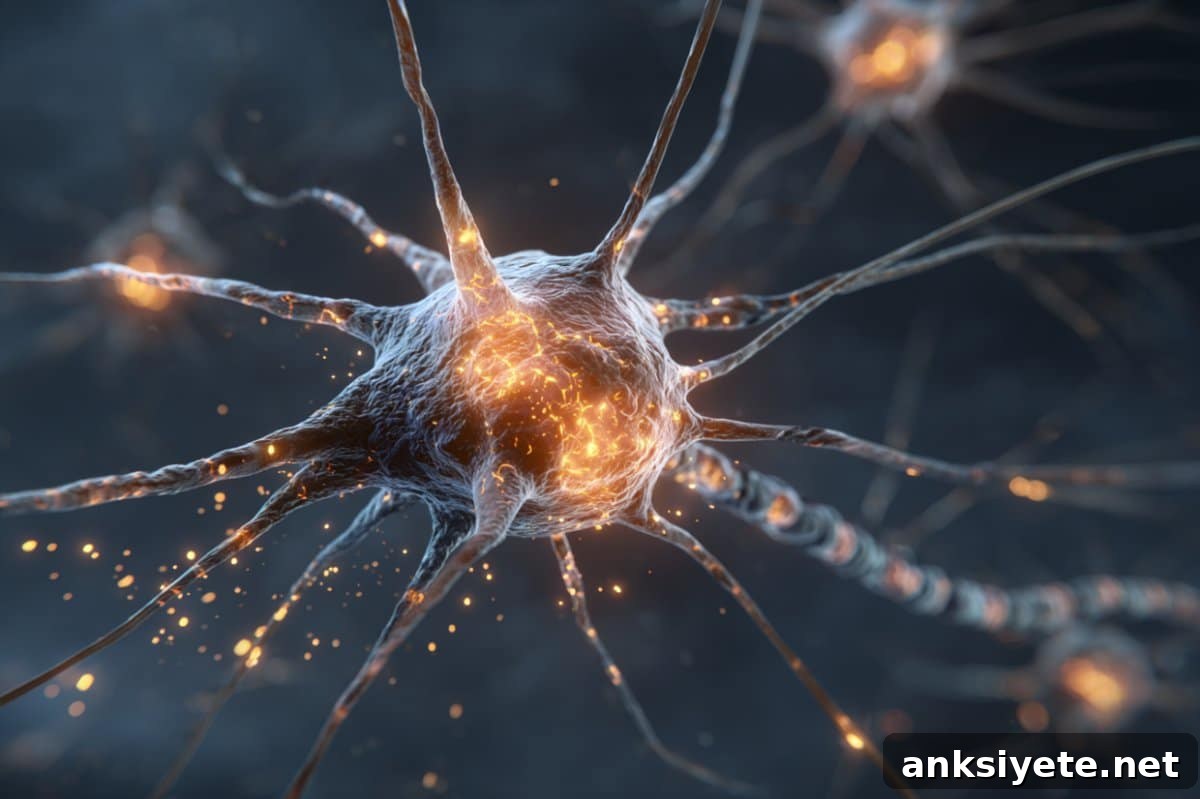
Summary: New research reveals that neurons maintain their own glycogen stores, acting as internal “backup batteries” that help preserve brain function during periods of metabolic stress. Using the roundworm Caenorhabditis elegans and advanced fluorescent biosensors, scientists tracked how neurons tap glycogen reserves when oxygen levels drop or mitochondrial activity is impaired.
This form of metabolic flexibility—termed glycogen-dependent glycolytic plasticity—shows neurons are more metabolically autonomous than long assumed. The discovery may point to new therapeutic strategies for neurological conditions in which energy failure contributes to dysfunction, such as stroke, epilepsy, and neurodegenerative disease.
Key Facts:
- Neurons store glycogen: Neurons themselves contain glycogen reserves, not just glial cells.
- Adaptive response to stress: Neurons mobilize glycogen during oxygen deprivation or mitochondrial impairment to sustain glycolysis.
- Clinical relevance: Understanding neuronal glycogen use could inform interventions for stroke, epilepsy, and neurodegeneration where energy supply is compromised.
Source: Yale
Overview of the study
A team of researchers from Yale University reports in the Proceedings of the National Academy of Sciences that neurons can store and use glycogen directly to maintain energy balance when preferred fuel pathways are disrupted. The work challenges the traditional model in which glial cells were thought to be the primary glycogen reservoirs for the brain.
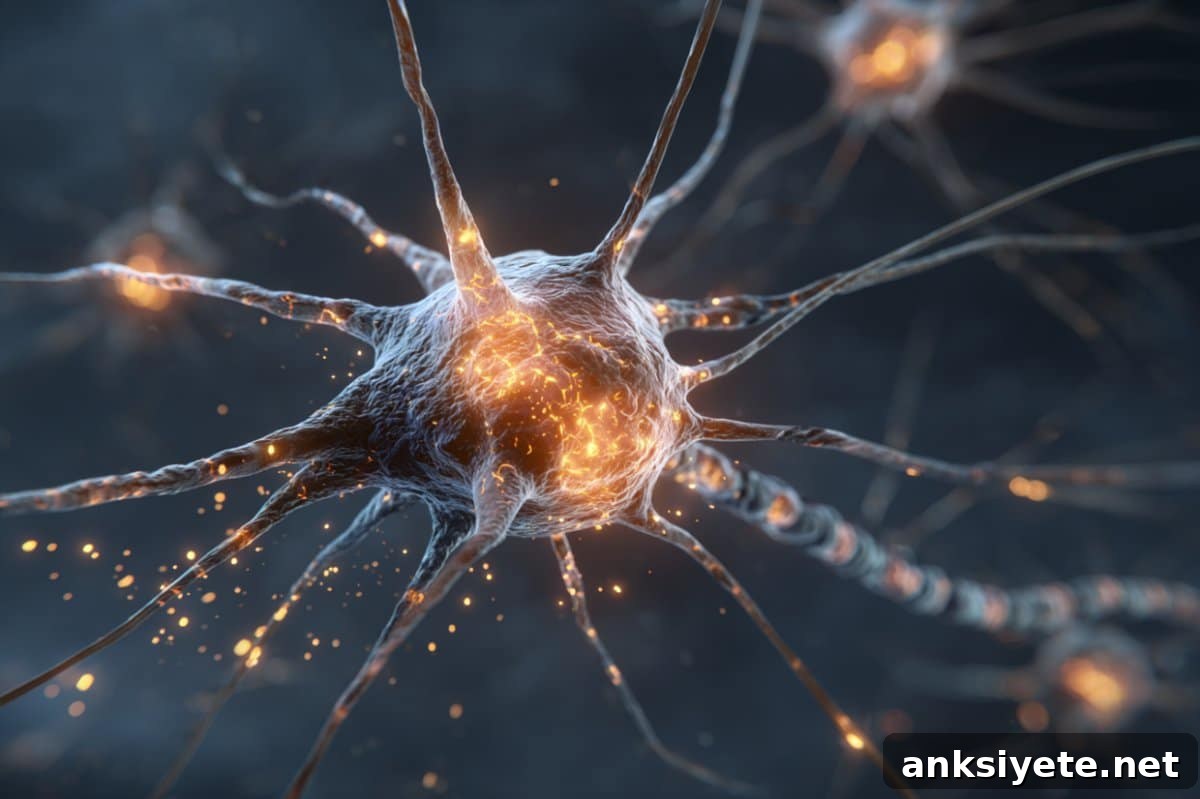
The investigators used the nematode C. elegans as an in vivo model and monitored single-cell metabolic changes with a genetically encoded fluorescent sensor called HYlight, which reports glycolytic activity. With precision oxygen-control devices, they observed neuronal responses to transient hypoxia and other sources of metabolic stress in real time.
A crucial molecular player identified in the study is PYGL-1, the worm equivalent of human glycogen phosphorylase. PYGL-1 enables neurons to break down stored glycogen into glucose units that enter glycolysis. Loss of PYGL-1 prevented neurons from increasing energy production during low-oxygen conditions, and restoring the enzyme specifically in neurons rescued that deficit.
The researchers found that neurons use at least two strategies to cope with energetic stress: a glycogen-independent pathway and a glycogen-dependent pathway. The glycogen-dependent pathway becomes especially important when mitochondrial function is compromised—such as during hypoxia—allowing rapid, low-cost access to fuel via glycolysis. The team labeled this capability “glycogen-dependent glycolytic plasticity” (GDGP).
GDGP appears to support not only basic neuronal metabolism but also synaptic function. When GDGP was impaired, neurons showed reduced glycolytic flexibility and problems with synaptic vesicle recycling under hypoxic conditions, suggesting that internal glycogen reserves help preserve communication between neurons when energy supply falters.
“Think of neurons as carrying an emergency battery,” said Milind Singh, a doctoral student in cell biology and co-lead author. “When mitochondria can’t keep up, glycogen provides a rapid, local fuel source so neurons can keep working.” Co-lead author Aaron Wolfe, a postdoctoral researcher, emphasized that the glycogen-dependent route plays a protective role when mitochondrial energy production is limited.
Senior author Daniel Colón-Ramos, Dorys McConnell Duberg Professor of Neuroscience and Cell Biology, described glycogen in neurons as an “energy capacitor” that buffers abrupt shifts in demand—similar to how muscle glycogen helps sustain intense activity. This metabolic reserve may be essential for preserving neuronal performance during brief but critical episodes of stress.
The study’s findings refine our understanding of brain energy metabolism and open new paths for exploring therapeutic approaches that bolster neuronal energy resilience. Targeting neuronal glycogen metabolism could be relevant for acute events like stroke or for chronic conditions in which energetic failure contributes to progressive dysfunction.
Other contributors to the study from Yale include Sarah Emerson, Ian J. Gonzalez, Anjali A. Vishwanath, Anastasia Tsives, and Richard Goodman.
About this neuroscience research news
Author: Bess Connolly
Source: Yale
Contact: Bess Connolly – Yale
Image credit: Neuroscience News
Original Research: Open access. “Glycogen supports glycolytic plasticity in neurons” by Milind Singh et al., PNAS.
Abstract (concise summary)
Although glycogen is known to be the brain’s largest stored energy reserve, its direct role in neuronal metabolism in living organisms was unclear. Using HYlight to monitor glycolysis in single cells of C. elegans, the study demonstrates that neurons dynamically regulate glycolysis in response to activity and transient hypoxia. An RNAi screen identified PYGL-1 as a necessary neuronal enzyme for this plasticity. The authors delineate two forms of glycolytic plasticity—glycogen-dependent and glycogen-independent—and show that glycogen-dependent glycolytic plasticity is used when mitochondrial function is impaired. Loss of this pathway reduces glycolytic adaptability and interferes with synaptic vesicle recycling during hypoxia, indicating that neuronal glycogen directly supports glycolytic resilience and synaptic function in vivo.