
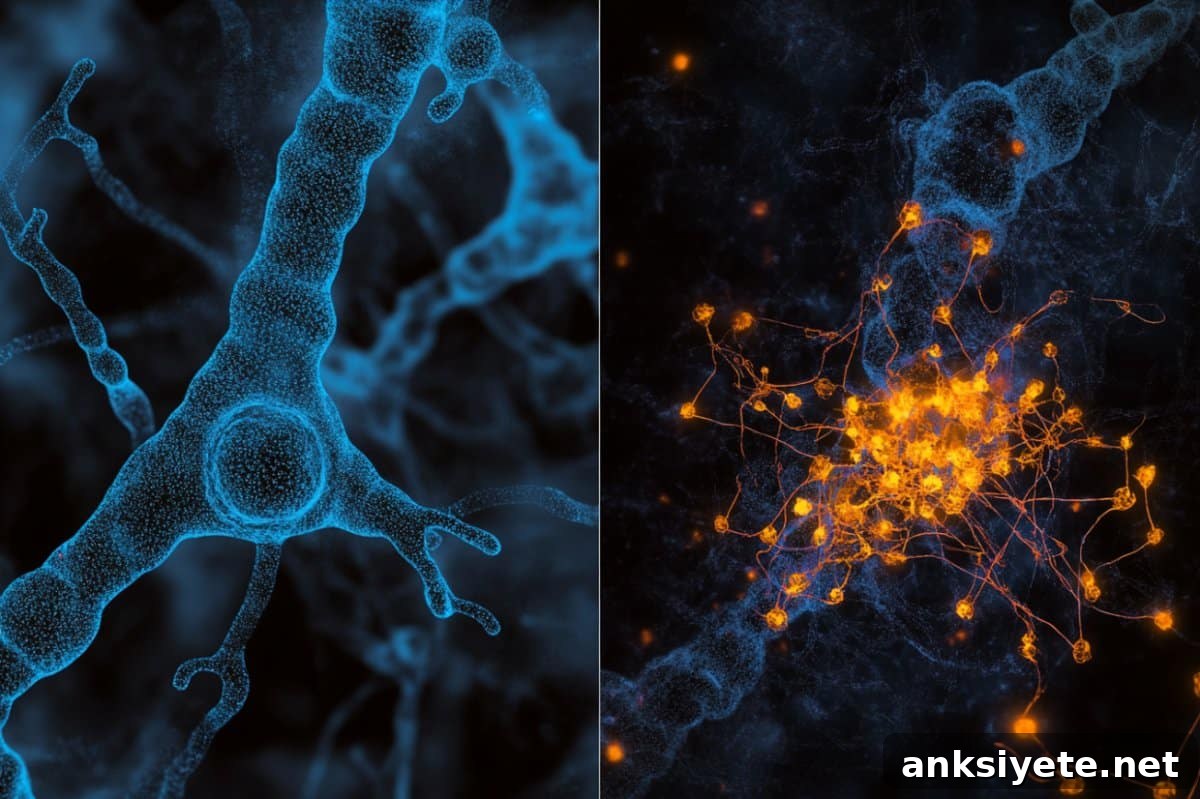
Summary: A tiny genetic segment called mini-exon B plays an outsized role in how neurons build excitatory synapses, new research shows. Deleting this four–amino-acid piece from the synapse-organizing protein PTPδ disrupts synaptic balance, impairs early survival in mice, and produces anxiety-like behaviors, revealing how subtle alternative splicing events can shape brain wiring and behavior.
Mini-exon B allows PTPδ to form a trans-synaptic complex with the postsynaptic protein IL1RAP. That interaction is essential for excitatory synapse formation in specific cell types, and its loss produces an excitation–inhibition imbalance linked to neurodevelopmental disorders such as autism, ADHD, and OCD.
Key facts
- Mini-exon B function: A four–amino-acid sequence in the extracellular region of PTPδ that enables critical protein–protein interactions required for excitatory synapse assembly.
- Physiological impact: Complete loss of mini-exon B leads to dramatically reduced postnatal survival; partial loss causes altered behavior and motor activity.
- Synaptic imbalance and disease relevance: Deleting mini-exon B reduces excitatory input to dentate gyrus granule cells while increasing excitatory drive onto interneurons, producing an excitation–inhibition imbalance associated with autism spectrum disorder, ADHD, and OCD.
Source: Institute for Basic Science
Researchers at the Institute for Basic Science (IBS) have pinpointed a minimal but essential component of genetic code that influences how neuronal circuits form and function.
Led by Director Kim Eunjoon, the Center for Synaptic Brain Dysfunctions at IBS focused on PTPδ (encoded by PTPRD), a synaptic adhesion protein long implicated in various neurological and psychiatric conditions. Rather than studying the entire protein, the team examined a tiny alternatively spliced segment—mini-exon B—and found that this short motif governs a specific trans-synaptic partnership and downstream synaptic development.
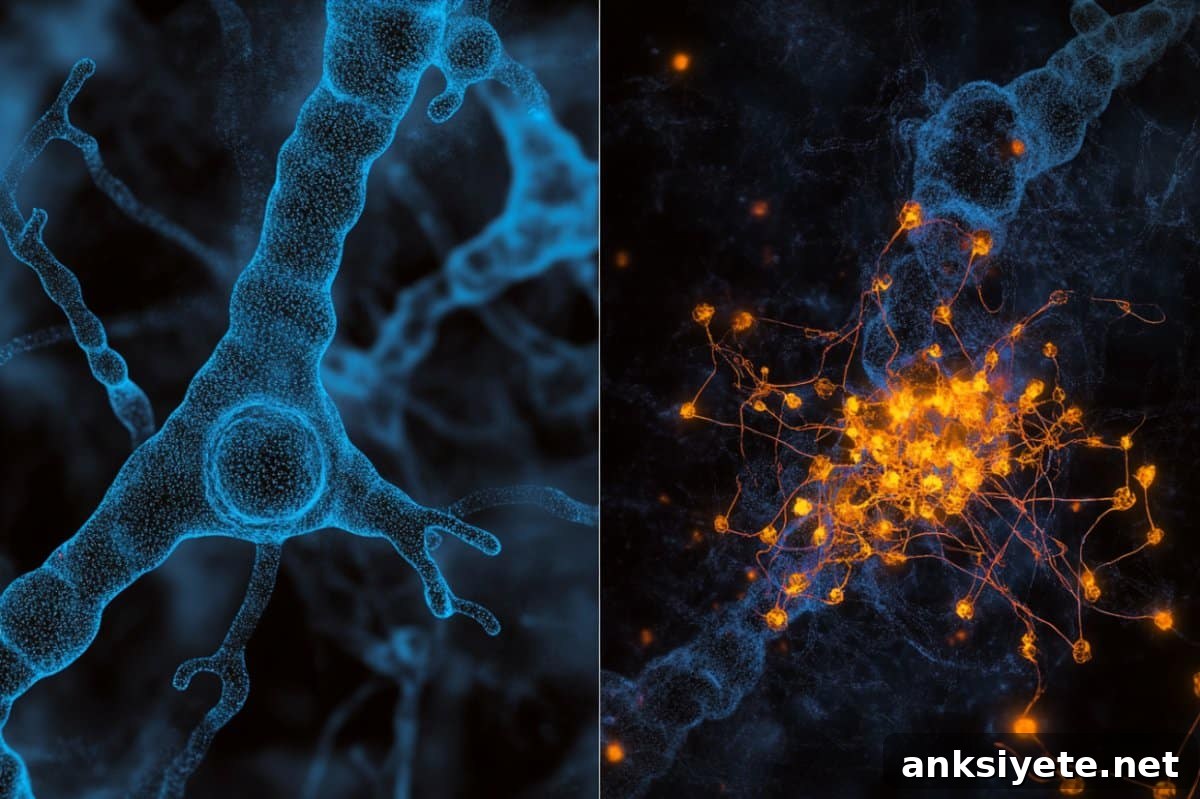
Alternative splicing allows cells to include or exclude tiny exons to adjust protein function. Mini-exon B is only four amino acids long, but that small change alters PTPδ’s ability to bind specific postsynaptic partners. To test its role in vivo, researchers generated mice lacking the mini-exon B sequence in PTPδ.
Homozygous mutants missing mini-exon B exhibited strikingly poor survival after birth—fewer than 30% survived—underscoring the element’s critical role in early nervous system development. Heterozygous males (with one altered allele) survived to adulthood but showed measurable behavioral changes, including increased anxiety-like behavior and reduced locomotion.
Synaptic findings and circuit consequences
Electrophysiological recordings and synaptic analyses revealed a clear disruption in excitatory synaptic transmission. Dentate gyrus granule cells (DG-GCs), which process information in the hippocampus, received weaker excitatory inputs. In contrast, certain interneurons—cells that modulate network activity—showed increased excitatory input and synaptic density. This cell-type-specific alteration produced an excitation–inhibition imbalance that can impair information processing and behavior.
Molecular mechanism: PTPδ and IL1RAP form a cell-type-specific partnership
Proteomic analyses identified reduced postsynaptic levels of IL1RAP, a known trans-synaptic partner that interacts specifically with PTPδ when mini-exon B is present. The PTPδ–IL1RAP interaction is therefore a lock-and-key-type partnership required for forming excitatory synapses in IL1RAP-expressing cells. Without mini-exon B, PTPδ fails to engage IL1RAP, impairing excitatory synapse assembly in a cell-type-dependent manner. Notably, interneurons that express little IL1RAP responded differently to mini-exon B loss, which accounts for the divergent synaptic changes across cell types.
As Director Kim Eunjoon summarized: “This study highlights how even a minuscule genetic element can tip the balance of neural circuits. Errors in alternative splicing of such microexons may have far-reaching consequences for brain function and behavior.”
Implications for human disorders and future directions
This work is the first in vivo demonstration of mini-exon B’s role in PTPδ function. Given accumulating evidence that microexon mis-splicing contributes to neuropsychiatric and neurodevelopmental disorders, these findings offer a concrete molecular mechanism linking alternative splicing to synaptic pathology. The study suggests new avenues for exploring therapeutic approaches that modulate splicing or restore specific trans-synaptic interactions to rebalance circuit activity.
The research was carried out in collaboration with KAIST, KBSI, KISTI, Kyungpook National University, and Yonsei University.
About this genetics and neuroscience research news
Author: Eunjoon Kim
Source: Institute for Basic Science
Contact: Eunjoon Kim – Institute for Basic Science
Image: The image is credited to Neuroscience News
Original Research: Open access. “Alternatively spliced mini-exon B in PTPδ regulates excitatory synapses through cell-type-specific trans-synaptic PTPδ-IL1RAP interaction” by Seoyeong Kim et al., published in Nature Communications.
Abstract
Alternatively spliced mini-exon B in PTPδ regulates excitatory synapses through cell-type-specific trans-synaptic PTPδ-IL1RAP interaction
PTPδ, encoded by PTPRD, is implicated in various neurological, psychiatric, and neurodevelopmental disorders, but the underlying mechanisms remain unclear.
PTPδ trans-synaptically interacts with multiple postsynaptic adhesion molecules, a process that depends on its extracellular alternatively spliced mini-exons, meA and meB. While PTPδ-meA functions have been studied in vivo, the role of PTPδ-meB remained unexplored.
This study reports that, unlike homozygous PTPδ-meA-mutant mice, homozygous PTPδ-meB-mutant (Ptprd-meB–/–) mice show markedly reduced early postnatal survival.
Heterozygous Ptprd-meB+/– male mice exhibit behavioral abnormalities and decreased excitatory synaptic density and transmission in dentate gyrus granule cells (DG-GCs). Proteomic analyses identify decreased postsynaptic density levels of IL1RAP, a known trans-synaptic partner of meB-containing PTPδ. Consistent with this, IL1RAP-mutant mice also show decreased excitatory synaptic transmission in DG-GCs. In contrast, Ptprd-meB+/– DG interneurons, which express minimal IL1RAP, show increased excitatory synaptic density and transmission.
These results indicate that PTPδ-meB is critical for survival, synaptic organization, and behavior, and that it regulates excitatory synapses in a cell-type-specific, IL1RAP-dependent manner.