
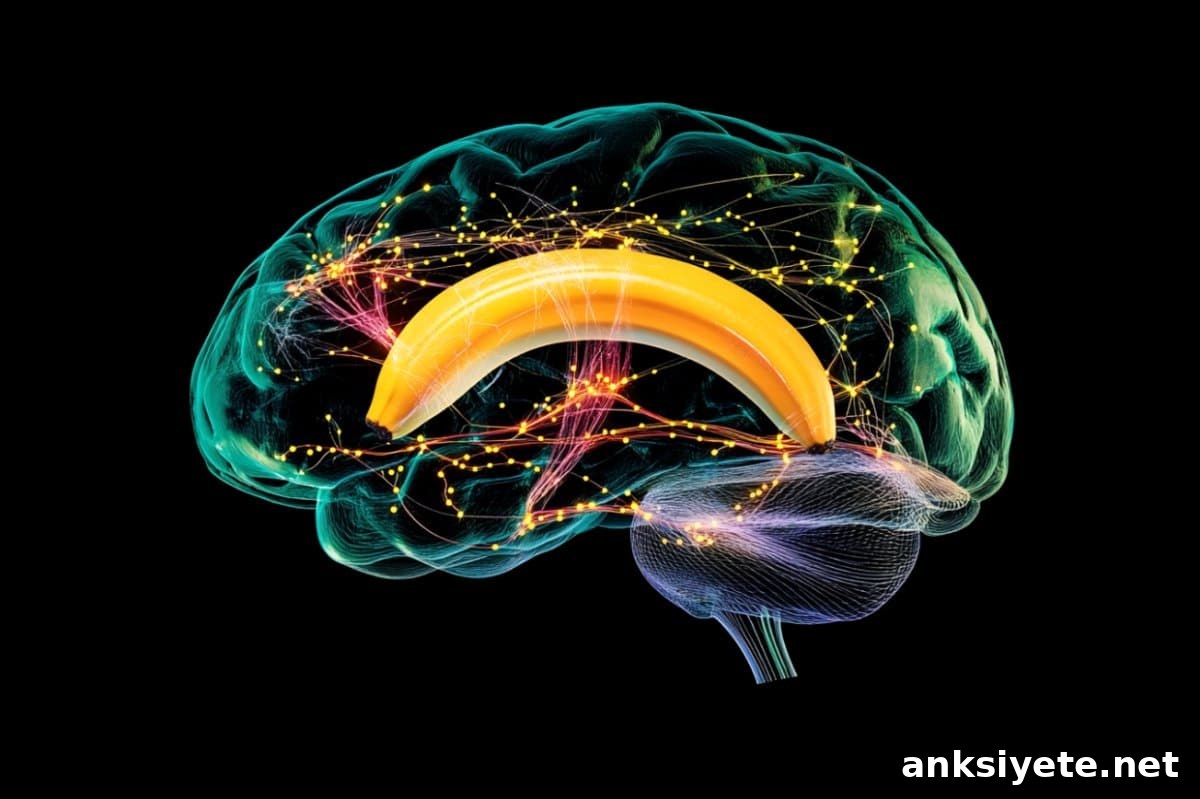
Summary: A new study reveals that remembering perceptual details about familiar objects—such as the typical color of a banana—depends on intact connections between the brain’s visual processing regions and language areas. Stroke patients whose white-matter pathways between these systems were disrupted showed weaker knowledge about object color and altered neural responses.
Using functional MRI and diffusion-weighted imaging, researchers demonstrated that the ventral occipitotemporal cortex (VOTC), a region that represents visual features, operates in close coordination with language-related regions including the anterior temporal lobe. These findings suggest that language contributes not only to describing the world but also to structuring how sensory information is stored and retrieved.
Key Findings:
- Integrated systems: Accurate object knowledge relies on functional and structural connectivity between visual and language regions.
- Effects of brain damage: Stroke-related disconnection between these regions impaired both neural representations and behavioral accuracy for object color knowledge.
- Language shapes perception: Language regions help organize sensory information, influencing how perceptual details are represented in visual cortex.
Source: PLOS Biology (study published May 20)
Study overview
Researchers led by Bo Liu at Beijing Normal University investigated whether communication between language networks and visual association cortex is necessary for representing object perceptual knowledge. They focused on object color as a test case to examine whether visual cortex representations depend on connections with language areas.
Perceiving an object and recalling a canonical perceptual attribute of that object—such as recognizing the yellow color of a banana and knowing that a banana is usually yellow—activate overlapping regions in the ventral occipitotemporal cortex. However, prior observations also implicated language-related regions, notably the anterior temporal lobe (ATL), in supporting object knowledge: patients with ATL damage can lose knowledge about typical object attributes despite preserved low-level vision.
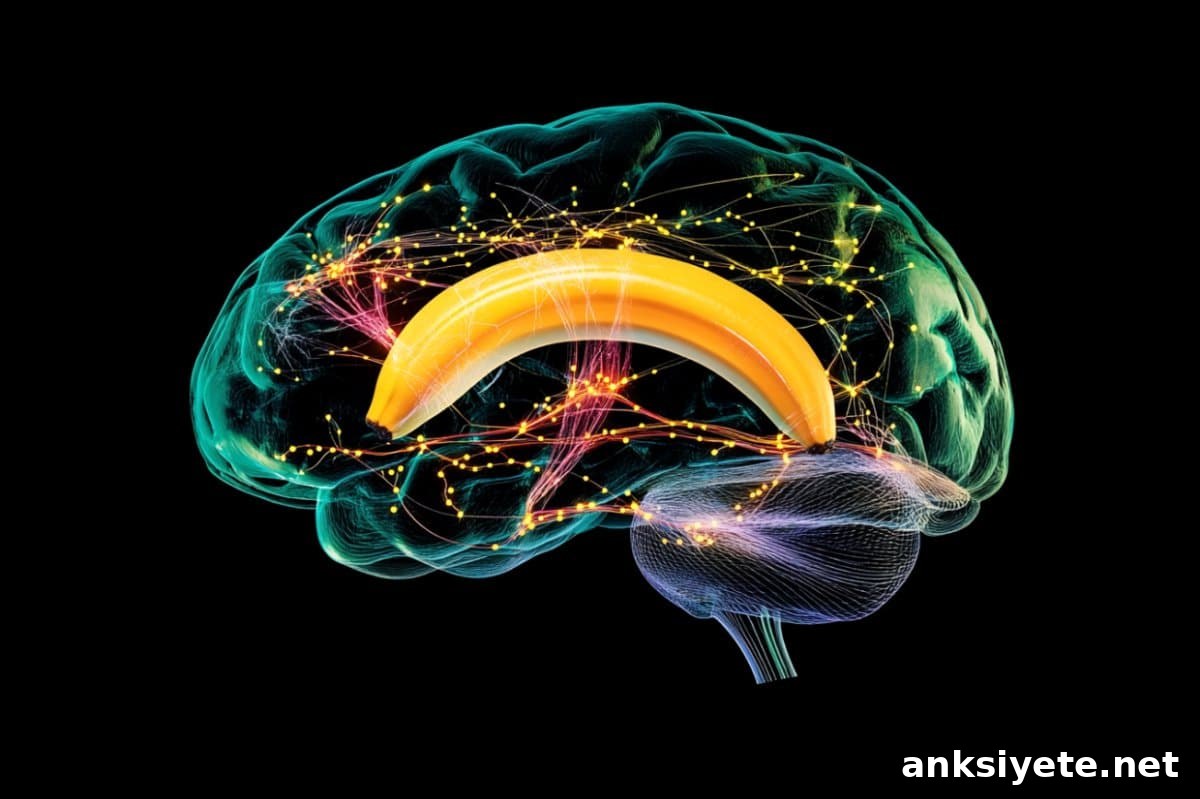
To test whether white-matter connections between visual and language systems are necessary for representing object color knowledge, the team assessed 33 stroke patients and 35 demographically matched control participants. They combined diffusion imaging to measure the structural integrity of white-matter pathways, functional MRI to probe neural representations of object color in the VOTC, and behavioral tests that measured participants’ ability to match objects with their typical colors.
The analyses revealed that stronger structural connectivity between anterior temporal language areas and the ventral visual cortex predicted stronger object-color representations in the VOTC and better behavioral performance on color-knowledge tasks. Importantly, these effects were robust after accounting for lesion location, general visual perception abilities, and other cognitive factors, indicating a specific contribution of the language-visual pathway to storing and retrieving perceptual object knowledge.
Stroke patients with compromised white-matter integrity along the language-visual route exhibited reduced VOTC response patterns related to object color and performed worse when asked to identify typical colors associated with objects. These findings suggest the language system supports the organization of perceptual features in visual cortex rather than merely providing post-hoc labels.
Interpretation and implications
The study provides evidence that the brain’s representation of object properties involves an interface between sensory association areas and language networks. Language regions appear to play a functional role in shaping how perceptual knowledge—like color associations—is encoded in visual cortex. Damage to the connections linking these systems disrupts both neural encoding and behavior, highlighting the interdependence of perception and conceptual language processing.
These results contribute to ongoing debates in cognitive neuroscience about whether conceptual knowledge is stored within modality-specific sensory cortices alone or whether it depends on distributed interactions with language and higher-order association systems. The present data support a hybrid view in which sensory representations in the ventral visual stream are structured and reinforced through communication with language-related regions.
Funding and disclosures
The research received funding from national research programs and foundations in China, including major projects and grants supporting basic and applied neuroscience research. The funders did not influence study design, data collection and analysis, decision to publish, or manuscript preparation.
About this language and visual memory research news
Author: Claire Turner
Source: PLOS Biology
Contact: Claire Turner – PLOS
Image credit: Neuroscience News
Original research: Open access. Title: “Object knowledge representation in the human visual cortex requires a connection with the language system” by Yanchao Bi and colleagues, published in PLOS Biology.
Abstract (concise)
This study tested whether interactions with the language system are necessary for storing object perceptual knowledge in the visual cortex. Combining diffusion imaging, fMRI, and neuropsychological assessment in patients who had experienced stroke, the authors found that loss of white-matter connectivity between anterior temporal language regions and ventral visual cortex significantly reduced neural representation strength for object color in VOTC and impaired behavioral color-knowledge across modalities. These effects were not explained by deficits in early visual perception or other confounding factors. The results highlight the functional importance of the language–sensory interface in representing object knowledge in the human brain.