
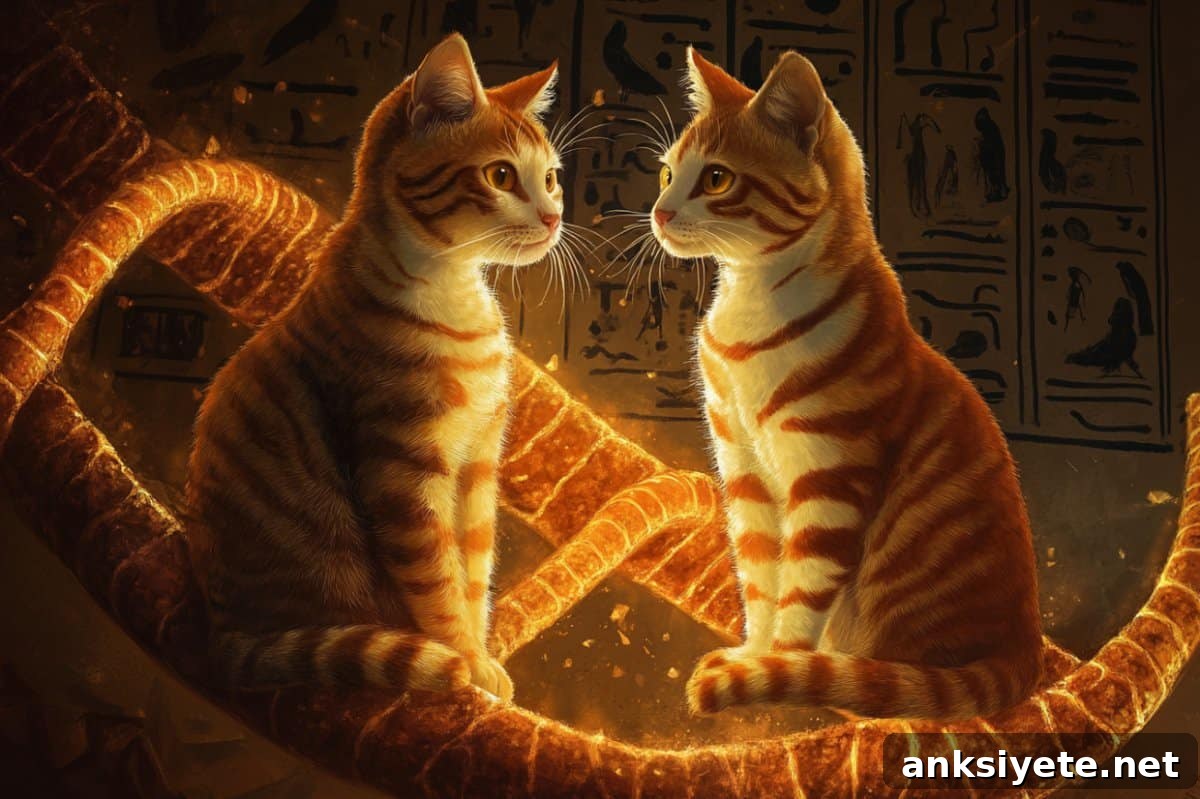
Summary: After decades of uncertainty, scientists have pinpointed the genetic change responsible for orange fur in domestic cats: a deletion mutation in the X-linked gene ARHGAP36. This deletion increases the gene’s activity in pigment-producing skin cells (melanocytes), shifting pigment synthesis in favor of orange hues. The discovery clarifies longstanding questions about why most orange cats are male and why females carrying one copy of the variant display calico or tortoiseshell patterns. It also raises the possibility that the variant may influence other tissues where ARHGAP36 is active, including parts of the brain and hormonal glands.
Researchers at Kyushu University led the study and found that a specific 5.1-kilobase deletion inside an intron of the X-linked ARHGAP36 gene is closely associated with orange coat coloration. An independent team at Stanford University reached confirmatory results, and both studies were published simultaneously in Current Biology on May 15, 2025.
Key facts:
- Gene identified: A 5.1 kb deletion linked to the X-linked ARHGAP36 locus is associated with orange fur.
- Sex-linked pattern: Because ARHGAP36 is on the X chromosome, males (XY) with the deletion are more likely to be fully orange; females (XX) require two copies to be uniformly orange, while heterozygous females display a mottled calico or tortoiseshell coat due to X-chromosome inactivation.
- Mechanism: The deletion falls in a regulatory non-coding region and appears to increase ARHGAP36 expression in melanocytes, which correlates with reduced activity of many melanogenesis genes and a shift from eumelanin (dark pigment) toward pheomelanin (orange/red pigment).
- Broader implications: Because ARHGAP36 functions in multiple tissues, the variant could have effects beyond coat color, a possibility the authors note as worth further study.
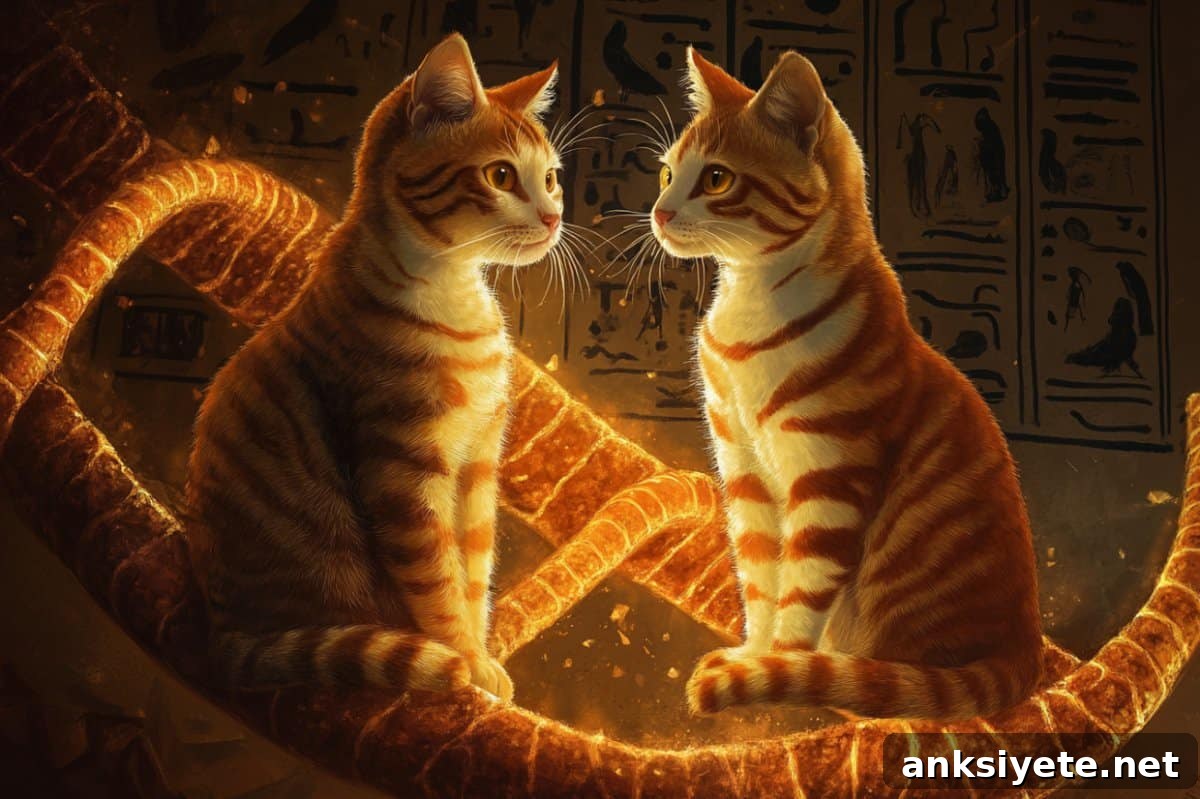
The search for the so-called “orange gene” has a long history. For more than a century, geneticists suspected that an X-linked locus controls the switch between darker coat pigments and orange tones. The classic examples—calico and tortoiseshell cats—illustrate X-chromosome inactivation (XCI) in females: when one X chromosome is randomly silenced in each cell early in development, patches of cells express different alleles and produce distinct coat-color regions.
Professor Hiroyuki Sasaki, lead author and geneticist at Kyushu University’s Medical Institute of Bioregulation and Institute for Advanced Study, pursued the gene with support from a crowdfunding campaign. His team sequenced DNA from an initial set of 18 cats (10 orange, 8 non-orange) and identified the same deletion in all orange individuals. The finding held when they expanded the analysis to 49 additional cats, including data from an international cat genome database.
Crucially, the deletion does not change the protein-coding sequence of ARHGAP36. Instead, it removes a conserved regulatory element within an intron, a change that appears to lift repression of the gene in skin melanocytes. Tissue analysis from calico cats showed markedly higher ARHGAP36 expression in orange patches than in adjacent black or white areas. High expression of ARHGAP36 correlated with decreased expression of many genes involved in melanogenesis, suggesting a downstream shift in pigment production favoring pheomelanin over eumelanin.
The team also showed evidence that ARHGAP36 undergoes X-chromosome inactivation in human and mouse cells, and observed XCI-associated DNA methylation patterns consistent with random XCI in female domestic cats. The distribution and apparent single-origin pattern of the 5.1 kb deletion suggest this variant is widespread among orange-coated domestic cats.
Because ARHGAP36 has roles beyond skin pigmentation, Sasaki points out possible wider consequences of the mutation. The gene is active in developmental pathways and in tissues such as the brain and endocrine glands, so altered expression could have subtle effects on physiology or behavior—an idea often discussed by cat owners but not yet demonstrated scientifically.
Looking ahead, Sasaki and colleagues plan functional studies using cat cell cultures to establish precisely how ARHGAP36 alters pigment pathways. Since the gene is conserved in humans and implicated in conditions such as some skin cancers and hair disorders, the findings could also inform medical research. The team is also interested in tracing the mutation’s history, including whether orange cats appear in historical records or ancient DNA samples.
About this genetics research news
Author: Danielle Ellenby
Source: Kyushu University
Contact: Danielle Ellenby – Kyushu University
Image: The image is credited to Neuroscience News
Original Research: Open access.
“A deletion at the X-linked ARHGAP36 gene locus is associated with the orange coloration of tortoiseshell and calico cats” by Hiroyuki Sasaki et al., Current Biology.
Abstract
A deletion at the X-linked ARHGAP36 gene locus is associated with the orange coloration of tortoiseshell and calico cats
The X-linked orange (O) locus in domestic cats controls a molecular mechanism that suppresses black-brownish pigmentation in favor of orange coloration. The patchwork appearance of tortoiseshell and calico females is a textbook example of random X-chromosome inactivation. Until now, the O gene had not been identified.
This research reports a 5.1-kilobase deletion within an intron of the X-linked ARHGAP36 gene, a gene encoding a Rho GTPase-activating protein, which is closely and exclusively associated with orange coloration. The deleted interval contains a highly conserved putative regulatory element; its removal is presumed to alter ARHGAP36 expression.
In cat skin, elevated ARHGAP36 expression is associated with suppression of numerous melanogenesis genes, potentially shifting pigment synthesis from eumelanin to pheomelanin. The gene also shows patterns of X-chromosome inactivation and CpG island methylation consistent with random XCI. The 5.1-kb deletion appears widespread in domestic cats displaying orange coat coloration, suggesting a single origin for this phenotype.