
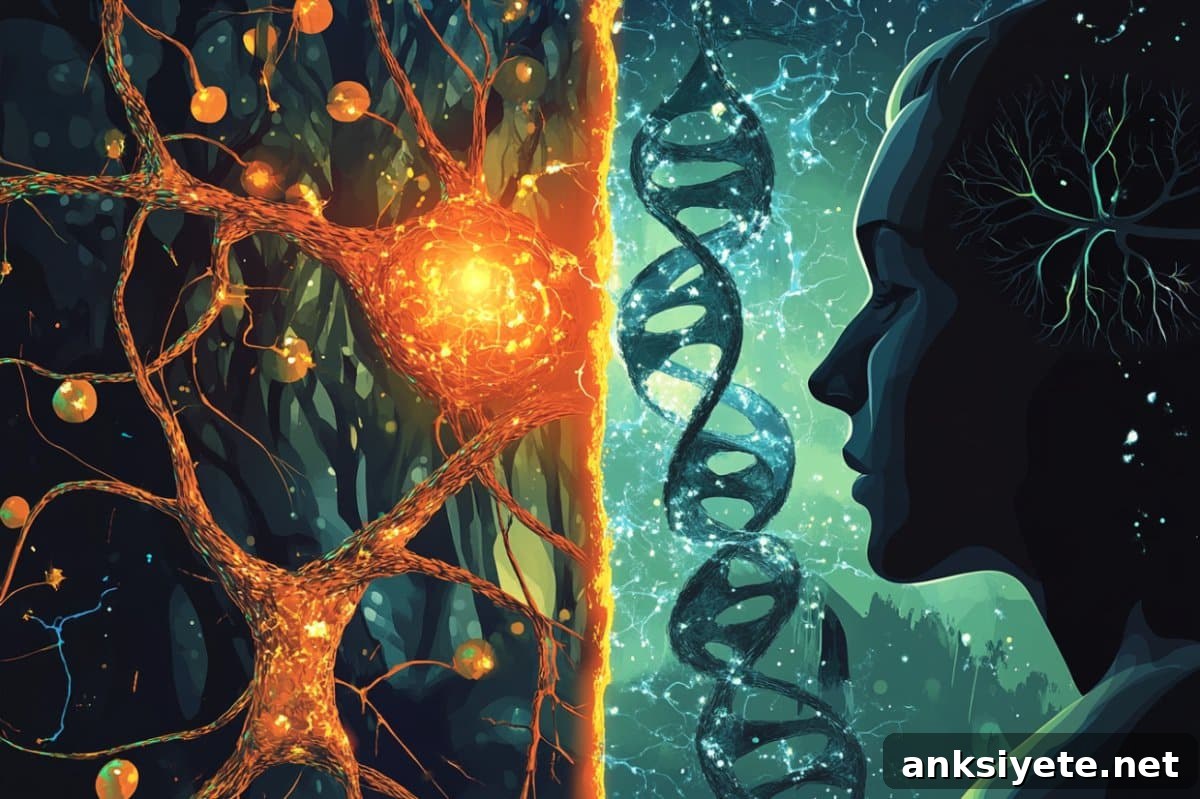
Summary: Researchers have identified a tiny, nine–amino-acid microexon spliced into the DAAM1 gene that is essential for memory formation and functions only in neurons. Removing this microexon in mice reduced the number of dendritic spines—key structures for learning and memory—and produced about a 40% drop in performance on memory tasks.
When the research team corrected a signaling imbalance chemically—an imbalance triggered by the microexon’s absence—the mice partially recovered neuronal activity and memory performance. The microexon’s sequence is so conserved that it appears unchanged in species ranging from sharks to humans, indicating a fundamental role in brain function across hundreds of millions of years of evolution.
Key Facts:
- Neuron-specific microexon: A nine–amino-acid sequence inserted only in brain cells alters DAAM1 protein function.
- Memory and synapses: Deleting the microexon reduced dendritic spine density and impaired memory recall in mice.
- Evolutionary conservation: The same microexon sequence is conserved across species, including sharks and humans, for over 400 million years.
Source: Center for Genomic Regulation
Splicing gives cells flexibility. By cutting and joining pieces of a gene’s message, cells generate multiple protein variants from the same gene. This versatility is especially pronounced in the brain, where alternative splicing fine-tunes neuronal proteins for development and function.
Scientists at the Centre for Genomic Regulation (CRG) have focused on one exceptionally small but important fragment: a neuronal microexon of just nine amino acids that is incorporated into the DAAM1 protein only in neurons and not in other tissues.
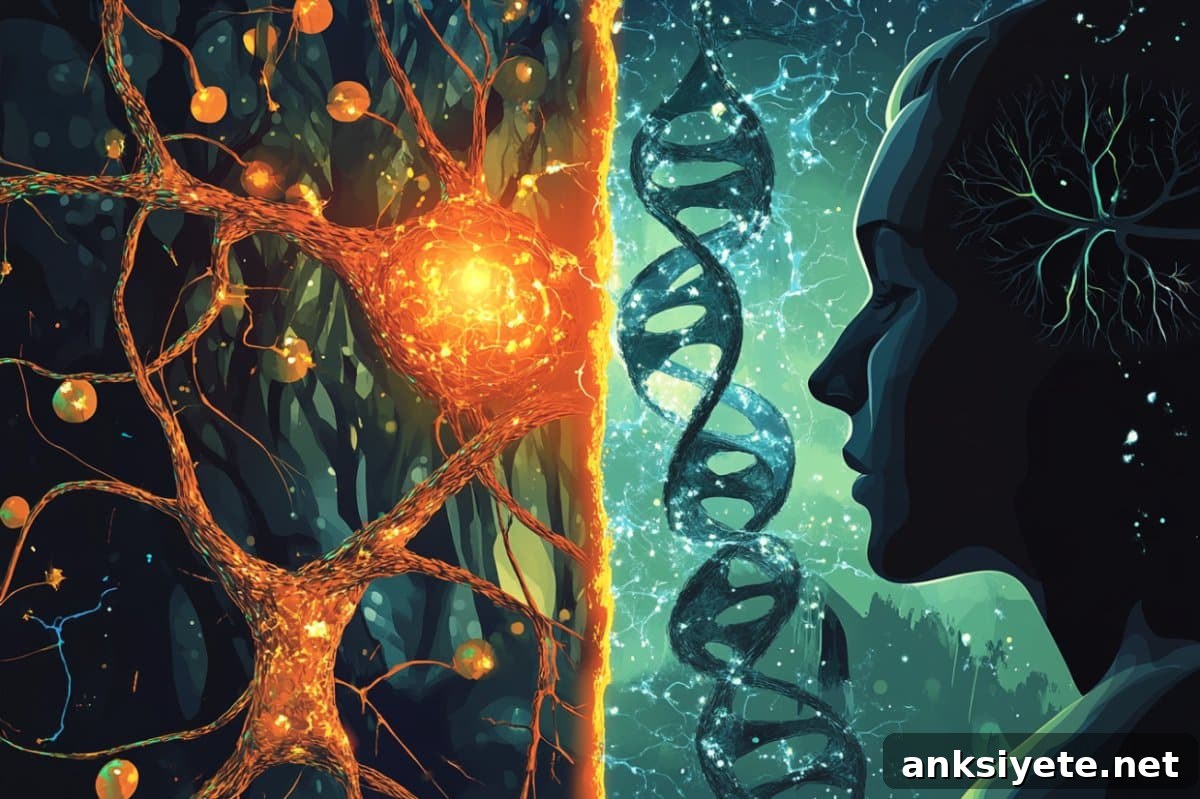
DAAM1 encodes a protein that helps organize the actin cytoskeleton, which determines cell shape and supports cellular movements. Inclusion of the microexon extends a linker region within DAAM1’s FH2 domain and changes how the protein interacts with actin filaments. That small change has outsized consequences for neuronal structure and memory.
Mice engineered to lack this nine–amino-acid microexon were born appearing healthy, yet their adult neurons showed profound changes: about half the normal number of immature dendritic spines, which are critical for forming new synaptic connections. Fewer spines translate into weaker synaptic networks, and behavioral tests revealed roughly a 40% reduction in memory performance in certain tasks.
Under the microscope, neurons without the microexon look largely normal, but their ability to form functional synapses and transmit information is markedly impaired. “Neurons appear almost normal visually, yet they cannot build the same connections or support effective signaling,” says Dr. Patryk Poliński, who led the experimental work at the CRG.
Mechanistically, loss of the microexon altered actin dynamics and triggered increased RHOA/ROCK signaling, a pathway that regulates the actin cytoskeleton. By applying a ROCK inhibitor to chemically reduce this overactive signaling, the team was able to partially restore neuronal firing and improve memory performance in the mice, demonstrating that the cognitive defects can be mitigated by targeting the affected pathway.
Dr. Mara Dierssen, co-corresponding author, notes, “Our results show memory retrieval can be at least partially rescued when the relevant molecular switch is corrected.” The researchers caution, however, that these interventions serve as proof of principle rather than immediate therapies for humans.
Evolutionary evidence strengthens the case for the microexon’s importance. The identical nine–amino-acid sequence appears in both sharks and humans, indicating that natural selection has preserved this element for nearly half a billion years. “Such deep conservation points to a molecular element that is essential for how neurons wire and store memories,” says ICREA Research Professor Manuel Irimia, co-corresponding author.
Previous work from Dr. Irimia’s group found that many neuron-specific microexons are systematically skipped in the brains of people with autism spectrum disorder. The human brain contains more than 300 microexons, but only a few have been characterized in detail. The authors propose that subtle splicing defects in microexons may contribute to a spectrum of neurodevelopmental disorders, learning disabilities, and autism-related conditions.
To follow up, the team is scanning human genetic databases for rare variants that could disrupt the DAAM1 microexon and correlate with learning disorders. Parallel experiments are underway to identify other neuronal microexons that may fine-tune cognition through similar mechanisms involving actin dynamics and signaling pathways like RHOA/ROCK.
About this genetics and memory research news
Author: Omar Jamshed
Source: Center for Genomic Regulation
Contact: Omar Jamshed – Center for Genomic Regulation
Image: The image is credited to Neuroscience News
Original Research: Open access. “A highly conserved neuronal microexon in DAAM1 controls actin dynamics, RHOA/ROCK signaling, and memory formation” by Patryk Poliński et al., published in Nature Communications.
Abstract
A highly conserved neuronal microexon in DAAM1 controls actin dynamics, RHOA/ROCK signaling, and memory formation
Actin cytoskeleton dynamics are essential for proper nervous system development and function. A conserved set of neuron-specific microexons influences many aspects of neurobiology, but their roles in actin regulation have been unclear. This study examines a microexon in DAAM1, a formin-homology-2 (FH2) domain protein involved in actin reorganization. Inclusion of the microexon lengthens the FH2 linker and alters actin polymerization. Genomic deletion of the microexon causes defects in neuritogenesis and increases calcium influx in differentiated neurons. Mice lacking the microexon display postsynaptic abnormalities, fewer immature dendritic spines, impaired long-term potentiation, and memory deficits. These phenotypes are linked to elevated RHOA/ROCK signaling and are partially rescued by treatment with a ROCK inhibitor. Overall, this work highlights how a conserved neuronal microexon regulates actin dynamics and cognitive function.