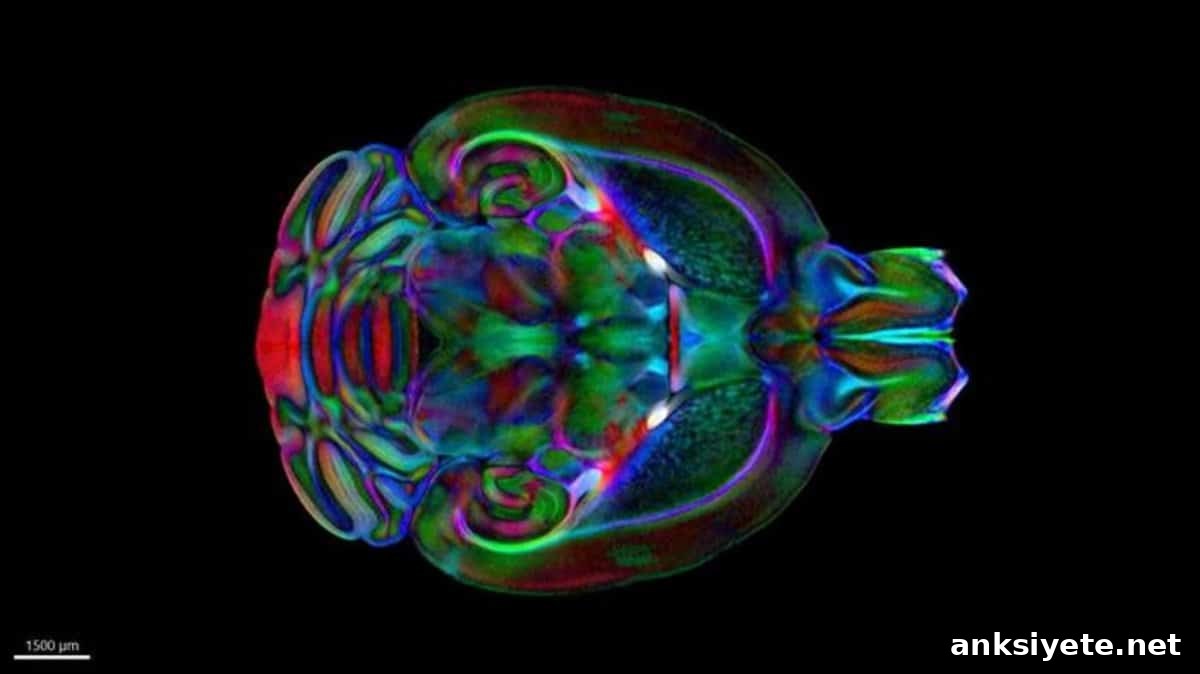
Summary: Researchers have released the Duke Mouse Brain Atlas, a state-of-the-art three-dimensional map that captures brain structure at scales ranging from whole regions down to individual cells. By integrating high-resolution MRI, microCT, and light sheet microscopy, the atlas corrects for imaging distortions and creates a consistent spatial framework for comparing data across studies.
Designed as an open-access resource, the atlas provides a shared reference for scientists studying neurodegenerative conditions such as Alzheimer’s and Huntington’s diseases, as well as models of environmental neurotoxicity. Its availability aims to speed research, improve measurement precision, and make advanced brain mapping accessible to educators and the public.
Key Facts:
- First fully 3D stereotaxic atlas: Combines multiple imaging modalities to produce an accurate, undistorted volumetric map of the mouse brain.
- Open access: Freely downloadable and compatible with a variety of open-source visualization tools.
- Research applications: Already applied to tracking neurodegeneration in mouse models of Alzheimer’s and Huntington’s diseases, and to studies of toxic metal and pesticide exposure.
Source: Duke University
A collaborative team from Duke University School of Medicine, the University of Tennessee Health Science Center, and the University of Pittsburgh developed this atlas to raise the precision and reproducibility of structural brain measurements in mice.
The Duke Mouse Brain Atlas merges microscopic-level imaging into a stereotaxic three-dimensional framework, producing coordinated maps that span large anatomical regions down to single cells and neural circuits. By aligning images from different technologies into one undistorted space, the atlas enables reliable cross-study comparisons and more accurate quantification of brain changes.
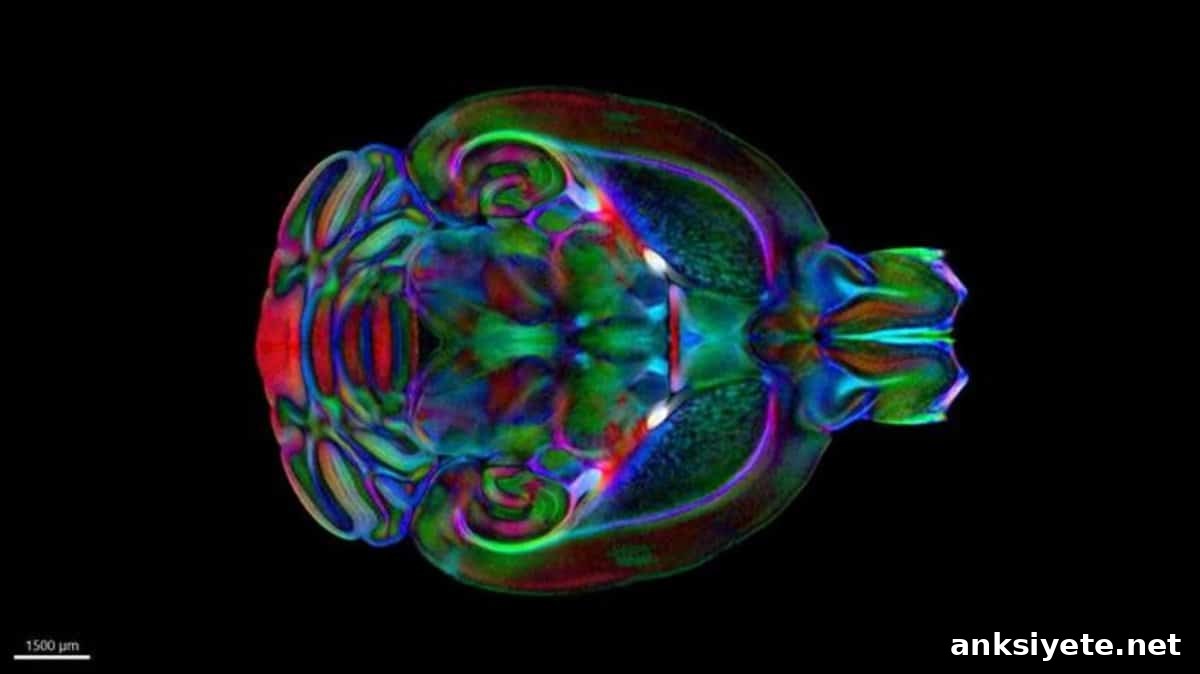
“This is the first truly three-dimensional, stereotaxic atlas of the mouse brain,” said G. Allan Johnson, PhD, Charles E. Putman University Distinguished Professor of Radiology at Duke, who also holds appointments in the Departments of Physics and Biomedical Engineering. The term stereotaxic indicates the atlas preserves the brain’s in-life orientation and includes external landmarks to guide experimental work.
Different imaging techniques offer complementary strengths and weaknesses: some produce detailed views of individual cells but introduce distortions from tissue processing, while others preserve overall geometry but lack cellular detail. The Duke atlas provides a common spatial reference so diverse datasets can be registered, aligned, and compared without geometric inconsistencies.
The project and its methods are described in a paper published April 30, 2025, in the journal Science Advances. Among the Duke coauthors are first author Harrison Mansour, programmer/analyst at the Duke Center for In Vivo Microscopy, and Leonard E. White, associate professor of neurology.
The atlas is freely available for download and works with multiple open-source display packages, making it useful both as an educational tool for students and as a precise research resource for neuroscientists. Current applications include tracking progressive cell loss and structural changes in models of Alzheimer’s and Huntington’s diseases and evaluating brain effects after environmental toxin exposure.
To build the atlas, the team began with diffusion tensor MRI, acquiring three-dimensional images from five perfusion-fixed mouse brains while still in the skull. These images were captured at 15-micron resolution—the highest resolution reported for diffusion tensor imaging in mouse brains—thanks to imaging strategies and hardware refined over four decades at the Duke Center for In Vivo Microscopy. This level of detail represents a resolution many orders of magnitude finer than clinical MRI.
Those MRI volumes were then registered to microCT scans of the mouse skull to establish precise external bony landmarks such as bregma and lambda. After mapping the brains in situ, the researchers removed them from the skull for light sheet microscopy, enabling cellular-resolution imaging that was coregistered back into the same stereotaxic space.
“By combining MRI, microCT, and light sheet microscopy at the highest achievable spatial resolution within one shared coordinate system, we created one of the most comprehensive mouse brain maps to date,” Johnson said.
About this brain mapping research news
Author: Shantell Kirkendoll ([email protected])
Source: Duke University
Contact: Shantell Kirkendoll – Duke University
Image: The image is credited to Duke University
Original Research: Open access. “The Duke Mouse Brain Atlas: MRI and light sheet microscopy stereotaxic atlas of the mouse brain” by G. Allan Johnson et al., Science Advances. DOI: 10.1126/sciadv.adq8089
Abstract
The Duke Mouse Brain Atlas: MRI and light sheet microscopy stereotaxic atlas of the mouse brain
Brain atlases are essential tools that let researchers share and compare data within a common reference frame. Until now, there has been no comprehensive three-dimensional stereotaxic atlas of the mouse brain that provides continuous coverage from macrostructures to single-cell detail.
The research team acquired diffusion tensor images from five perfusion-fixed (in skull) mouse specimens at 15-micrometer resolution, producing multiple complementary 3D volumes that each emphasize different aspects of cytoarchitecture. These averaged MRI volumes were mapped into micro–computed tomography (microCT) scans of the skull to define external landmarks, and light sheet microscopy images of the same brains were coregistered to provide cellular maps in the same stereotaxic coordinate system.
To correct geometric distortions in existing references, the Allen Reference Atlas was registered to this new volume and adjusted into the stereotaxic space. The resulting multiscalar atlas—comprising roughly 13 terabytes of image data—establishes a shared spatial framework for integrating molecular, structural, and functional mouse brain studies.