
Summary: Researchers at UT Austin have identified “extinction neurons” in the hippocampus that suppress fearful memories when active and allow those memories to return when inactive. This discovery could point to new approaches for treating PTSD, phobias, and anxiety disorders.
Source: UT Austin
Neuroscientists at The University of Texas at Austin have identified a specific population of brain cells that control whether a fearful memory is suppressed or allowed to resurface. This discovery sheds light on why fear often relapses after successful therapy and could influence future approaches to treating anxiety, phobias, and post-traumatic stress disorder (PTSD).
Published in Nature Neuroscience, the study reports the discovery of so-called “extinction neurons” in the hippocampus. When these neurons are active, they suppress fear memories; when they are inactive, the original fear can return. This finding helps explain spontaneous recovery, a common form of relapse in which a previously diminished fear reappears without any new traumatic event.
“There is frequently a relapse of the original fear, but we knew very little about the mechanisms,” said Michael Drew, associate professor of neuroscience and the senior author of the study. “These kinds of studies can help us understand the potential causes of disorders like anxiety and PTSD, and they can also guide new treatment strategies.”
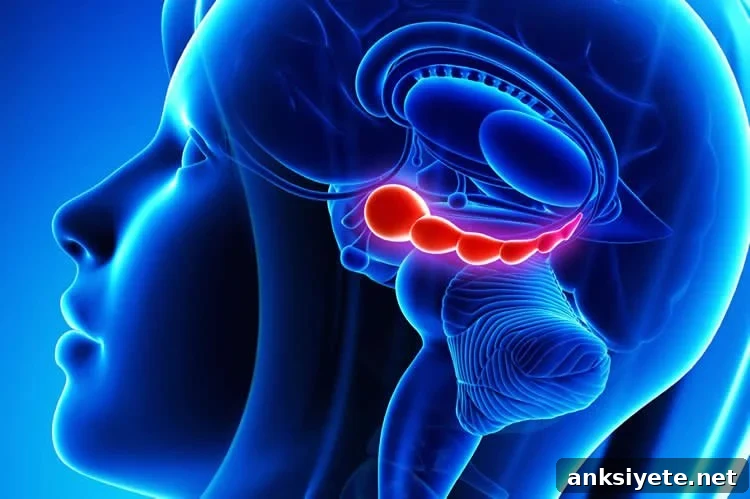
Contrary to expectations, the research team found these fear-suppressing neurons in the hippocampus rather than the amygdala, which is typically associated with fear processing. The hippocampus is critical for memory formation and spatial context, suggesting that it plays a major role in linking fear memories to the places and circumstances in which they were formed.
This finding has clear implications for exposure therapy, a leading psychological treatment for fear-based disorders. Exposure therapy works by creating new “extinction” memories of safety that compete with the original fear memory. For instance, a person afraid of spiders after a bite may gradually learn safety through repeated, controlled exposures to harmless spiders. The new memories do not erase the original fear; instead, they inhibit it. The UT Austin study shows that both fear and extinction memories can coexist in the hippocampus as distinct neural traces, and the balance between these traces determines whether fear is expressed or suppressed.
“Extinction does not erase the original fear memory but instead creates a new memory that inhibits or competes with the original fear,” Drew explained. “Our results demonstrate that the hippocampus forms memory traces for both fear and extinction, and the interaction between these traces controls whether fear returns.”
The experiments used a standard rodent model for contextual fear conditioning. Mice were placed in a distinct chamber and received a mild, harmless shock to induce a fear response. With repeated, shock-free re-exposure to the same chamber, mice developed extinction memories and stopped showing fear behaviors. The researchers then used optogenetics—a method that allows precise control of neuron activity with light—to selectively activate or inhibit the neuron populations linked to either the original fear or the extinction memory.
By selectively switching these hippocampal ensembles on or off, the team demonstrated causal control over fear expression: activating extinction neurons suppressed fear and prevented its spontaneous return, while inhibiting extinction neurons triggered relapse of the fear response. Conversely, stimulating neurons associated with fear acquisition increased fear, and silencing those fear neurons reduced spontaneous recovery.
“Artificially suppressing these so-called extinction neurons causes fear to relapse, whereas stimulating them prevents fear relapse,” Drew said. “These experiments reveal potential avenues for suppressing maladaptive fear and preventing relapse.”
The research team was led by graduate student Anthony Lacagnina and included Emma Brockway, Chelsea Crovetti, Francis Shue, Meredith McCarty and Kevin Sattler of The University of Texas at Austin, along with Sean Lim, Sofia Leal Santos and Christine Denny of Columbia University.
Funding: This research was supported by the National Institutes of Health and the Portuguese Foundation for Science and Technology.
Source:
UT Austin
Media Contacts:
Christine Sinatra – UT Austin
Image Source:
Image adapted from the UT Austin news release.
Original Research: Closed access. “Distinct hippocampal engrams control extinction and relapse of fear memory” — Anthony F. Lacagnina, Emma T. Brockway, Chelsea R. Crovetti, Francis Shue, Meredith J. McCarty, Kevin P. Sattler, Sean C. Lim, Sofia Leal Santos, Christine A. Denny & Michael R. Drew. Nature Neuroscience. DOI: 10.1038/s41593-019-0361-z
Abstract
Learned fear often relapses after extinction, suggesting extinction training generates a new memory that coexists with the original fear memory. The mechanisms that determine which memory is expressed have been unclear. Using activity-dependent neural tagging in the dentate gyrus, the authors show that extinction training both suppresses reactivation of contextual fear engram cells and activates a separate extinction ensemble. Optogenetic inhibition of neurons active during extinction increased fear, whereas silencing neurons active during fear reduced spontaneous recovery. Stimulation of fear neurons increased fear, while stimulation of extinction neurons suppressed fear and prevented spontaneous recovery. These results indicate the hippocampus forms distinct fear and extinction representations and that interactions between these hippocampal engrams govern suppression and relapse of fear after extinction.