Loss of a key receptor in a specific class of inhibitory brain cells may contribute to neurodevelopmental disorders such as autism and schizophrenia, new research from Salk Institute scientists suggests.
Previous studies had established the significance of the metabotropic glutamate receptor mGluR5 in various brain regions, particularly in excitatory neurons. However, until now the role of mGluR5 within parvalbumin-positive (Pv+) interneurons—a highly specialized class of inhibitory neurons implicated in cognitive processing and the generation of neural oscillations—had not been examined in detail.
“When mGluR5 is absent from parvalbumin cells, mice develop a range of serious behavioral deficits,” says Terrence Sejnowski, head of Salk’s Computational Neurobiology Laboratory, which led the study published in Molecular Psychiatry. “Many of these changes closely resemble features observed in schizophrenia.”
mGluR5 mediates glutamate signaling, and past research has linked alterations in this receptor to conditions including addiction, anxiety and Fragile X syndrome—studies that primarily focused on excitatory neurons. The Salk team instead focused on Pv+ interneurons because of their critical role in the maturation and balance of neural circuits during development.
Working in collaboration with Athina Markou’s laboratory at the University of California, San Diego, the researchers engineered mice in which the mGluR5 receptor was selectively removed from Pv+ interneurons after the initial stages of brain formation. By targeting the receptor postnatally, the team probed how changes occurring after birth influence circuit maturation and behavior.
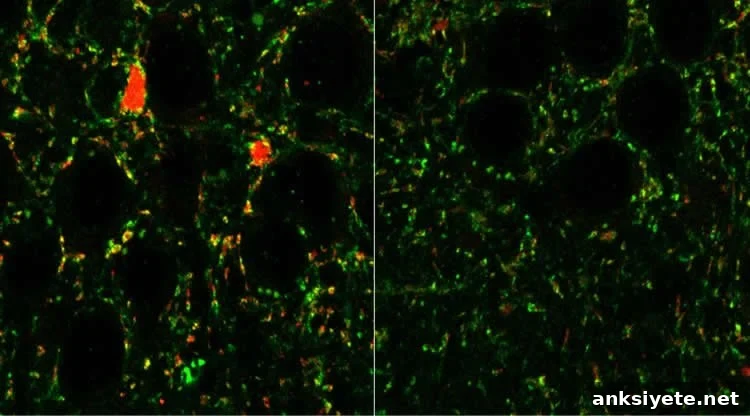
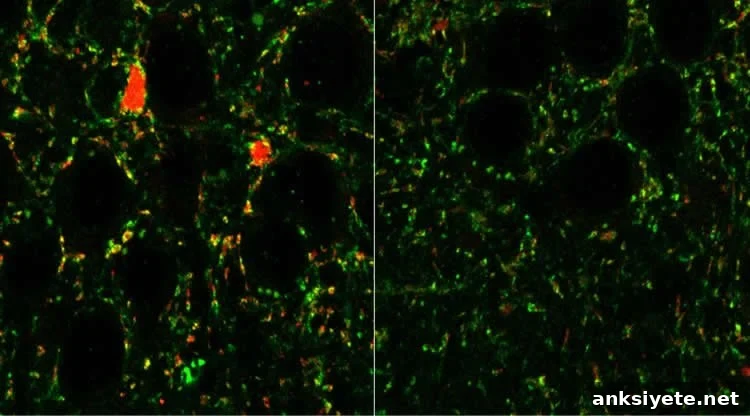
Animals lacking mGluR5 in parvalbumin interneurons displayed a spectrum of developmental and behavioral abnormalities. Notable findings included compulsive, repetitive grooming and reduced social interaction. Electrophysiological measures revealed fewer inhibitory connections from Pv+ neurons onto excitatory cells and diminished inhibitory currents overall. These cellular changes were accompanied by altered brain oscillatory patterns and event-related potentials—electrical signatures that resemble those recorded in people with schizophrenia.
“Our results indicate that disruptions occurring after birth can reshape the way networks form and function,” says Margarita Behrens, corresponding author and Salk staff scientist. The study showed that deleting mGluR5 from Pv+ cells reduced the number of detectable parvalbumin neurons and impaired the inhibitory control they exert over cortical circuits.
Behavioral and sensory consequences observed in the mice included domain-specific memory impairments, increased compulsive-like behavior, abnormal sensorimotor gating and an altered response to stimulant drugs. Together, these changes suggest that mGluR5 signaling in parvalbumin interneurons plays a central role in establishing balanced network activity and normal behavior, and that perturbation of this signaling pathway can produce broad-spectrum effects relevant to neurodevelopmental disorders.
The investigators emphasize that the affected parvalbumin cells remain present rather than dying off completely, suggesting potential for therapeutic restoration. “The cells are still alive, and if we can identify and manipulate the molecular switches disrupted by the loss of mGluR5, it may be possible to restore healthier, functioning states,” Sejnowski adds.
At the same time, the authors urge caution for drug development strategies that broadly target mGluR5 across the whole brain. “Many clinical trials are exploring modulation of mGluR5 to treat anxiety and Fragile X syndrome,” Behrens notes. “Our findings imply that indiscriminate manipulation of mGluR5 could produce unexpected behavioral outcomes by affecting parvalbumin neurons.”
Further work is required to determine whether alterations of mGluR5 in parvalbumin interneurons occur in human neurodevelopmental disorders, and to identify the mechanisms that lead to loss or dysregulation of these receptors. Understanding these mechanisms will be essential for assessing whether targeted, cell-type-specific interventions could prevent or reverse abnormal circuit development.
Additional contributors to the study included A. Pinto-Duarte, A. Kappe, A. Zembrzycki, E.A. Mukamel, K. Lucero, and X. Wang from the Salk Institute, and S.A. Barnes and A. Markou from the University of California, San Diego.
Funding: The research and investigators received support from the National Institutes of Health, the Howard Hughes Medical Institute, and a Calouste Gulbenkian Foundation Fellowship.
Original research: The work is reported under the title “Disruption of mGluR5 in parvalbumin-positive interneurons induces core features of neurodevelopmental disorders” in the journal Molecular Psychiatry. The study examines how postnatal ablation of mGluR5 from Pv+ interneurons affects cellular properties, network oscillations and behavior relevant to autism spectrum disorders and schizophrenia.
Abstract
Disruption of mGluR5 in parvalbumin-positive interneurons induces core features of neurodevelopmental disorders
Altered glutamatergic transmission onto developing GABAergic systems—particularly onto parvalbumin-positive (Pv+) fast-spiking interneurons—has been proposed as a contributing factor in several neurodevelopmental disorders, including schizophrenia and autism. Excitatory glutamatergic input mediated by ionotropic and metabotropic receptors is essential for proper postnatal maturation of the Pv+ GABAergic network. The authors generated mutant mice with postnatal, cell-type-specific deletion of metabotropic glutamate receptor 5 (mGluR5) from Pv+ interneurons and examined the consequences at cellular, network and behavioral levels. Loss of mGluR5 led to fewer detectable Pv+ neurons, reduced inhibitory synaptic currents, altered brain oscillations and event-related potentials, domain-specific memory deficits, increased compulsive-like behaviors, disrupted sensorimotor gating and modified responses to stimulant agents. These results support a critical role for mGluR5 in the development and function of Pv+ interneurons and indicate that disruption of this signaling pathway can produce widespread alterations in brain network activity and behavior relevant to neurodevelopmental disorders.