
Summary: New research shows that infants’ brains respond differently to emotional tones in voices. The study suggests that early maternal behavior—particularly how much a mother directs or controls her infant’s actions—can influence the same brain network adults use to process emotional vocalizations.
Source: PLOS.
Researchers report that the brain network adults use to process angry vocal sounds is active in infants as young as six months, and this sensitivity is strongest in infants whose mothers frequently direct or control their behavior. The open-access study, published in PLOS ONE by Chen Zhao and colleagues at the University of Manchester, indicates that the neural systems for vocal emotion detection are present early in life and that aspects of maternal interaction shape how infants respond to emotional tones.
Decades of developmental research have shown that infants can discriminate emotional cues in caregiver speech long before they understand words. Infants use prosody—intonation, pitch, rhythm, and tone—to infer a speaker’s emotion. In adults, processing of vocal emotion recruits frontal and temporal brain regions. Imaging studies with infants have been limited because conventional MRI scanners are noisy, making it difficult to measure neural responses to auditory stimuli.
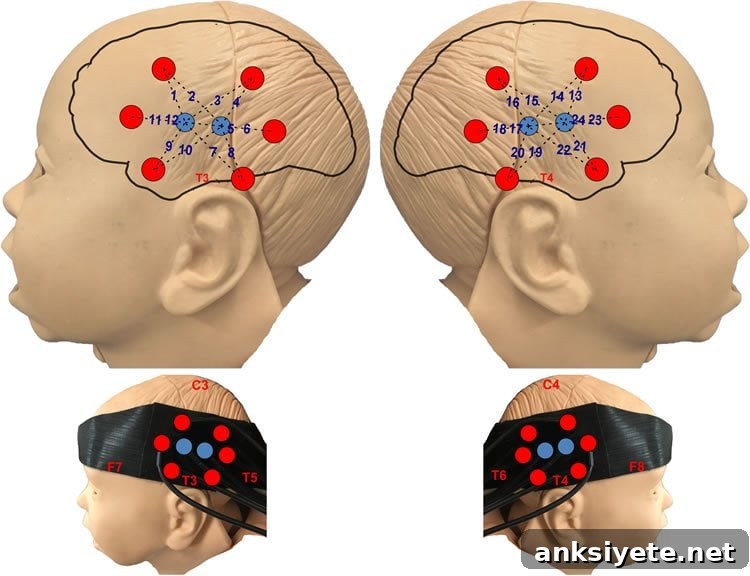
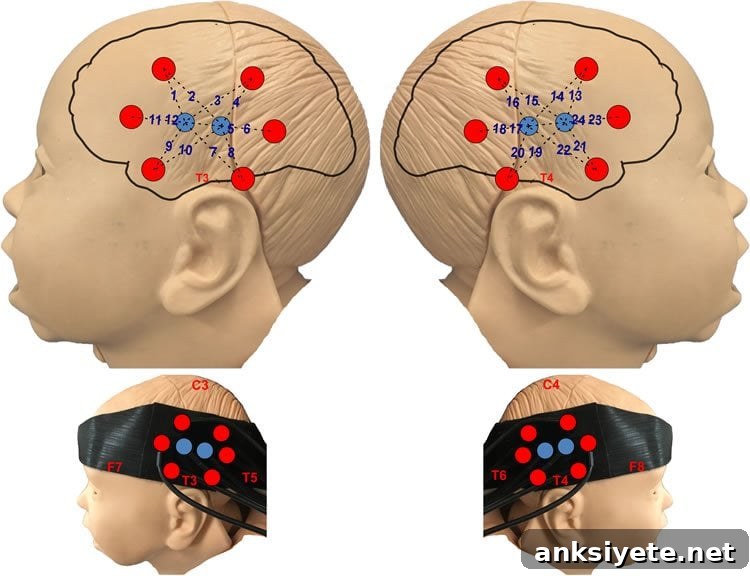
To avoid that problem, the team used functional near-infrared spectroscopy (fNIRS), a quiet and noninvasive technique that monitors blood flow in cortical regions. During the study, 29 six-month-old infants sat on their mothers’ laps while listening to brief non-speech vocalizations that conveyed anger, happiness, or neutral affect. Each recording was designed to convey emotional tone without meaningful words.
In addition to the neuroimaging session, researchers observed the same mother-infant pairs during a floor-play interaction. Trained observers rated mothers on two dimensions: sensitivity (how responsive the mother was to the infant’s changing behavior) and directiveness (the degree to which the mother guided or attempted to control the infant’s actions during play). These behavioral measures allowed the team to relate infants’ brain responses to real-world caregiving styles.
The results showed that both angry and happy vocalizations activated a fronto-temporal cortical network in the infants, comparable to regions implicated in adult vocal emotion processing. Importantly, the magnitude of the neural response to angry vocalizations (compared with neutral ones) was higher in infants whose mothers scored higher on directiveness during play. In other words, infants who experienced more directive caregiving—or who experienced greater stress from more controlling interactions—displayed stronger neural sensitivity to angry voices.
These findings suggest two key points. First, the neural architecture that supports vocal emotion detection is functionally present by six months of age and already differentiates emotional tones such as anger and happiness. Second, early social experience appears to shape that sensitivity: the character of mother-infant interactions, particularly how much mothers steer or correct infant behavior, is associated with stronger infant brain responses to anger.
Zhao commented on the implications: “Brain science shows that babies’ brains are sensitive to different emotional tones they hear in voices. Such tones can cause different activation patterns in the infant’s brain areas which are also known to be involved in processing voices in adults and older children. These patterns also reveal that the early care experienced by babies can influence brain responses so that the more intrusive and demanding their mother, the stronger the brain response of these 6-month-olds is to hearing angry voices.”
Funding: Chen Zhao was supported by a scholarship from the China Scholarship Council while conducting this research. Professor Kathryn Abel is an NIHR Senior Investigator and also received support from a European Research Council Consolidator award.
Source: Chen Zhao – PLOS
Publisher: NeuroscienceNews.com (organized coverage)
Image credit: Zhao et al./PLOS ONE
Original research: Study published in PLOS ONE, titled “Is infant neural sensitivity to vocal emotion associated with mother-infant relational experience?” by Chen Zhao, Georgia Chronaki, Ingo Schiessl, Ming Wai Wan, and Kathryn M. Abel. Published February 27, 2019.
DOI: 10.1371/journal.pone.0212205
PLOS. “Mother’s Behavioral Corrections Tune Infant’s Brain to Angry Tone.” NeuroscienceNews. February 27, 2019.
PLOS (2019). Mother’s Behavioral Corrections Tune Infant’s Brain to Angry Tone. NeuroscienceNews. Retrieved February 27, 2019.
PLOS. “Mother’s Behavioral Corrections Tune Infant’s Brain to Angry Tone.” NeuroscienceNews. Accessed February 27, 2019.
Abstract
Is infant neural sensitivity to vocal emotion associated with mother-infant relational experience?
An early ability to recognize others’ vocal emotions helps infants obtain appropriate care and navigate social interactions. Prior work suggests that temporal cortex responses to the prosody of emotional speech appear within the first year of life, and that early experience might influence neural specialization for vocal emotion. In this fNIRS study of 29 six-month-old infants, both angry and happy non-speech vocalizations evoked increased activation in temporal cortices compared with neutral sounds. Moreover, the strength of the angry-versus-neutral effect correlated positively with the degree of maternal directiveness observed during play. These findings implicate bilateral temporal mechanisms similar to those reported in adults and indicate that infants exposed to more directive caregiving or more controlling social play may preferentially or more strongly process vocal anger by six months of age.