
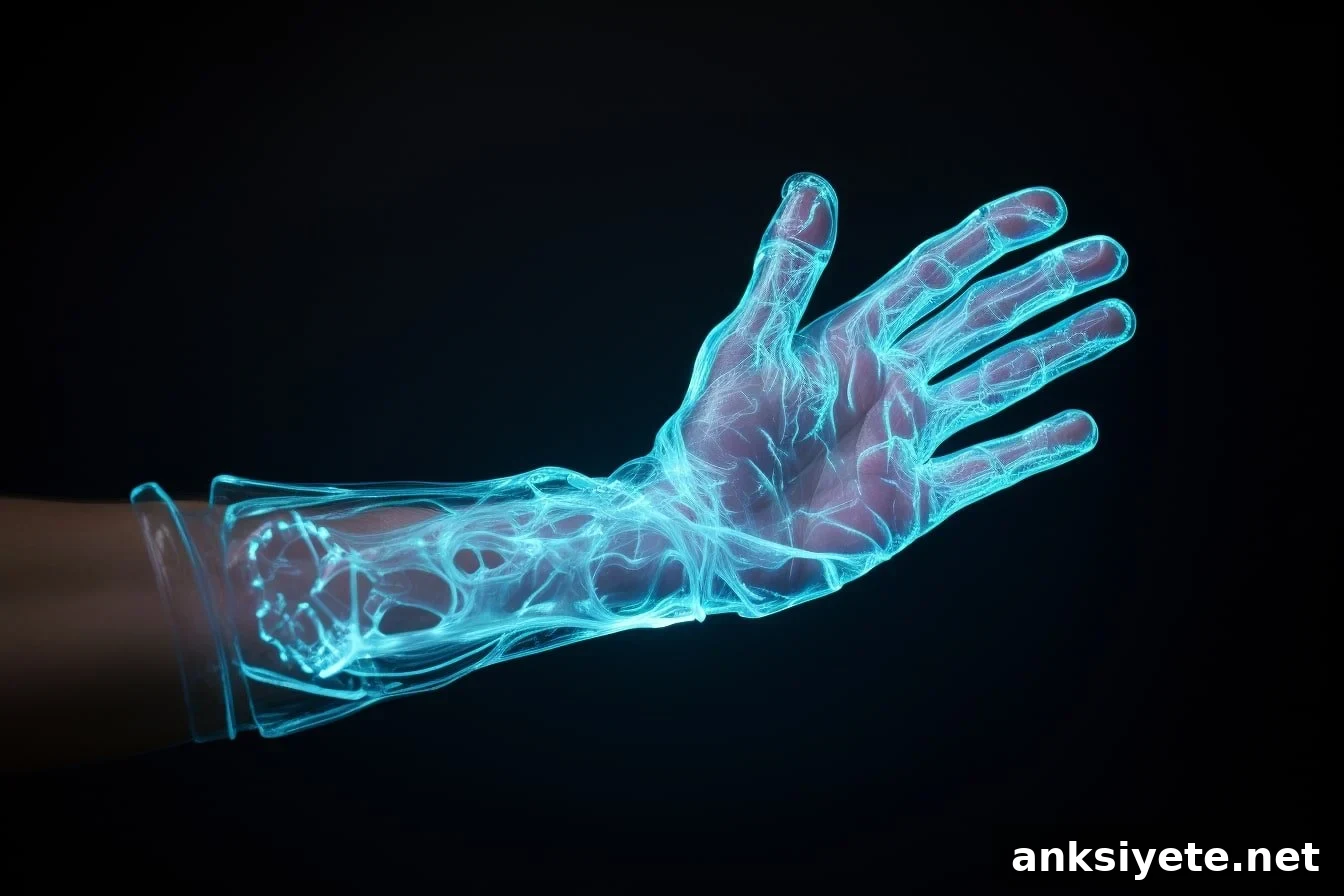
Summary: Researchers have developed a compact, highly efficient thermoelectric device capable of restoring temperature sensations in amputees’ phantom limbs.
Called the wearable thin-film thermoelectric cooler (TFTEC), this ultrathin device is lightweight, fast-acting, and energy-efficient. It holds promise for enhancing prosthetic feedback, creating new haptic experiences for augmented reality, enabling thermally-modulated medical therapies, and supporting industrial uses such as electronics cooling and satellite energy harvesting.
Testing of the TFTEC showed it can produce perceptible cooling in phantom hands more quickly, more intensely, and with less energy than conventional thermoelectric systems.
Key Facts:
- Johns Hopkins Applied Physics Laboratory (APL) researchers designed the wearable TFTEC — one of the smallest and most efficient refrigeration devices to date — to help amputees experience temperature through their phantom limbs.
- In human trials, the TFTEC generated cooling sensations faster, stronger, and using less power than traditional thermoelectric devices.
- Beyond prosthetics, TFTEC technology could be applied to cooling electronics and lasers or to energy-harvesting systems for satellites.
Source: Johns Hopkins University
Johns Hopkins Applied Physics Laboratory researchers have built a feather-light, high-performance thin-film thermoelectric cooler (TFTEC) and collaborated with neuroscientists to enable amputees to perceive temperature in their phantom hands.
This novel device opens new possibilities for sensory restoration and haptic design, including improved prosthetic feedback, temperature-enabled augmented reality interactions, and therapies that rely on controlled thermal cues for pain management or rehabilitation.
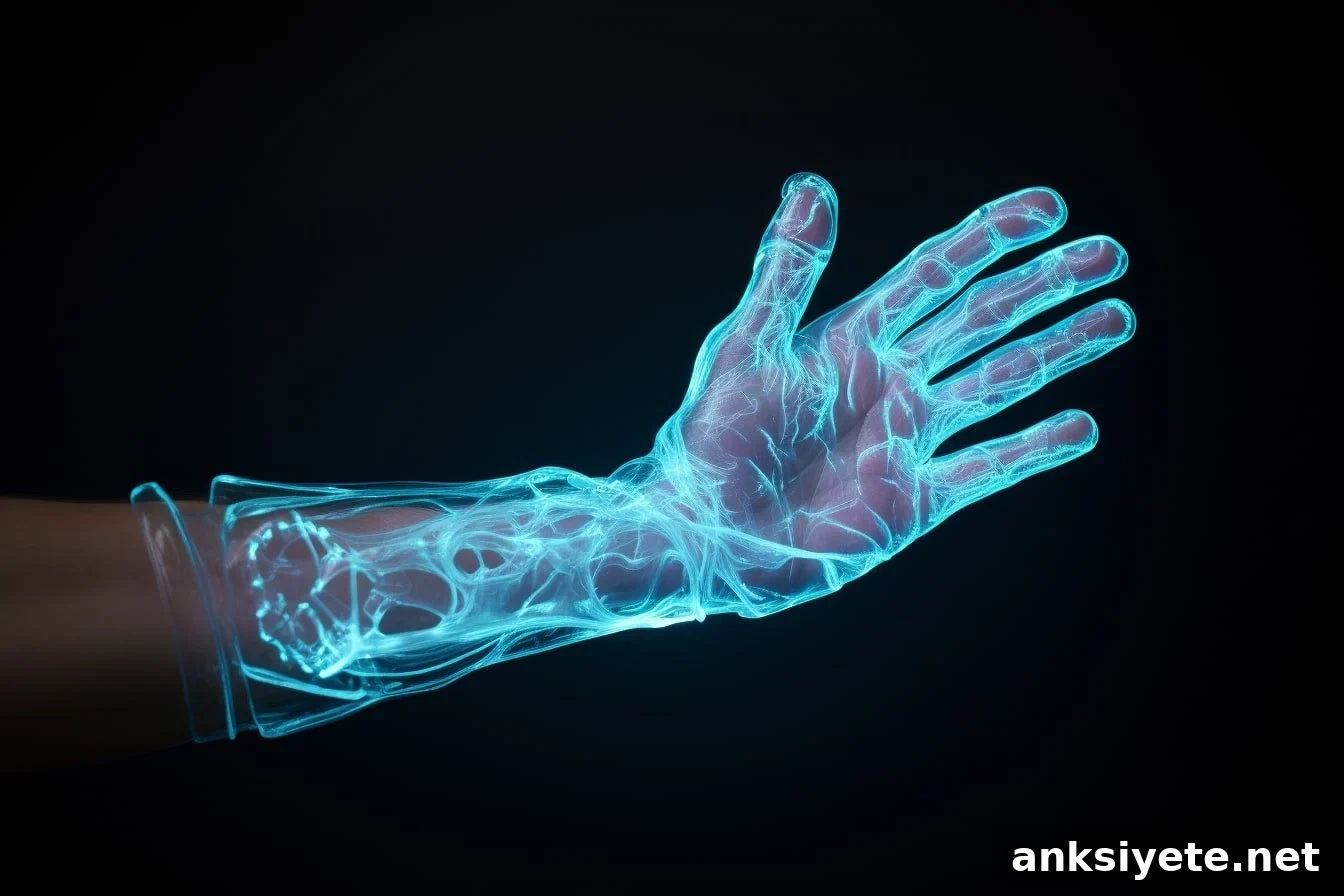
The TFTEC’s capabilities also suggest a range of industrial and research uses, from targeted cooling of sensitive components to compact energy-harvesting solutions in space systems.
Work on the TFTEC began in 2016 when Rama Venkatasubramanian, a semiconductor device engineer and APL’s chief technologist for thermoelectrics research, started developing nano-engineered thermoelectric materials for DARPA’s MATRIX program. That effort produced advanced thin-film materials — Controlled Hierarchically Engineered Superlattice Structures (CHESS) — aimed at delivering novel transduction capabilities for defense-related cooling and thermal management.
By 2019 Venkatasubramanian’s progress with CHESS attracted interest from APL’s Exploratory Science Branch. Bobby Armiger proposed adapting the technology to restore thermal perception in prostheses, a natural extension of APL’s long-running work on advanced prosthetic control and sensory feedback.
APL has previously led DARPA’s Revolutionizing Prosthetics efforts to create brain-controlled artificial limbs that deliver near-natural motor and sensory function. While tactile and vibration feedback have been demonstrated before, reproducing rapid, realistic cooling sensations with the required speed, intensity, and efficiency had remained a challenge.
“We’ve known how to evoke touch and vibration in a phantom limb, but producing a natural-feeling cooling response fast and efficiently enough for prosthetic use is new,” Armiger said. He noted that restoring temperature perception can improve practical tasks—like identifying a cold drink—and deepen emotional embodiment, such as feeling warmth when a loved one holds the prosthetic hand.
APL’s thermoelectrics team partnered with neuroscientists and roboticists through a study supported by the Center for Rehabilitation Sciences Research at the Uniformed Services University of the Health Sciences. The collaborative goal was a wearable thermoelectric cooler capable of matching the human body’s rapid thermal sensitivity.
The result is the TFTEC. “Our TFTEC is just over one millimeter thick, weighs about 0.05 grams—comparable to a thin adhesive bandage—and can deliver intense cooling in less than a second,” Venkatasubramanian said. “It’s roughly twice as energy efficient as common thermoelectric devices and can be manufactured with semiconductor tools similar to those used for LEDs.”
Researchers evaluated the device by mapping thermal sensations on four amputees’ phantom hands. Luke Osborn, a neuroengineering researcher who leads APL’s noninvasive nerve stimulation efforts, explained that nerves in the residual limb can still convey sensations to a phantom hand. By stimulating these regions thermally or electrically, researchers can determine where and what kind of sensation is perceived.
A recent Nature Biomedical Engineering publication reports comprehensive TFTEC testing, including lab characterization, amputee trials, and a practical demonstration. The thin-film device produced cooling sensations in all participants during a cold-detection task; comparable bulk thermoelectric devices achieved this in only half of participants. The TFTEC elicited sensations up to eight times faster and three times stronger while consuming half the energy and using a tiny fraction of the active thermoelectric mass.
“The TFTEC created faster, more intense cooling perceptions than traditional devices, even at the same target temperature,” Osborn said. Improved perception speed helped participants make quicker decisions during testing. Importantly, the stimulation sites remained stable across 48 weeks, indicating long-term reliability and the potential for durable, noninvasive sensory restoration.
Venkatasubramanian recalled that initial trials in 2020 quickly produced clear responses from participants—reports of immediate cold sensations and tingles where expected. Continued testing on amputees and non-amputee controls refined the approach and validated the design.
APL program managers and engineers involved in health research highlight the TFTEC’s translational potential. David Drewry, a biomedical engineer and program manager, emphasized plans for larger clinical trials and integration into wearable devices to deliver sensory restoration or haptic feedback to more users. Katy Carneal, who leads innovative health-related research at APL, noted wide-ranging research opportunities, from studying neuromuscular disorders to exploring new pain therapies that leverage pressure and temperature cues.
Clinicians at the Uniformed Services University praised the collaboration between engineers and medical researchers, underscoring the real-world impact for patients, including military personnel with limb loss. APL’s multidisciplinary work sits at the intersection of materials science, device engineering, biology, and neuroscience, enabling advances across neural interfaces, genomics tools, and fatigue monitoring within its National Health Mission Area.
About this neurotech research news
Author: Paulette Campbell
Source: Johns Hopkins University
Contact: Paulette Campbell – Johns Hopkins University
Image: The image is credited to Neuroscience News
Original Research: Closed access.
“Evoking natural thermal perceptions using a thin-film thermoelectric device with high cooling power density and speed” by Rama Venkatasubramanian et al. Nature Biomedical Engineering
Abstract
Evoking natural thermal perceptions using a thin-film thermoelectric device with high cooling power density and speed
Multimodal sensory feedback for upper-limb prostheses improves function and usability. Here, a wearable thin-film thermoelectric device with high cooling power density and rapid response restores intuitive thermal perceptions in a phantom hand through targeted stimulation of remaining nerves in the residual limb.
Specific regions on the residual limb, when thermally stimulated, produced stable phantom-hand sensations that persisted beyond 48 weeks. Some sites selectively evoked temperature, others touch, and some both, depending on whether stimulation was thermal or mechanical.
In closed-loop tasks where participants identified cold objects, the thin-film device outperformed traditional bulk thermoelectric devices: it produced cooling sensations up to eight times faster and up to three times greater in intensity while using half the energy and only about 1/600th of the active thermoelectric mass. Wearable thin-film thermoelectric devices may enable noninvasive restoration of thermal perception during touch.