
Summary: Researchers validated a stimulus-free method to assess consciousness by asking volunteers to squeeze a force sensor on inhalation and release on exhalation. This breathe–squeeze paradigm produced precise, sensitive measures of transitions between conscious and unconscious states during dexmedetomidine sedation and may improve clinical monitoring for insomnia treatment and coma recovery.
Source: Picower Institute for Learning and Memory
Measuring consciousness presents a classic experimental challenge: the act of testing can change the state being measured. In studies of anesthesia and arousal, researchers commonly use external prompts—spoken commands, tones, or painful stimuli—to check responsiveness. Those prompts, however, can alter brain activity and bias the timing of losing or regaining consciousness.
A new study published in the British Journal of Anaesthesia demonstrates and validates an alternative, low-perturbation approach for tracking consciousness during sedation. The breathe–squeeze task eliminates ongoing external stimulation after initial instruction, offering a more natural, internally driven behavioral readout of responsiveness.
“We want to measure when people transition between conscious and unconscious states without influencing the very dynamics we aim to study,” said Christian Guay, lead author and researcher at the Neuroscience Statistics Research Laboratory in The Picower Institute at MIT, who is also an anesthesiology and critical care fellow at Massachusetts General Hospital. “Asking subjects to respond repeatedly with external cues disrupts those dynamics. The breathe–squeeze paradigm avoids that confound.”
Guay and colleagues designed the experiment to support a related investigation into closed-loop acoustic stimulation during dexmedetomidine sedation. Because acoustic stimulation could itself modify sedation, the team needed a method to assess responsiveness that did not rely on sound.
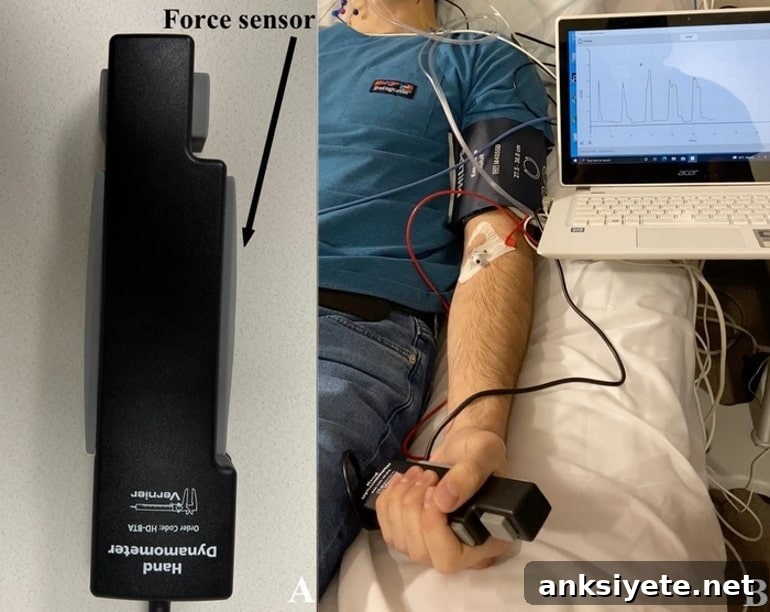
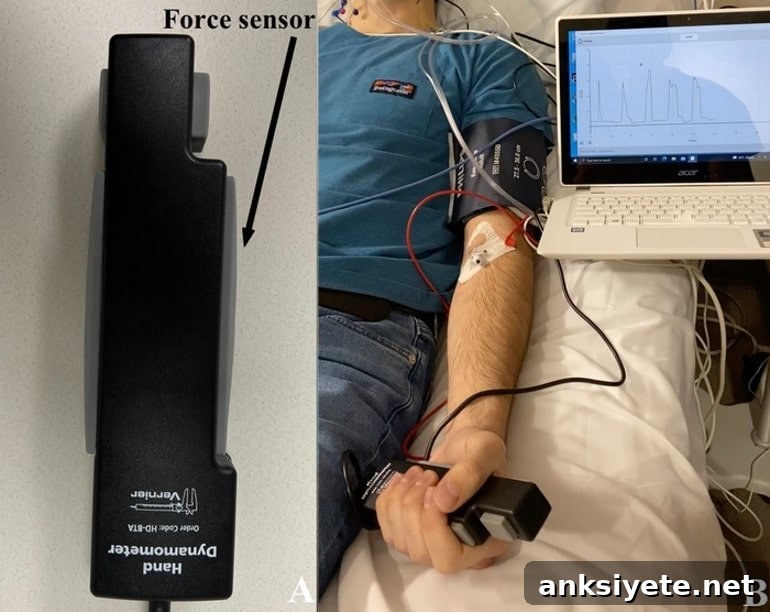
Fourteen healthy volunteers were trained before infusion to perform the breathe–squeeze maneuver: grip a handheld dynamometer when inhaling and release it when exhaling. After this single instruction, no further external prompting was given. Researchers judged loss of responsiveness (LOR) as five consecutive inspirations without accompanying squeezes and return of responsiveness (ROR) as five inspirations with squeezes after dosing tapered.
Throughout infusion and recovery, participants’ brain activity was recorded with 64-channel EEG. The team observed characteristic dexmedetomidine-driven changes in brain rhythms: occipital alpha (around 10 Hz) power fell as subjects became unresponsive, while slower delta-band power rose across fronto-occipital regions. Those spectral signatures reversed as participants regained responsiveness.
Because the breathe–squeeze method avoids repeated auditory probes, the researchers did not observe the EEG artifacts and perturbations seen in a prior study that used sound-based assessments with the same sedative. Comparative pharmacodynamic estimates further suggested the breathe–squeeze paradigm detected loss of responsiveness at lower estimated brain concentrations of dexmedetomidine than the stimulus-based method, implying greater sensitivity.
“This stimulus-free behavioral paradigm removes the major confound introduced by conventional external probes,” said Emery N. Brown, co-senior author and Edward Hood Taplin Professor of Medical Engineering and Computational Neuroscience at MIT, who is also an anesthesiologist at MGH. “We plan to apply the technique to studies of other anesthetic agents and arousal states.”
Brown is leading a collaborative initiative, the Brain Arousal State Control Innovation Center (BASCIC), to bridge anesthesiology and basic neuroscience research on arousal systems. Better, less disruptive measures of conscious-state transitions are a priority for that effort because they enable clearer study of neural mechanisms and foster clinically useful monitoring tools.
Guay emphasizes the broader clinical relevance: improved measurement of how the brain enters and exits unconsciousness could inform treatments for sleep disorders such as insomnia and guide interventions to enhance recovery of consciousness in disorders like coma. Accurate, low-perturbation assessments are essential to those goals.
In addition to Christian Guay and Emery N. Brown, the study’s authors include Darren Hight, Guarang Gupta, MohammadMehdi Kafashan, Anhthi Luong, Michael Avidan, and Ben Julian Palanca. Funding for the research was provided by the McDonnell Center for Systems Neuroscience at Washington University, and Brown’s MIT laboratory receives partial support from The JPB Foundation.
About this consciousness research news
Author: David Orenstein
Source: Picower Institute for Learning and Memory
Contact: David Orenstein – Picower Institute of Learning and Memory
Image: The image is credited to Christian Guay
Original Research: Closed access. “Breathe–squeeze: pharmacodynamics of a stimulus-free behavioural paradigm to track conscious states during sedation” by Christian Guay et al., British Journal of Anaesthesia
Abstract
Breathe–squeeze: pharmacodynamics of a stimulus-free behavioural paradigm to track conscious states during sedation
Background
Conscious states are commonly inferred from behavioral responses to auditory or noxious stimuli. We evaluated a stimulus-free behavioral paradigm—the breathe–squeeze task—to track transitions in responsiveness during dexmedetomidine sedation. We hypothesized that estimated dexmedetomidine effect-site concentrations at loss of responsiveness (LOR) would exceed those at return of responsiveness (ROR), and that both concentrations might differ from estimates obtained using stimulus-based assessments.
Methods
This secondary analysis used data from a study of closed-loop acoustic stimulation during dexmedetomidine sedation. Fourteen healthy volunteers performed the breathe–squeeze task: gripping a dynamometer with inhalation and releasing it with exhalation. LOR was defined as five consecutive inspirations without accompanying squeezes; ROR was the restoration of five inspirations with squeezes. Brain activity was monitored with 64-channel EEG. Dexmedetomidine was delivered via target-controlled infusion, and effect-site concentrations were estimated with a pharmacokinetic model.
Results
Contrary to the initial hypothesis, mean estimated dexmedetomidine effect-site concentration was lower at LOR (0.92 ng ml−1; 95% CI: 0.69–1.15) than at ROR (1.43 ng ml−1; 95% CI: 1.27–1.58) (paired t-test; P = 0.002). LOR was associated with progressively increased fronto-occipital EEG power in the 0.5–8 Hz range, loss of occipital alpha power (8–12 Hz), and reduced global beta power (16–30 Hz). These EEG signatures reversed at ROR.
Conclusions
The breathe–squeeze task provides an effective, stimulus-free method to track loss and recovery of responsiveness during sedation. It avoids external perturbations that can confound measurements and may be more sensitive to state changes than stimulus-based assessments. The paradigm is particularly useful when perturbation of brain states is undesirable.
Clinical trial registration
NCT04206059.