
Summary: A fetal MRI study identifies measurable structural differences in brains exposed to alcohol during pregnancy. Investigators report larger corpus callosum volume and reduced volume in the periventricular zone in alcohol-exposed fetuses compared with healthy controls.
Source: RSNA
Researchers reporting at the Radiological Society of North America (RSNA) annual meeting describe the first MRI-based study focusing on how prenatal alcohol exposure alters fetal brain anatomy. The study detected distinct structural changes in fetuses exposed to alcohol compared with matched healthy controls.
“Fetal alcohol exposure remains a global concern in regions where alcohol is accessible,” said Gregor Kasprian, M.D., associate professor of radiology at the Medical University of Vienna. “Current estimates suggest roughly 9.8% of pregnant women consume alcohol, and the true rate is likely higher due to underreporting.”
Fetal alcohol spectrum disorders (FASD) encompass a range of conditions that result from alcohol exposure during pregnancy, with fetal alcohol syndrome (FAS) representing the most severe form. Children affected by FASD may display characteristic physical features, cognitive and learning challenges, behavioral issues, and delays in speech and language development. According to the researchers, approximately one in 70 pregnancies with alcohol exposure leads to fetal alcohol syndrome.
“While many postnatal imaging and clinical studies document consequences of prenatal alcohol exposure, we sought to determine how early such changes are detectable in utero,” Dr. Kasprian added.
The research team screened 500 pregnant patients who were referred for clinical fetal MRI. An anonymous questionnaire identified 51 respondents who admitted alcohol consumption during pregnancy. Questionnaires included the Pregnancy Risk Assessment Monitoring System (PRAMS) and the T-ACE screening tool, both established methods for identifying risk-related alcohol use in pregnancy.
To encourage honest reporting, the study provided a confidential setting for participants to complete the screening forms, according to the investigators.
After excluding exams for reasons such as structural brain anomalies or insufficient image quality, the final analysis included 26 fetal MRI examinations representing 24 alcohol-exposed fetuses and a control group of 52 healthy fetuses matched by sex and gestational age. Fetal ages at imaging ranged from 20 to 37 weeks’ gestation.
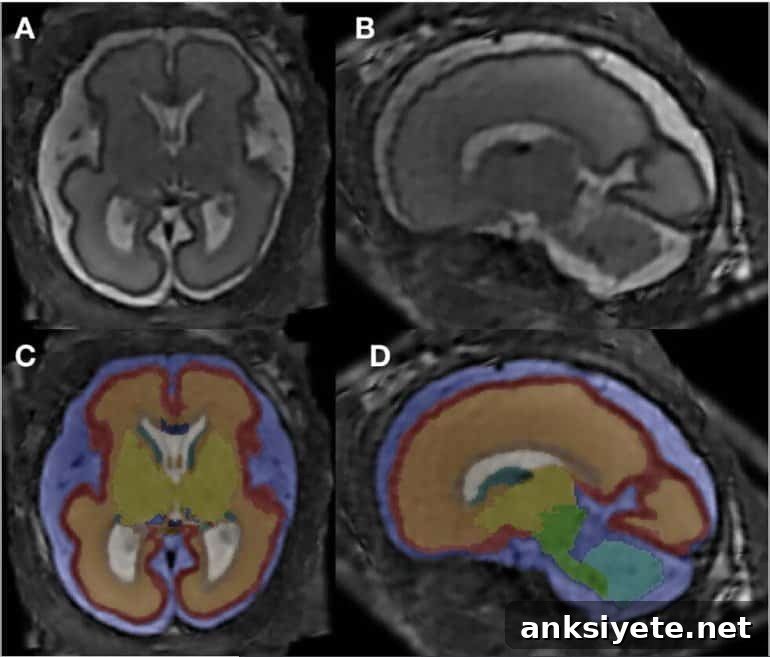
The investigators applied super-resolution reconstruction techniques to combine multiple MRI acquisitions into a single high-quality dataset for each fetus. Using an atlas-based segmentation approach, they measured total brain volume and segmented volumes for 12 distinct brain compartments to examine regional effects of alcohol exposure.
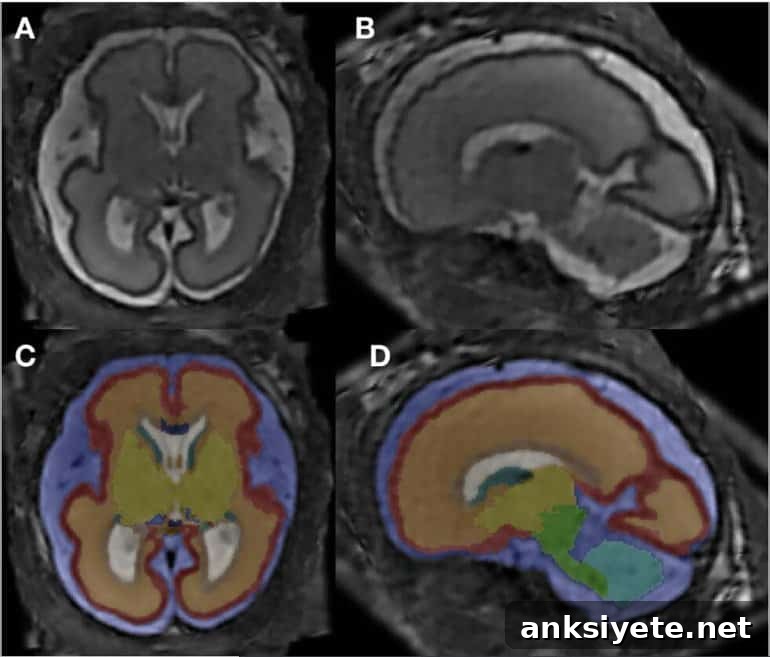
“A strength of our work is the detailed segmentation of many small brain compartments, which allowed us to detect localized differences rather than only broad global changes,” said co-author Marlene Stuempflen, M.D., a scientific researcher at the Medical University of Vienna.
Statistical analysis identified two consistent regional differences in the alcohol-exposed group compared with controls: an increased volume of the corpus callosum and a reduced volume of the periventricular zone.
“This is the first prenatal imaging study to quantify these specific alcohol-associated alterations,” Dr. Stuempflen noted.
The corpus callosum is the primary white matter tract connecting the brain’s two hemispheres. The researchers observed that involvement of this central interhemispheric structure may relate to the varied clinical manifestations seen in FASD, since the syndrome’s symptoms are heterogeneous and not confined to a single brain region.
Changes in the periventricular zone, an area where many neurons originate during development, suggest that prenatal alcohol exposure can have widespread effects on neuronal generation and overall brain maturation.
The finding of a thicker corpus callosum in utero was unexpected, since studies of infants and children with FASD often report a thinner corpus callosum later in development. The authors propose that alcohol exposure may alter the developmental trajectory, producing early overgrowth or altered maturation that later evolves into the more commonly reported thinning.
“These results support the value of fetal MRI as a tool to characterize how both genetic disorders and environmental exposures—such as toxic agents—shape brain development before birth,” Dr. Kasprian said.
The study team included additional co-authors Ernst Schwartz, M.Sc.; Mariana Diogo, M.D., Ph.D.; Sarah Glatter, M.D., M.M.Sc.; Birgit Pfeiler; Victor Schmidbauer, M.D.; Lisa Bartha-Doering, Ph.D.; Rainer Seidl, M.D.; Elisabeth Krampl-Bettelheim, M.D.; and Daniela Prayer, M.D.
About this neurology research news
Author: Linda Brooks
Source: RSNA
Contact: Linda Brooks – RSNA
Image: The image is credited to RSNA and Marlene Stuempflen, M.D.