
Summary: Researchers report that klotho, a longevity-associated protein, improved working memory, spatial memory and learning in mice. A single injection produced measurable cognitive benefits that were long lasting.
Source: UCSF.
In a study suggesting therapeutic potential for klotho — a protein hormone linked to extended lifespan that some people naturally produce at higher levels — researchers at the University of California, San Francisco (UCSF) found that administering a fragment of the klotho protein rapidly improved cognitive and motor performance in young, aged and disease-model mice.
Prior research had associated high, lifelong klotho expression with improved cognition, but those studies relied on mice engineered to produce elevated klotho chronically or on human populations carrying genetic variants that maintain high klotho levels over a lifetime. It remained uncertain whether klotho could be used like a drug to enhance cognition quickly in animals or people with normal or low klotho levels.
“The burning question in the field was: does klotho have therapeutic potential?” said Dena Dubal, MD, PhD, associate professor of neurology and senior author of the study. “This work shows that it does.”
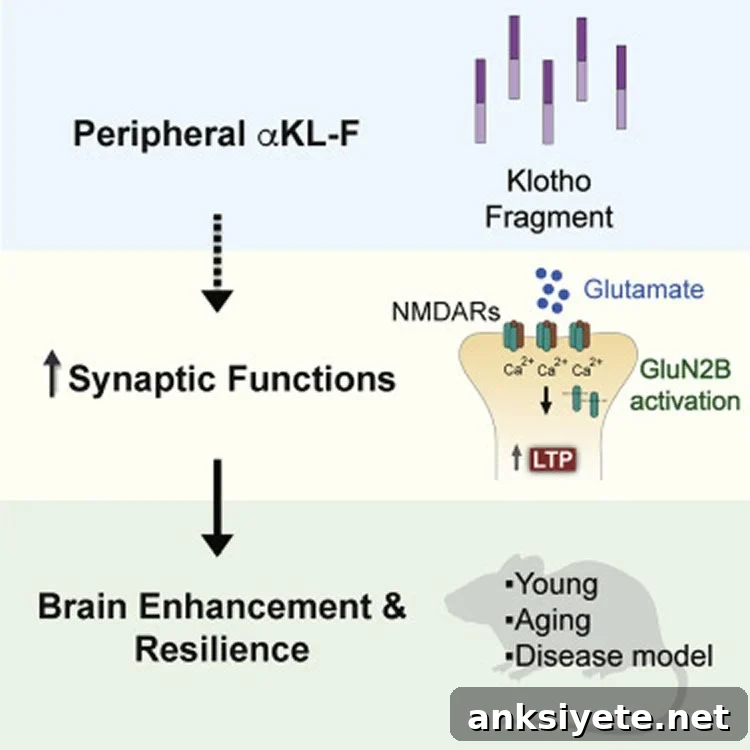
The study, published in Cell Reports, demonstrated clear improvements across several cognitive domains, including spatial learning, spatial memory and working memory, after peripheral administration of a klotho fragment. The results are particularly striking because the researchers did not find evidence that the injected klotho fragment crosses the blood-brain barrier, leaving the mechanism of action on brain function unclear.
“These findings make us consider how the body and brain communicate,” Dubal said. “What we observed with acute klotho administration may resemble the cognitive benefits produced by exercise, which also improves brain health through systemic mechanisms we don’t yet fully understand.”
Long-Lasting Effect
The cognitive benefits in young mice were evident within hours and persisted long after measurable klotho levels in the blood had declined. That persistence suggests a durable change in neural circuits, perhaps through remodeling of synapses, the junctions where neurons communicate.
A single injection of the klotho fragment also significantly improved navigation and learning in aged mice (18 months old, roughly comparable to a 65-year-old human in life-stage). The results indicate that short-term peripheral elevation of klotho can rapidly enhance function in an aging brain.
The team further evaluated mice engineered to express human alpha-synuclein, a protein implicated in Parkinson’s disease and associated with movement and cognitive problems. Klotho treatment improved motor performance in those mice and enhanced their willingness to explore new environments, even though their brains still contained pathogenic protein aggregates. This suggests the treatment increased resilience of neural systems rather than clearing toxic proteins directly.
“There is growing evidence that the body functions as an integrated system and that systemic factors profoundly affect brain resilience,” Dubal said.
Klotho is produced naturally in the kidney and the brain and exists in multiple forms. The membrane-bound form can be enzymatically cleaved to release a circulating fragment found in blood and cerebrospinal fluid. The klotho fragment used in the study resembles this circulating cleaved portion. Because klotho does not appear to cross the blood-brain barrier, the researchers are investigating how peripheral klotho alters brain function indirectly through systemic signaling pathways.
Previous Work About Genetic Modifications
Earlier work from Dubal’s laboratory showed that mice engineered to overexpress klotho throughout life had higher levels of a synaptic protein subunit called GluN2B, which contributes to long-term potentiation — a cellular process central to learning and memory. The team expected to see increased abundance of GluN2B in mice treated acutely with the klotho fragment, but they did not observe that change.
Instead, the klotho fragment appeared to increase activation of the existing GluN2B subunits. After extensive experiments, the authors found that blocking GluN2B activity prevented the cognitive benefits of klotho. An unbiased proteome analysis of roughly 4,000 brain proteins revealed coordinated changes implicating glutamate receptor signaling and N-methyl-D-aspartate receptor (NMDAR) pathways, which include GluN2B, as key mediators of klotho’s effects.
These findings point to a mechanism in which peripheral klotho enhances NMDAR-dependent synaptic plasticity and neural signaling, thereby promoting cognitive enhancement and resilience without directly entering the brain or reducing pathogenic protein levels.
“Collectively, this work joins other studies — including experiments on exercise and young-blood rejuvenation — that are clarifying how systemic factors influence brain resilience,” Dubal said. “Understanding these body-brain connections could open new therapeutic avenues.”
Other authors on the study include Arturo Moreno, Bayardo Garay and Dan Wang, MD, of the UCSF Department of Neurology; and Robert J. Chalkley, PhD, and Alma Burlingame, PhD, of the UCSF School of Pharmacy.
Source: Laura Kurtzman — UCSF
Image Source: Image credited to Dubal et al./Cell Reports.
Original Research: The study is reported in the open-access paper titled “Peripheral Elevation of a Klotho Fragment Enhances Brain Function and Resilience in Young, Aging, and α-Synuclein Transgenic Mice,” published in Cell Reports (published online August 8, 2017; DOI: 10.1016/j.celrep.2017.07.024).
UCSF. “Hormone Shows Promise as Cognition Enhancer.” NeuroscienceNews. Published August 10, 2017.
Abstract
Peripheral Elevation of a Klotho Fragment Enhances Brain Function and Resilience in Young, Aging, and α-Synuclein Transgenic Mice
Highlights
• A klotho fragment (αKL-F) enhances cognition in young and aging mice
• αKL-F counters deficits in α-synuclein mice without altering pathogenic protein levels
• αKL-F induces GluN2B cleavage and increases NMDAR-dependent synaptic plasticity
• Selective NMDAR blockade of GluN2B subunits abolishes acute αKL-F effects
Summary
Aging and neurodegenerative diseases such as Parkinson’s and Alzheimer’s lead to cognitive decline and reduced mobility, highlighting an urgent need for new therapies. Increasing brain resilience is a promising strategy. While lifelong overexpression of full-length klotho improves cognition in mice, the therapeutic potential of acute, peripheral klotho administration was unknown. This study shows that a peripherally delivered α-klotho fragment (αKL-F) rapidly enhances cognition and neural resilience in young, aging and α-synuclein transgenic mice, despite its apparent inability to cross the blood-brain barrier. αKL-F treatment promoted cleavage and activation of the NMDAR subunit GluN2B and enhanced NMDAR-dependent synaptic plasticity. Blocking GluN2B eliminated the benefits, indicating that peripheral αKL-F can induce neural enhancement and resilience through modulation of glutamate receptor signaling and synaptic function. These results support further investigation of klotho-based approaches as potential therapeutics for cognitive decline.