
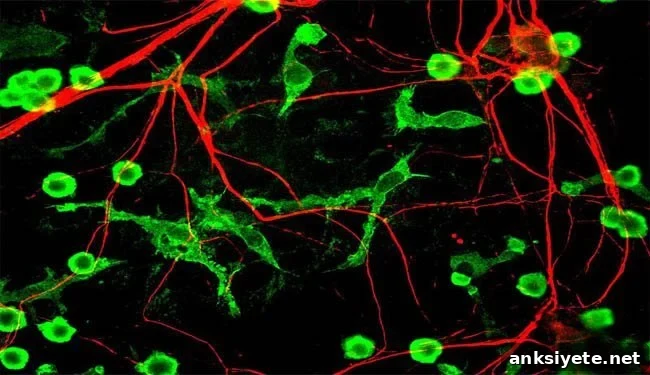
Immune cells “sculpt” circuits in the brain by eating away excess connections
Findings offer a fresh look at developmental and degenerative brain diseases
At birth our brains already contain many connections, but those initial circuits are reshaped as we interact with the world. New research from Boston Children’s Hospital reveals a striking mechanism behind that refinement: microglia — brain-resident immune cells — actively engulf and remove excess synapses, sculpting neural circuits during development.
The study, led by Beth Stevens, PhD, and Dori Schafer, PhD, of the Department of Neurology and the F.M. Kirby Neurobiology Center at Boston Children’s Hospital, provides the first direct evidence of microglia eliminating synapses in a healthy, maturing brain. The researchers show that microglia monitor neuronal activity and respond to molecular cues from the complement cascade, an immune signaling system. When complement signaling is disrupted, microglia prune fewer synapses, indicating that the complement pathway guides which connections are removed.
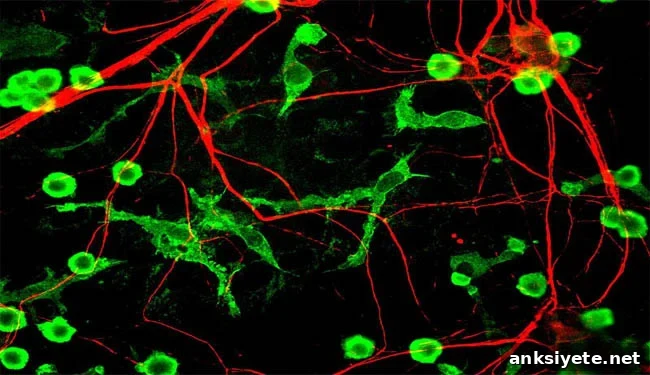
Microglia were historically viewed primarily as defenders against infection and injury. Over the past decade, however, researchers have recognized that these cells have an active role in normal brain development. “Microglia act like gatekeepers,” says Stevens. “They are present during the critical periods when the brain is wiring up, and they quickly sense and respond to changes in neural activity.”
Stevens’ earlier work from 2007 demonstrated that disrupting the complement system interferes with synaptic pruning, and that neurons express complement proteins soon after birth — precisely when pruning peaks. In the new study, Stevens and Schafer identify microglial receptors that recognize the complement protein C3, which selectively appears on synapses destined for elimination.
Schafer, first author on the paper, explains the model: “We believe that weaker synapses are tagged with C3, and microglia recognize this tag and remove those connections, similar to how macrophages eliminate unwanted material. C3 functions like an ‘eat me’ signal.” The researchers showed that mice lacking C3 receptors, or whose microglial C3 receptors were pharmacologically blocked, failed to remove weaker synapses as expected.
Because microglia are so dynamic, the team followed their behavior in living mice using tracer dyes and imaging approaches. They focused on the visual system — the pathway connecting the eyes to the brain — because it is well-characterized and permits controlled manipulation of activity patterns. These experiments helped link neuronal activity, complement tagging, and microglial pruning in a coherent, activity-dependent process.
The findings have implications beyond normal development. In a variety of neurodegenerative diseases — including glaucoma, Alzheimer’s disease, amyotrophic lateral sclerosis (ALS), Huntington’s disease and Parkinson’s disease — researchers have observed early, subtle synaptic changes that may mark connections for elimination. In such conditions, normally quiescent microglia and the complement system can become activated, potentially accelerating synapse loss. Stevens and Schafer suggest that targeting microglial activity, complement receptors, or complement proteins themselves might one day help prevent unwanted synapse removal in these disorders.
There is also emerging evidence that microglia and the complement cascade could be involved in neurodevelopmental disorders such as autism spectrum disorder, epilepsy and schizophrenia, where alterations in synapse number and function are frequently reported. The authors emphasize, however, that these links remain speculative until the basic mechanisms of normal pruning are fully understood.
“Before we can develop safe interventions, we need a clearer map of how synapse elimination is regulated during healthy brain maturation,” Stevens notes. Understanding the balance between synapse formation and removal is critical for interpreting how disruptions might contribute to disease.
About this neuroscience research article
The study received funding from the Smith Family Foundation, the Dana Foundation, the John Merck Scholars Program, the National Institute of Neurological Disorders and Stroke, the NIH National Research Service Award, the National Institute on Drug Abuse, and other National Institutes of Health programs.
Boston Children’s Hospital hosts a large pediatric research enterprise that has produced discoveries benefitting children and adults since 1869. Its research community includes more than 1,100 scientists, with many members recognized by national academies and major research institutions. Founded as a 20‑bed children’s hospital, Boston Children’s has grown into a 395‑bed comprehensive center for pediatric and adolescent healthcare and is the primary pediatric teaching affiliate of Harvard Medical School.
Contact: Meghan Weber – Boston Children’s Hospital
Press release submitted to Neuroscience News by: Meghan Weber
Additional Source: Boston Children’s Hospital newsroom release
Image credit: Neurology image adapted from Wikimedia Commons user Gerry Shaw. Licensed under Creative Commons Attribution-Share Alike 3.0 Unported.
Original Research: “Microglia Sculpt Postnatal Neural Circuits in an Activity and Complement-Dependent Manner” by Dorothy P. Schafer et al., published in Neuron, Volume 74, Issue 4, 24 May 2012, Pages 691–705. DOI: 10.1016/j.neuron.2012.03.026