
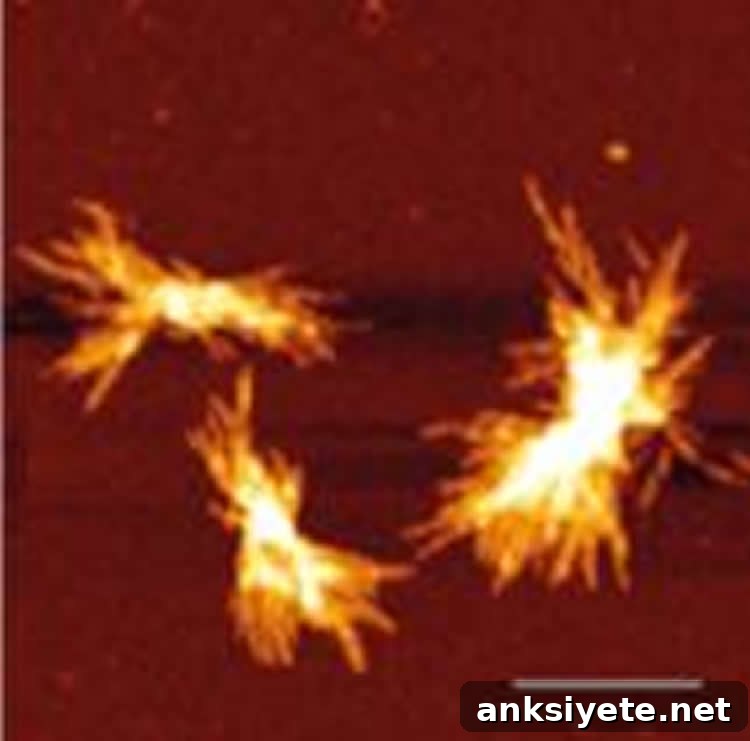
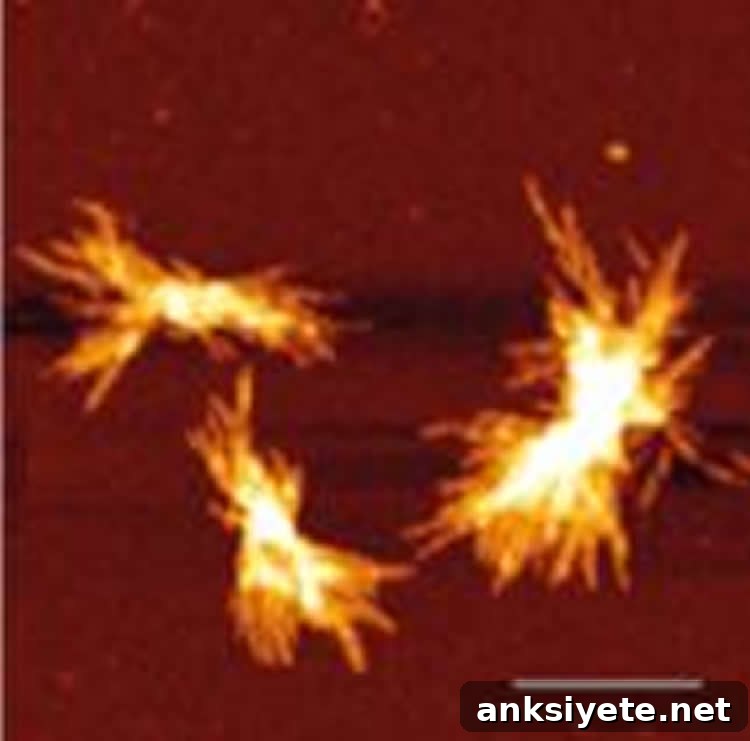
Huntington’s disease (HD) is a progressive neurodegenerative disorder marked by the accumulation of abnormal huntingtin protein aggregates in the brain. A new study published in Genome Research introduces a computational approach that pinpoints huntingtin interaction partners and identifies CRMP1 as a previously unrecognized factor that reduces huntingtin misfolding and aggregation.
Huntington’s disease arises when the huntingtin (HTT) protein carries an expanded run of glutamine residues (polyglutamine, polyQ). This expansion alters HTT’s normal function and drives the formation of toxic, aggregation-prone fragments in neurons. The proteins that interact with mutant, polyQ-expanded HTT are believed to influence whether and how these aggregates form, but distinguishing disease-relevant interactors from incidental ones has been a major challenge.
To address this, researchers led by Erich Wanker at the Max Delbrück Center for Molecular Medicine combined large protein–protein interaction (PPI) datasets with brain region–specific gene expression profiles from Huntington’s patients and controls. By applying a stepwise computational filtering strategy tuned to expression patterns in affected brain regions, the team reduced a broad interaction network down to 13 high-priority candidate HTT interactors. Seven of these candidates were already implicated in HD, validating the approach, while the remaining candidates provided new leads for further study.
Among the novel candidates, the investigators prioritized collapsin response mediator protein 1 (CRMP1) because of its neuron-enriched expression pattern in the brain. Follow-up experiments in cellular models and in Drosophila showed that increasing CRMP1 levels reduced the formation of huntingtin aggregates and decreased cellular toxicity. Conversely, lowering CRMP1 expression amplified aggregation and neurotoxic effects. In purified protein assays, CRMP1 directly slowed the spontaneous self-assembly of N-terminal HTT fragments containing expanded polyQ tracts, indicating a direct influence on the biophysical process of aggregation.
“CRMP1 had not previously been considered a therapeutic target in Huntington’s disease, but our data indicate it is worth exploring further,” said Erich Wanker. The discovery suggests that neuron-specific modulators of protein folding and aggregation could be viable avenues for limiting HTT-driven neurotoxicity.
This collaborative study brought together teams from the Max Delbrück Center for Molecular Medicine, Humboldt University of Berlin, Charité – Universitätsmedizin Berlin, University of British Columbia, Free University of Berlin, King’s College London, and the University of Algarve. Funding support came from the Deutsche Forschungsgemeinschaft (DFG), the Federal Ministry of Education and Research (BMBF), the HDSA Coalition for the Cure, the European Union, and the Helmholtz Association.
Source: Peggy Calicchia – Cold Spring Harbor Laboratory
Image credit: Nadine Strempel and Erich Wanker, Max Delbrück Center for Molecular Medicine.
Original research: Stroedicke M., Bounab Y., Strempel N., Klockmeier K., Yigit S., Friedrich R.P., Chaurasia G., Li S., Hesse F., Riechers S.-P., Russ J., Nicoletti C., Boeddrich A., Wiglenda T., Haenig C., Schnoegl S., Fournier D., Graham R.K., Hayden M.R., Sigrist S., Bates G.P., Priller J., Andrade-Navarro M.A., Futschik M.E., Wanker E.E. — “Systematic interaction network filtering identifies CRMP1 as a novel suppressor of Huntingtin misfolding and neurotoxicity.” Genome Research. Published online April 23, 2015. doi:10.1101/gr.182444.114
Abstract (summary)
Aggregated fragments of huntingtin with expanded polyglutamine tracts are a defining pathological feature of Huntington’s disease, yet the mechanisms driving their formation and neuronal toxicity remain incompletely understood. The authors applied a systematic interaction network filtering strategy that integrates large PPI databases with transcriptomic data from disease-relevant brain regions. This approach yielded a focused network of 13 proteins that directly or indirectly connect to HTT and are potentially dysregulated in HD. Experimental validation highlighted CRMP1, a neuron-enriched protein, as a suppressor of aggregation-prone N-terminal HTT fragments. CRMP1 reduced spontaneous self-assembly of these fragments in cell-free assays and lowered aggregate formation and toxicity in cellular and Drosophila models. These findings demonstrate that combining interaction maps with brain-specific expression data can effectively identify disease-relevant modifiers of protein misfolding and aggregation and reveal CRMP1 as a promising candidate for further investigation in Huntington’s disease research.