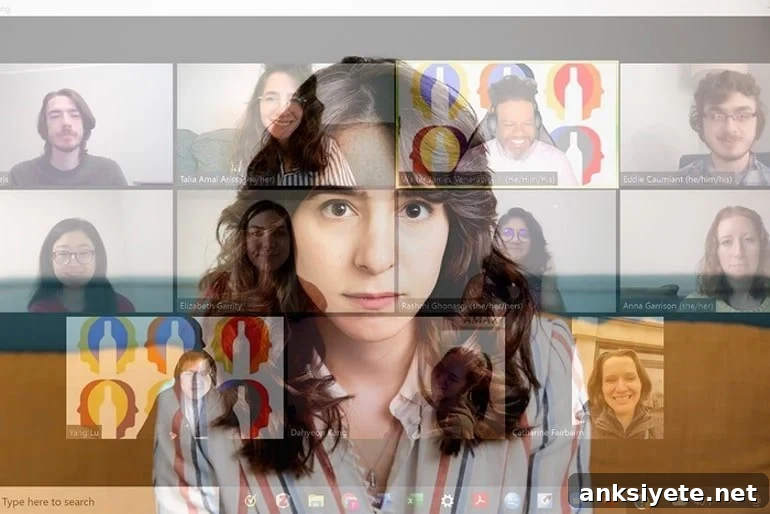
Summary: New research indicates that spending more time looking at oneself during a virtual meeting is linked to a decline in mood over the course of the conversation.
Source: University of Illinois
Researchers report that people who focus on their own video feed during an online conversation tend to experience a worsening mood, and that alcohol can intensify this effect.
Published in the journal Clinical Psychological Science, the study highlights how common video platforms may contribute to increases in anxiety and depressive symptoms for some users by encouraging self-focused attention during social interactions.
“We used eye-tracking technology to examine the relationship between mood, alcohol and attentional focus during virtual social interaction,” said Talia Ariss, a doctoral candidate in psychology at the University of Illinois Urbana-Champaign, who led the study with Professor Catharine Fairbairn.
Ariss explained, “Participants who spent more time looking at themselves in the video window tended to feel worse after the call, even after accounting for how they felt before the interaction. We also found that participants who had consumed alcohol spent more time looking at themselves.”
These findings build on prior research linking excessive self-focus—especially during social encounters—to greater risk for mood disorders. When attention turns inward rather than outward, people are more likely to notice and amplify anxious or negative thoughts, which can worsen emotional states.
“Higher levels of self-focused attention are associated with feelings that overlap with anxiety and depression,” Ariss said. “Virtual platforms that continually present a live self-view may unintentionally promote that inward focus.”
The researchers note that use of online video call platforms surged during the COVID-19 pandemic—Zoom users, for example, rose dramatically from the tens of millions to the hundreds of millions within months—coinciding with a reported rise in pandemic-related anxiety and depression. Many people described increased self-awareness and a sense of fatigue after prolonged virtual interactions, prompting questions about whether the format itself contributes to these effects.
In the experiment, participants completed brief mood assessments before and after a series of online conversations. During each session they talked with a partner about everyday topics such as what they like and dislike about living in their local community and their musical preferences.
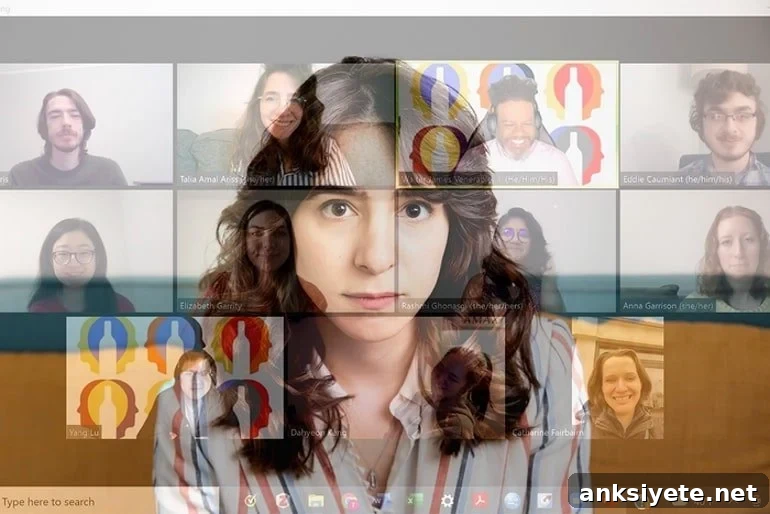
On-screen, each participant could see both their own video and the face of their conversation partner on a split-screen display. Some participants drank a low dose of alcohol before the chat, while others consumed a nonalcoholic beverage, allowing the team to assess how mild intoxication influenced attention and mood.
Overall, participants looked at their partners far more than they looked at themselves, but individual differences were substantial. Some people frequently glanced at their own image, while others rarely did. Those who devoted a larger share of attention to their self-view later reported a greater decline in mood.
“One unique aspect of video platforms is that they simulate a mirror experience—your face is constantly visible to you,” Ariss said. “This feature creates an opportunity to study how visual self-focus during social interaction affects feelings, attention, and behavior.”
Including alcohol in the study added another dimension: it revealed that mild inebriation changed attentional patterns in virtual settings. “In face-to-face social situations, alcohol often acts as a social lubricant and can temporarily improve mood for some people,” Ariss noted. “But in these online conversations, alcohol was associated with increased self-focus and did not produce the usual mood benefits.”
Professor Catharine Fairbairn emphasized the practical implications: “Many of us have learned that virtual interactions are not the same as in-person meetings. People commonly report fatigue and low spirits after a day of video calls. Our findings suggest that the self-view embedded in many platforms may make those interactions more draining than necessary.”
Funding: This research was supported by the National Institutes of Health.
About this psychology research news
Author: Diana Yates (Diana Yates, University of Illinois)
Source: University of Illinois
Contact: Diana Yates – University of Illinois
Image: Photo credit: Michelle Hassel
Original Research: The study’s findings appear in Clinical Psychological Science.