
Although a family history of Alzheimer’s disease is the most important risk factor for this progressive neurological condition, only three genes — the amyloid precursor protein (APP) and presenilins 1 and 2 (PSEN1 and PSEN2) — have been definitively linked as causes of inherited, early-onset Alzheimer’s disease, accounting for roughly half of those familial cases.
Researchers at Massachusetts General Hospital (MGH) have now identified a different class of genetic alterations, called copy-number variants (CNVs) — which include deletions, duplications, and rearrangements of segments of genomic DNA — in affected members of multiple families with early-onset Alzheimer’s. Importantly, the study found distinct CNVs in the affected individuals from each family analyzed.
This work was carried out as part of the Alzheimer’s Genome Project, led by Rudolph Tanzi, PhD, director of the Genetics and Aging Research Unit at MGH and a co-discoverer of the three established early-onset genes. The study received support from the Cure Alzheimer’s Fund and the National Institute of Mental Health (NIMH).
“In each family we examined, the relatives who developed early-onset Alzheimer’s carried duplications or deletions in genes that play important roles in brain function, while their unaffected siblings retained normal copies of those genes,” says Basavaraj Hooli, PhD, lead author and a research fellow in Neurology at Harvard Medical School and the MassGeneral Institute for Neurodegenerative Disease. The report appears online in Molecular Psychiatry.
Most genetic studies of Alzheimer’s risk have focused on single-nucleotide variants, and while thousands of such changes have been cataloged, each typically exerts only a small influence on disease risk. In contrast, CNVs can alter larger stretches of DNA and may have a more pronounced functional impact. Motivated by this distinction, Tanzi and colleagues searched specifically for large CNVs in members of families with inherited, early-onset Alzheimer’s.
Using genomic data drawn from two major resources — the NIMH Alzheimer’s Disease Genetics Initiative and the National Cell Repository for Alzheimer’s Disease — the investigators concentrated on 261 families in which at least one person developed Alzheimer’s before age 65. Applying a novel algorithm the team developed to detect CNVs, they identified deletions or duplications that were present exclusively in affected relatives. While two families carried CNVs that included the well-known APP gene, the researchers found ten additional families with previously unreported Alzheimer’s-associated CNVs; each of these families showed a different gene segment affected.
None of these newly identified variants has been definitively linked to Alzheimer’s disease before, yet many involve genes thought to be essential for normal neuronal function. Several of the affected genes have prior associations with other neurodegenerative conditions. For example, one family showed a deletion in CHMP2B, a gene in which mutations have been implicated in amyotrophic lateral sclerosis (ALS) and frontotemporal dementia. Another family had three copies of MAPT, the gene encoding tau protein, which is a major component of the neurofibrillary tangles that characterize Alzheimer’s pathology; MAPT mutations are also known causes of frontotemporal dementia.
“These are the first novel early-onset familial Alzheimer’s gene mutations reported since 1995, when presenilins were identified,” Tanzi notes. “As with those earlier discoveries, characterizing these new CNVs could point to biological pathways that drive disease and help guide development of targeted therapies aimed at preventing or treating Alzheimer’s.”
Hooli emphasizes that clinical implications remain uncertain at this stage. Two key questions must be answered before these findings can inform patient care: first, how common are these CNVs in larger cohorts of families with inherited Alzheimer’s, and second, does carrying one of these CNVs reliably predict that an individual will develop early-onset disease? Equally important is understanding how these structural variants disrupt neuronal pathways and lead to neurodegeneration.
Looking ahead, Tanzi observes that as whole-genome sequencing becomes more accessible and affordable, researchers will increasingly identify rare, structural, and other atypical mutations underlying many disorders. In the future, genetic diagnosis and prognosis may play a larger role in medical decision-making, potentially enabling more precise therapies that target the specific molecular defects responsible for disease. If the exact genetic causes of neurodegenerative diseases can be pinpointed, the potential consequences for treatment and prevention could be substantial.
Notes about this genetics and Alzheimer’s research
The study’s senior author is Rudolph E. Tanzi, Joseph P. and Rose F. Kennedy Professor of Neurology at Harvard Medical School. Co-authors include Basavaraj V. Hooli, Kristina Mullin, Maxwell A. Blumenthal, Can Zhang, Gayatry Mohapatra, Zsolt M. Kovacs-Vajna, Manuel Mattheisen, Christoph Lange, and Lars Bertram.
Contact: Mike Morrison — Massachusetts General Hospital
Source: Massachusetts General Hospital press release
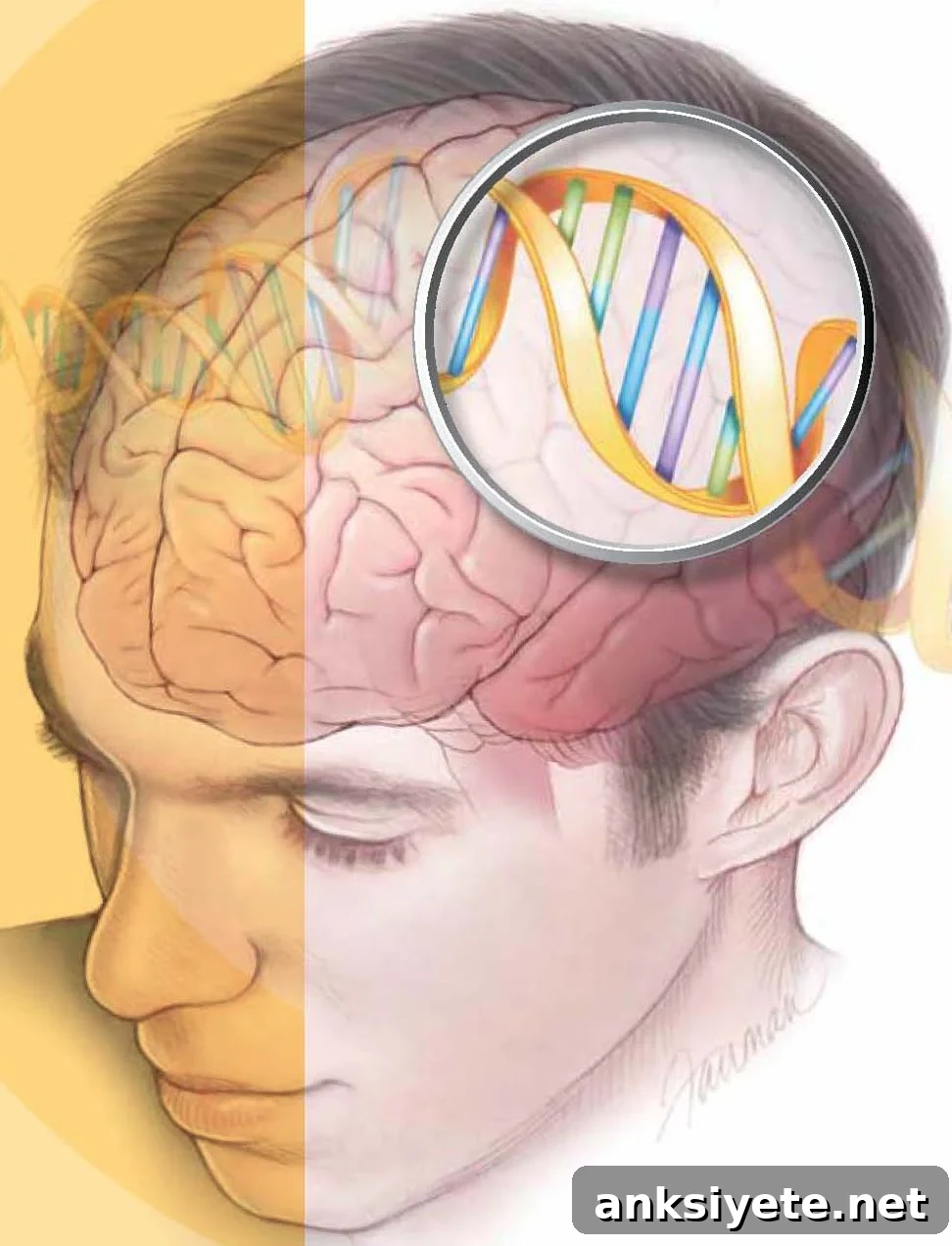
Image Source: The DNA brain image is credited to NINDS/NIH and is in the public domain.
Original Research: Abstract for “Rare autosomal copy number variations in early-onset familial Alzheimer’s disease” by B. V. Hooli et al., published online June 13, 2013 in Molecular Psychiatry (doi: 10.1038/mp.2013.77).