
Summary: New mouse research identifies neurons in the anterior insular cortex that drive motivational vigor, shedding light on brain mechanisms that could be relevant to conditions such as depression.
Source: CSHL
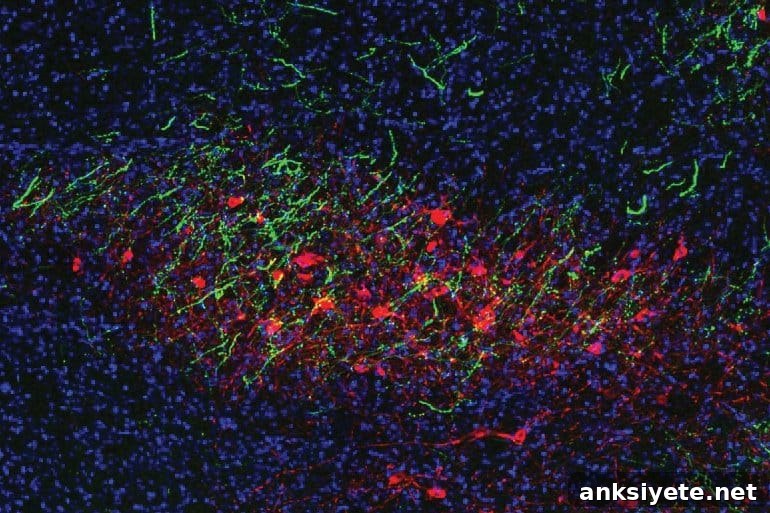
Motivation is commonly diminished in depressive disorders. Researchers at Cold Spring Harbor Laboratory (CSHL), led by Professor Bo Li in collaboration with Adjunct Professor Z. Josh Huang, have identified a specific group of neurons in the mouse anterior insular cortex that modulate an animal’s motivation to perform tasks for rewards.
These neurons, defined by activation of the gene Fezf2, alter how energetically a mouse pursues a goal. Increasing the activity of Fezf2-expressing neurons makes mice work faster and with greater vigor for rewards, while decreasing activity produces the opposite effect. Importantly, this neural system appears to include safeguards that prevent compulsive overconsumption or addictive-like behavior when animals are already sated.
The discovery points to a neural circuit that selectively controls motivational drive without directly encoding sensory properties of rewards such as taste or valence. Because lack of motivation is a core symptom in many psychiatric illnesses, understanding this circuit could inform new approaches to treating symptoms like apathy and low drive in humans.
In behavioral tests the researchers trained mice to lick a water spout to receive a small sugar reward. When the team increased activity in the Fezf2-expressing neurons in the anterior insular cortex, mice licked more vigorously and at a higher rate. Suppressing those same neurons caused slower, less vigorous licking. A comparable pattern emerged in a separate experiment in which mice ran on a wheel to earn rewards: stimulating the Fezf2 neurons led to faster running, and reduced activity diminished effort.
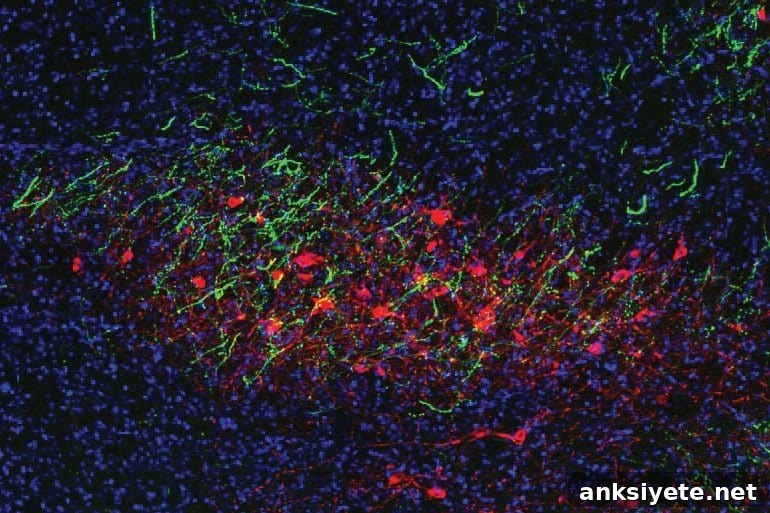
Beyond showing that Fezf2 neurons modulate vigor, the team found that this influence depends on learning and the animal’s internal state. The Fezf2-expressing neurons and their postsynaptic partners in the brainstem nucleus tractus solitarii (NTS) develop anticipatory activity through learning—neural responses that represent the perceived value of an outcome and the vigor required to obtain it. Circuit activation increases effort and invigorates need-seeking behaviors and also influences dopamine release in the striatum, but only when the action has been learned and the outcome is actually needed.
Crucially, when mice were sated after drinking enough sugar water, they did not escalate licking or running even if Fezf2 neuron activity was experimentally increased. This built-in limit suggests the circuit can boost motivation without driving compulsive intake, an important distinction for considering therapeutic targets that aim to increase motivation without creating addiction risk.
Li emphasizes the clinical implications carefully: the goal would be to restore or enhance appropriate motivation so people can carry out necessary daily activities, without producing dependence on a pharmacological intervention. These findings therefore highlight a promising, specific target for further study in the context of disorders that impair motivational drive, such as depression.
About this neuroscience and motivation research news
Author: Press Office
Source: CSHL
Contact: Press Office – CSHL
Image: The image is credited to Li lab/CSHL, 2021
Original Research: Closed access.
“A genetically defined insula-brainstem circuit selectively controls motivational vigor” by Bo Li et al., published in Cell.
Abstract
A genetically defined insula-brainstem circuit selectively controls motivational vigor
Highlights
- Neurons in the anterior insular cortex defined by Fezf2 expression form a functional circuit to the nucleus tractus solitarii (aICFezf2 → NTS) that acquires anticipatory activity through learning.
- Their anticipatory activity encodes perceived value and motivational vigor, linking expectation and effort for goal-directed actions.
- Activity in the aICFezf2 → NTS pathway controls vigor and effort and modulates striatal dopamine release during need-driven behavior.
- The circuit’s influence depends on both prior learning and the animal’s homeostatic state; it does not represent taste or valence and does not drive reinforcement or total consumption.
Summary
The anterior insular cortex (aIC) is implicated in cognitive and motivational control of behavior, yet the precise neural mechanisms have been unclear. This study identifies a subset of pyramidal tract neurons in aIC that express Fezf2 (aICFezf2) and demonstrates that these neurons signal motivational vigor and invigorate need-seeking actions via projections to the brainstem nucleus tractus solitarii (NTS).
Through behavioral training, aICFezf2 neurons and their postsynaptic NTS targets develop anticipatory firing patterns that reflect the expected value of outcomes and the vigor of actions undertaken to satisfy internal needs. Manipulating this aIC → NTS circuit alters effort, vigor, and striatal dopamine release—but only when the behavior is learned and when the outcome is required. The circuit does not encode sensory taste or valence, nor does it drive reinforcement or change total consumption, indicating a selective role in controlling motivational vigor.
These results clarify a specific top-down pathway by which the anterior insula can regulate dopamine signaling and selectively adjust motivational drive, offering a targeted framework for future research into treatments for motivational deficits in psychiatric disorders.