
Summary: Researchers have mapped how five subregions of the prefrontal cortex contribute to deciding whether to initiate or withhold movement.
Source: University of Freiburg.
The decision to act or to remain still in response to a stimulus depends on a delicate balance between excitation and inhibition in the prefrontal cortex (PFC). Synaptic circuits at the front of the brain help determine whether an external cue triggers movement. Until now, the specific roles and interactions of distinct PFC subregions in this choice were not well defined. An international team led by Stefanie Hardung from the group of Professor Ilka Diester—affiliated with the Bernstein Center Freiburg and the Cluster of Excellence BrainLinks-BrainTools—has identified functional contributions of five PFC subareas to movement decisions. Their findings were published in Current Biology and offer insights that may be relevant for studying impulse control disorders.
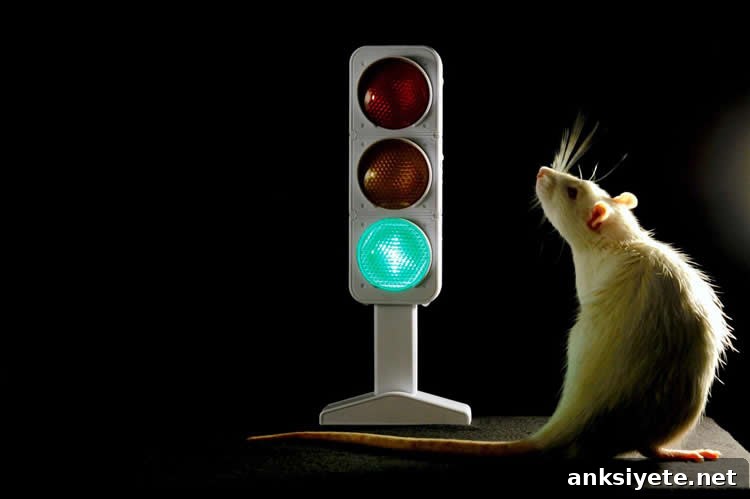
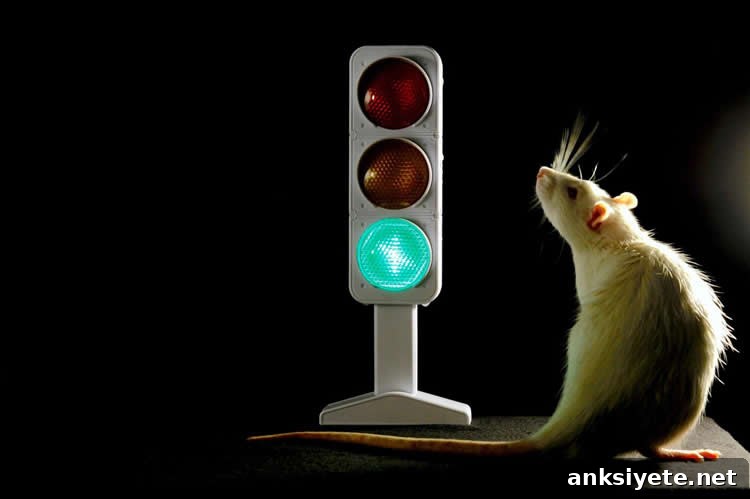
“You can think of these PFC regions like a traffic light,” says Stefanie Hardung. “Some subareas act to inhibit movement, while others prepare or promote action.” To investigate this, the researchers trained genetically modified rats to perform tasks that required both proactive and reactive stopping. Reactive stopping occurs when an animal halts in response to an unexpected external signal. Proactive stopping is guided by the animal’s internal goals and expectations.
In the behavioral paradigm used here, rats learned to press and hold a lever until a cue signaled whether they should continue or release the lever. Optogenetic tools allowed the team to transiently silence selected genetically targeted neurons with light. By switching off individual PFC subregions systematically, the researchers were able to observe how each area influenced the animals’ decision to stop or proceed. Comparing behavior with and without these temporary deactivations provided a direct test of each region’s causal role.
Silencing specific PFC zones produced clear changes in task performance. Inactivation of the infralimbic cortex (IL) or parts of the orbitofrontal cortex (OFC) reduced the rats’ ability to stop in response to external cues, impairing reactive stopping. In contrast, suppressing activity in the prelimbic cortex (PL) led most animals to respond prematurely, suggesting a loss of the restraint needed to withhold action. Electrophysiological recordings further showed that, when all regions were intact, a subset of PL neurons decreased their firing immediately before premature responses, linking PL population dynamics to the control of timing for action initiation.
These results support a model in which IL and PL play partially opposing roles compared with OFC regions: IL and PL are more involved in shaping proactive behavior and the decision to withhold action according to internal goals, while OFC—particularly ventral OFC sectors—contributes primarily to reactive movement control driven by external cues. The contrast between mPFC (medial PFC) and OFC activity was also reflected in predictive power: neuronal activity in medial PFC during response preparation correlated more strongly with trial outcomes and reaction times than OFC activity did.
The authors note that optogenetics provides a reversible and minimally invasive method to manipulate neural activity compared with permanent surgical or pharmacological interventions. This allows rapid testing of different circuit components while preserving overall connectivity. As a result, the described animal model offers a controlled framework for probing circuit-level mechanisms that underlie impulse control. Such work can inform future studies aimed at understanding disorders characterized by impaired inhibitory control, including attention deficit hyperactivity disorder (ADHD) and obsessive-compulsive disorder (OCD).
Funding: This work was supported by Mead Johnson Nutrition.
Source: Michael Veit, University of Freiburg.
Image credit: Michael Veit.
Original research: Abstract for “A Functional Gradient in the Rodent Prefrontal Cortex Supports Behavioral Inhibition” by Stefanie Hardung, Robert Epple, Zoe Jäckel, David Eriksson, Cem Uran, Verena Senn, Lihi Gibor, Ofer Yizhar, and Ilka Diester in Current Biology. Published online February 9, 2017. DOI: 10.1016/j.cub.2016.12.052.
University of Freiburg. “Traffic Light in the Brain.” NeuroscienceNews. February 11, 2017.
Abstract
A Functional Gradient in the Rodent Prefrontal Cortex Supports Behavioral Inhibition
Highlights
• Optogenetic inhibition of PL or IL produces opposing effects on premature responses and restraint.
• Optogenetic inhibition of ventral OFC increases delayed releases and slows reaction times.
• Medial PFC contributes more to proactive control, while OFC contributes more to reactive control.
• Distinct neuronal subpopulations are specialized for behavioral inhibition or execution.
Summary
Appropriate timing of responses to external cues requires a finely tuned balance between initiating and suppressing movement. Disruption of this balance in the prefrontal cortex is implicated in impulse control disorders. Using optogenetics and electrophysiology, the authors systematically examined five subregions of the rat medial prefrontal and orbitofrontal cortices to determine their roles in action control. Inactivation of medial PFC subareas produced marked changes in performance—either increasing premature responses (prelimbic cortex) or reducing them (infralimbic cortex). Electrophysiological data showed reduced activity in a PL neuronal subpopulation before premature responses. In contrast, inhibiting OFC areas, mainly ventral OFC, impaired rapid responding to external cues. Medial PFC activity during response preparation better predicted trial outcomes and reaction times than OFC activity. These findings delineate distinct, complementary contributions of rodent PFC subregions to movement inhibition and execution and provide an experimental basis for further studies of PFC-related impulse control disorders.
Study: “A Functional Gradient in the Rodent Prefrontal Cortex Supports Behavioral Inhibition” by Stefanie Hardung et al., Current Biology, published online February 9, 2017. DOI: 10.1016/j.cub.2016.12.052.