
Discovery of how two types of neurons suppress activity could illuminate autism and other brain disorders
The brain is composed of billions of neurons organized into intricate circuits that allow us to perceive the world, control movement and make decisions. Understanding how those circuits operate is essential for learning how healthy brains function and for identifying what goes wrong in a wide range of neurological and psychiatric conditions.
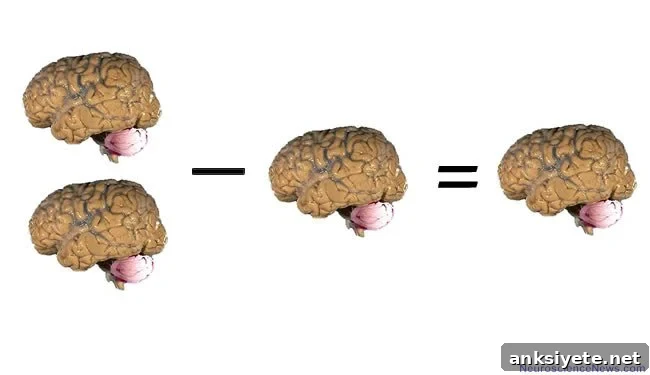
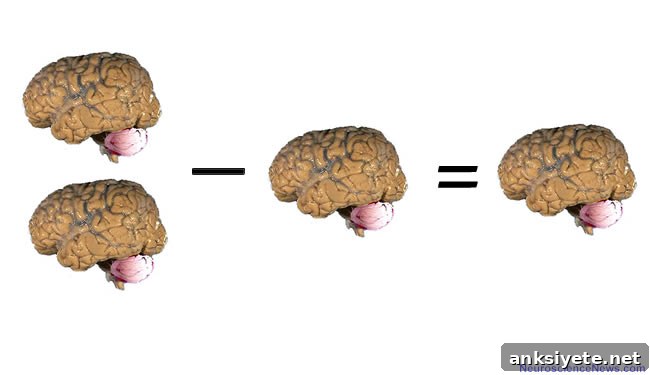
Researchers at MIT have made a significant advance toward that goal. In a new paper published in the Aug. 9 issue of Nature, the team shows that two main classes of inhibitory neurons reduce neural activity in distinct, mathematically describable ways: one class subtracts from overall activity levels, while the other divides them.
“These are simple yet powerful computations,” says Mriganka Sur, the Paul E. Newton Professor of Neuroscience and senior author of the Nature paper. “A central challenge in neuroscience is to translate large amounts of experimental data into computational principles. How different neuron types implement those computations had been unclear until now.”
The findings have potential implications for conditions in which the balance between neuronal excitation and inhibition is disrupted, including autism spectrum disorders, schizophrenia and bipolar disorder.
Lead authors on the study are graduate student Caroline Runyan and postdoctoral researcher Nathan Wilson. Forea Wang, who contributed as an MIT undergraduate, is also an author.
Maintaining a delicate balance
Neuronal types in the brain are diverse, but most neurons are excitatory while a smaller population exerts inhibitory control. All perception and cognition depend on a finely tuned balance between excitation and inhibition. Disruptions to that balance have been linked to several psychiatric and neurodevelopmental disorders.
“Evidence is mounting that subtle alterations in excitation–inhibition balance underlie many forms of neuropsychiatric disease,” says Sur, who directs the Simons Center for the Social Brain at MIT. “These disorders often do not reflect gross structural defects but rather changes in specific circuit functions — for example in networks that support social behavior.”
In the study, the authors focused on two major types of cortical inhibitory interneurons. Parvalbumin-expressing (PV) interneurons primarily inhibit neuronal cell bodies, while somatostatin-expressing (SOM) interneurons mainly target dendrites, the branching input structures of other neurons. Both PV and SOM neurons inhibit pyramidal cells, which are the primary excitatory neurons in the cortex.
To determine how these interneurons modulate pyramidal cell responses in the intact brain, the team needed tools to selectively activate each inhibitory cell class and simultaneously monitor the resulting activity changes in their pyramidal cell targets.
The researchers used genetic methods to express a light-sensitive protein, channelrhodopsin, selectively in either PV or SOM interneurons in mice. Channelrhodopsin can open ion channels in the cell membrane when illuminated, allowing experimenters to activate those neurons with precise light pulses. The investigators combined that approach with in vivo calcium imaging of pyramidal cells, which reports neuronal activity through changes in intracellular calcium levels.
“Only in recent years have we gained the ability to target manipulations and recordings to identified cell classes in the living brain,” Runyan notes. “That specificity lets us dissect circuit function with much greater precision than before.”
Dissecting circuit computations
The team tested how activating each inhibitory population affected cortical processing of simple visual stimuli — oriented bars presented at different angles. Visual signals travel from the retina to the thalamus and then to the visual cortex, where spatial features are represented by patterns of activity across populations of neurons. Those excitatory responses are shaped by concurrent inhibitory inputs.
The researchers found two distinct computational effects: SOM-cell inhibition produced a subtractive effect, reducing the baseline activity of pyramidal targets and narrowing the range of stimuli that elicit a response. In contrast, PV-cell inhibition produced a divisive effect, scaling down activity levels across inputs without substantially changing the tuning range of the target cell.
These differences have functional consequences. Divisive inhibition from PV cells preserves a neuron’s selectivity while lowering its responses proportionally, which also alters response gain — the sensitivity of cells to changes in stimulus contrast. Subtractive inhibition from SOM cells reduces responses more uniformly and can sharpen a cell’s selectivity by narrowing the set of inputs to which it responds.
“By separating the contributions of distinct inhibitory elements, we see a logical design: different interneuron types perform different computations that together shape sensory encoding,” Wilson explains.
The authors suggest this inhibitory motif — subtraction by dendrite-targeting SOM cells and division by soma-targeting PV cells — may be a general principle repeated across sensory and cognitive circuits in the brain.
Sur’s laboratory plans to apply these methods to mouse models of autism-related disorders. In particular, they will examine mice that lack the MeCP2 gene, a model of Rett Syndrome that produces autism-like behaviors and other neurological symptoms. Using targeted activation and imaging, the team will test whether altered inhibitory control contributes to disease-related circuit dysfunction.
About this research
Written by Anne Trafton of the MIT News Office. Contact: Sarah McDonnell, Massachusetts Institute of Technology. Source: Massachusetts Institute of Technology press release. Image: mathematical brains image credited to Neuroscience News; it is in the public domain.
Original research: “Division and subtraction by distinct cortical inhibitory networks in vivo” by Nathan R. Wilson, Caroline A. Runyan, Forea L. Wang and Mriganka Sur, published in Nature (online 8 August 2012).