
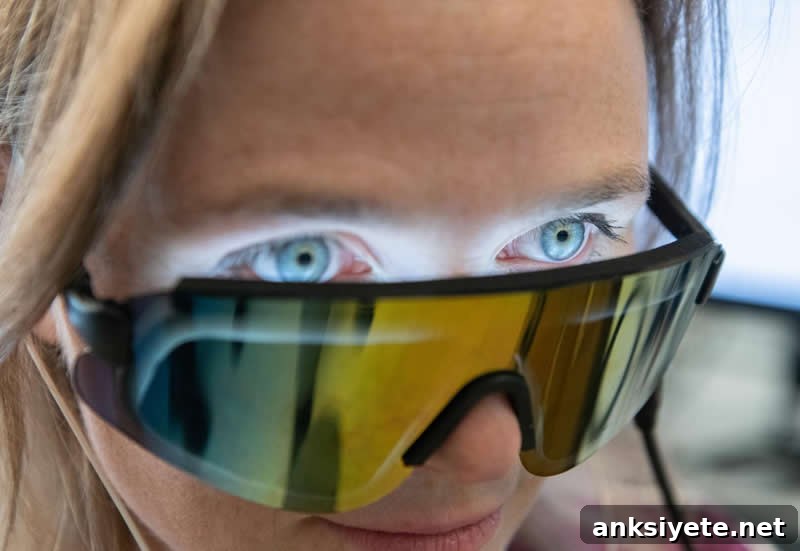
Summary: Exposure to light flickering at 40 Hz prompts the brain to release a rapid surge of cytokines that activate microglia and reduce neuroinflammation. These findings could inform new approaches to treating Alzheimer’s disease.
Source: Georgia Institute of Technology
Background
Alzheimer’s disease has resisted effective treatment for more than a century, but recent, unexpected research using flickering light has renewed hope. Scientists have now begun to uncover how that flicker might produce beneficial effects in the brain.
Researchers at the Georgia Institute of Technology found that exposing mice to light pulsing at 40 hertz (40 cycles per second) triggers a rapid release of signaling proteins—cytokines—that appear to activate microglia, the brain’s resident immune cells. Microglia are known to clear amyloid beta, a protein that accumulates between neurons and is a hallmark of Alzheimer’s disease.
The mouse experiments are closely tied to ongoing human studies in collaboration with Emory University, in which patients with Alzheimer’s are exposed to 40 Hz light and sound. Data from the animal work are being used to guide and interpret fluid samples collected from patients.
“I’ll be running samples from mice in the lab, and around the same time a colleague will be doing a strikingly similar analysis on patient fluid samples,” said Kristie Garza, the study’s first author and a graduate research assistant in Annabelle Singer’s lab at Georgia Tech, who is also part of Emory’s neuroscience program.
Immune signaling and microglia
Earlier work in 2016 showed that 40 Hz flicker mobilized microglia in mice with Alzheimer’s-like pathology, helping them clear amyloid beta. The new study sought the biochemical link between that flicker and immune activation. The researchers detected a surge of about 20 cytokines—small, secreted proteins that cells use to communicate—and found parallel changes in intracellular phosphorylation, the rapid activation of proteins by phosphate groups.
“The phosphoproteins showed up first. It looked as though they were leading, and our hypothesis is that they triggered the release of the cytokines,” said Annabelle Singer, senior author and assistant professor in the Wallace H. Coulter Department of Biomedical Engineering at Georgia Tech and Emory.
Levi Wood, co-leader of the study and an assistant professor in Georgia Tech’s George W. Woodruff School of Mechanical Engineering, added that several factors identified could support overall neural health, not only microglial activation.
The team published the results in the Journal of Neuroscience on February 5, 2020. Funding came from the National Institute of Neurological Disorders and Stroke (NIH), the Packard Foundation, Friends and Alumni of Georgia Tech, and the Lane family.
Stereo of brain rhythms
Alzheimer’s typically appears late in life and progressively damages brain tissue, with large losses in brain mass and the buildup of amyloid plaques outside neurons and phosphorylated tau tangles inside neurons. Gamma-band neural activity—oscillations commonly centered around 40 Hz—is diminished early in Alzheimer’s, and restoring gamma-like rhythms through sensory stimulation has shown protective effects in animal models.
Researchers describe the idea as unexpectedly powerful: a simple sensory stimulus at a specific frequency can restore gamma rhythms and engage brain immune responses. Singer noted, “Sometimes it does feel like science fiction.”
Which cytokines rose—and when
The cytokine profile that emerged suggested links to microglial activation, especially a strong signal from macrophage colony-stimulating factor (M-CSF), which is known to influence microglial behavior. The overall response included both pro-inflammatory and anti-inflammatory cytokines, but it was transient—a brief rise followed by a decline.
“A transient inflammatory response can promote clearance and repair. Chronic inflammation is generally harmful, but a brief, regulated response may be beneficial,” said Levi Wood. Singer emphasized that the rapid spike and subsequent drop-off suggest a potentially advantageous process rather than damaging chronic inflammation.
Timing of these events was rapid: phospho-signaling changes appeared within minutes of stimulation, while measurable cytokine increases were evident after about an hour. Garza summarized, “We saw phosphoprotein signals after about 15 minutes of flickering, and cytokines increased by one hour.”
Frequency matters
To test specificity, the team compared 40 Hz flicker with other stimulation frequencies. Unexpectedly, other frequencies also altered cytokine levels, but 20 Hz produced the opposite effect to 40 Hz—cytokine levels were broadly reduced. Singer suggested that different stimulation protocols might become tools tailored to distinct neurological conditions, where either boosting or suppressing immune signaling could be desirable.
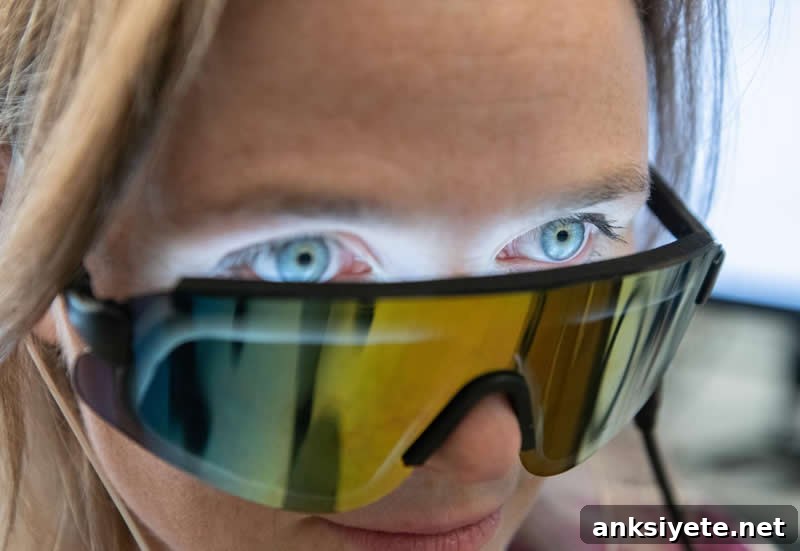
The team cautions against attempting DIY light therapies. More research is needed to establish safety and efficacy in humans, and incorrect frequencies or exposure patterns could be harmful.
Authors and funding
Authors include Kristie M. Garza, Lu Zhang, Ben Borron, Levi B. Wood and Annabelle C. Singer. The study was supported by NIH grants R01-NS109226 and R01-NS109226-01S1, the Packard Foundation, Friends and Alumni of Georgia Tech, and the Lane family. The authors note that findings and conclusions are theirs and do not necessarily reflect the sponsors’ views.
Original research
Article: “Gamma Visual Stimulation Induces a Neuroimmune Signaling Profile Distinct from Acute Neuroinflammation.” Journal of Neuroscience. DOI: 10.1523/JNEUROSCI.1511-19.2019.
Abstract (summary)
Exposing mice to 40 Hz visual flicker drives gamma-frequency neural activity and recruits microglia. The study measured cytokine expression and protein phosphorylation across intracellular pathways linked to immune signaling. Results showed that 40 Hz flicker rapidly increases cytokines associated with microglial phagocytic states (for example, IL-6, IL-4) and chemokines such as M-CSF and MIG, and upregulates phospho-signaling in NF-κB and MAPK pathways within minutes. The cytokine response after one hour differed from profiles seen in acute inflammation induced by lipopolysaccharide, indicating a distinct neuroimmune signaling state. These findings reveal a rapid and specific immune signaling response to 40 Hz visual stimulation in healthy animals, with potential therapeutic implications.
Source:
Georgia Institute of Technology
Media contacts:
Ben Brumfield – Georgia Institute of Technology
Image credit:
Georgia Tech / Allison Carter