
Implantable, Biodegradable Device Accelerates Peripheral Nerve Regeneration in Rats
Summary: Researchers at Washington University School of Medicine in St. Louis and Northwestern University have developed a small, implantable and bioresorbable device that delivers programmed electrical pulses to injured peripheral nerves in rats, promoting faster nerve regrowth and improved recovery of muscle function.
Source: WUSTL
Peripheral nerve injuries—from car accidents and sports trauma to repetitive strain from typing or texting—can cause numbness, tingling and muscle weakness in the hands, arms or legs. Recovery often takes months, and clinicians have had few effective options to accelerate healing.
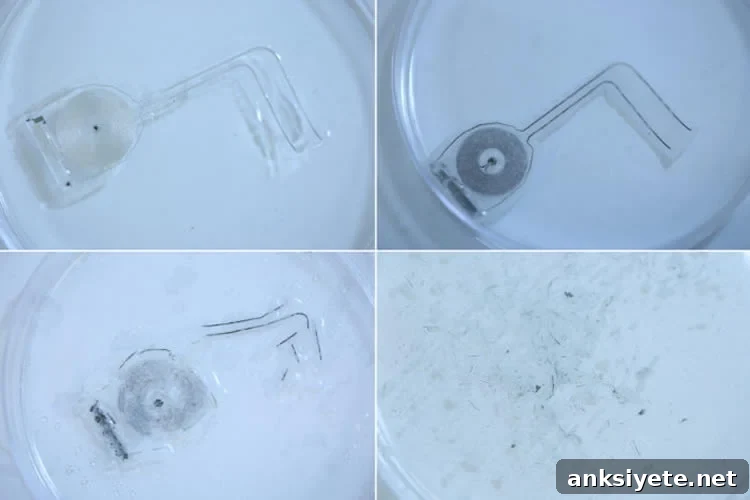
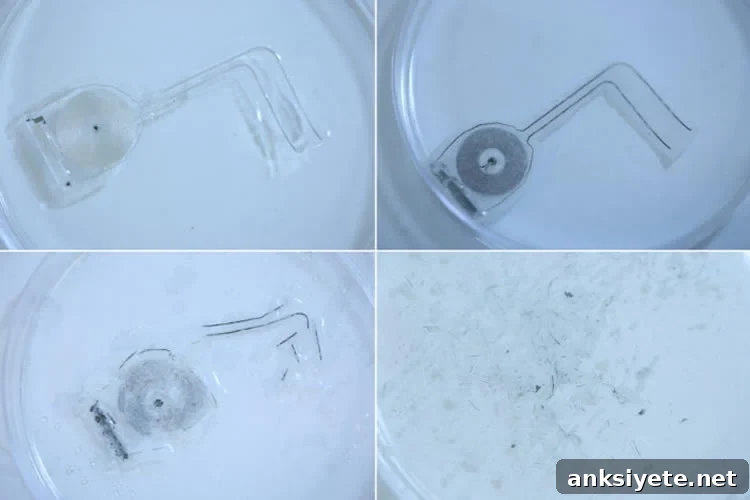
Researchers at Washington University School of Medicine in St. Louis, together with engineers at Northwestern University, report an implantable, biodegradable device about the size of a quarter that wraps around an injured peripheral nerve and delivers scheduled pulses of electricity. In rat experiments the device improved nerve regeneration and helped animals recover muscle mass and strength more quickly. The device functions for roughly two weeks before safely dissolving in the body.
The findings were published on October 8 in Nature Medicine.
How the device works
Peripheral nerves in the arms, legs and torso can regenerate after injury, unlike many neurons in the central nervous system. Electrical stimulation is known to trigger release of growth-promoting proteins and to boost nerve cell activity, which can accelerate regrowth. Traditionally, clinicians can apply electrical stimulation only during surgery, and once surgery ends the opportunity for repeated stimulation is gone.
To overcome that limitation, the research team created a wireless, bioresorbable electronic system that delivers repeated, programmable electrical stimulation directly to the injured nerve. The device wraps around the nerve and receives power wirelessly from an external transmitter, similar in principle to wireless phone chargers. After completing its programmed treatment course, the device harmlessly dissolves and is absorbed by the body.
“These platforms represent early examples of a bioelectronic medicine that provides active therapeutic function in a dosed and programmable format, then disappears without a trace,” said John Rogers, PhD, co-senior author from Northwestern. “Our devices support electrical stimulation at selected time points during healing to enhance recovery from peripheral nerve damage.”
Results from the rat study
The investigators tested the device on rats with injury to the sciatic nerve, which controls muscles in the lower leg and foot. Animals received one hour per day of electrical stimulation for one, three or six days, or no stimulation, and were then monitored for recovery over 10 weeks. Any regimen of electrical stimulation produced better outcomes than none: stimulated animals maintained more muscle mass and regained more muscle strength. Moreover, longer courses of stimulation produced faster and more complete restoration of nerve signaling and muscle function.
“Before this study, it was unclear whether extending stimulation beyond a single intraoperative application would add benefit,” said Wilson “Zack” Ray, MD, co-senior author at Washington University. “Our results show a clear dose-response: more days of scheduled stimulation improved recovery. That opens the door to optimizing treatment schedules to maximize healing.”
The device’s functional lifetime can be tuned by changing the composition and thickness of its biodegradable materials. The team is developing versions that can deliver stimulation for longer periods—potentially weeks—before resorption.
Clinical potential and next steps
Currently, options for many peripheral nerve injury patients are limited. Although this implantable device has not yet been tested in humans, it represents a novel, nonpharmacological approach that could fill a therapeutic gap. The researchers emphasize that further testing is required to determine safety, optimal stimulation schedules and translational feasibility for clinical use.
Funding: Support came from multiple sources including the National Research Foundation of Korea, the National Natural Science Foundation of China, the National Science Foundation, the Defense Advanced Research Projects Agency and the Center for Bio-Integrated Electronics at Northwestern University.
Study publication: The results were reported in Nature Medicine on October 8, 2018, in the article titled “Wireless bioresorbable electronic system enables sustained nonpharmacological neuroregenerative therapy.”
Summary abstract: Peripheral nerve injuries represent 2–5% of trauma cases and often result in incomplete motor or sensory recovery despite current interventions. Direct intraoperative electrical stimulation can enhance recovery, but conventional protocols are limited to a single intraoperative application. The authors introduce a wireless, programmable, fully bioresorbable electronic platform capable of delivering repeat peripheral nerve stimulation and demonstrate that multiple, scheduled episodes of stimulation enhance neuroregeneration and functional recovery in rodent models.