
Researchers at Butler Hospital report cellular changes tied to childhood adversity and psychiatric disorders, according to a study published online in Biological Psychiatry on January 16, 2015. The study links telomere shortening and alterations in mitochondrial DNA (mtDNA) with early-life stress and lifetime psychiatric conditions—changes that are commonly associated with cellular aging and may indicate accelerated biological aging related to psychosocial factors.
Mitochondria are the cell’s energy producers and are essential for metabolism, cellular signaling, growth, and programmed cell death. Telomeres, the protective caps on the ends of chromosomes, progressively shorten with cell division and are widely used as a biomarker of cellular aging. While previous work has begun to explore connections between mitochondrial function and mental health, evidence addressing mitochondrial DNA content in relation to psychosocial stress and psychiatric disorders has been sparse. This study adds important new data suggesting that stress and psychiatric illness may be reflected in both telomere length and mtDNA copy number.

The study included 299 community-recruited adults who were screened to be otherwise healthy. Participants underwent structured diagnostic interviews to identify lifetime psychiatric disorders, including depressive, anxiety, and substance use disorders. Childhood adversity was assessed through interviews that captured experiences such as parental loss and various forms of maltreatment or neglect. Based on the presence or absence of childhood adversity and lifetime psychiatric disorder diagnoses, participants were sorted into four comparison groups.
From each participant, researchers extracted DNA from whole blood samples using standard laboratory procedures. They measured telomere length and quantified mtDNA copy number, the latter serving as an index of mitochondrial DNA content. These molecular measures were then analyzed in relation to participants’ histories of childhood adversity and psychiatric diagnoses.
The principal findings show that both childhood adversity and lifetime psychiatric disorders were independently associated with markers that suggest advanced cellular aging. Specifically, individuals with histories of childhood stress or psychiatric disorders tended to have shorter telomeres and increased mtDNA copy number. These associations were observed among people with major depression and other depressive and anxiety disorders, and in those who had experienced parental loss or childhood maltreatment. A history of substance use disorders was also linked to higher mtDNA copy numbers in this sample.
These results imply that psychosocial stressors and certain psychiatric conditions correlate with measurable cellular alterations. Shortened telomeres and altered mitochondrial DNA content are changes often connected to physiological aging and disease risk, including inflammatory and metabolic conditions. By identifying these biological signatures, the study contributes to a growing understanding of how psychological and social adversity may translate into long-term physical health consequences.
Audrey Tyrka, MD, PhD, Director of the Laboratory for Clinical and Translational Neuroscience at Butler Hospital and Associate Professor of Psychiatry and Human Behavior at Brown University, emphasized the importance of linking psychosocial experiences to cellular biology. She noted that understanding these pathways is an essential step toward developing improved prevention and treatment strategies for stress-related psychiatric and medical illnesses, and it may also help clarify mechanisms involved in the aging process itself.
Contact: Holly Brown-Ayers – Women and Infants Hospital
Source: Women and Infants Hospital press release
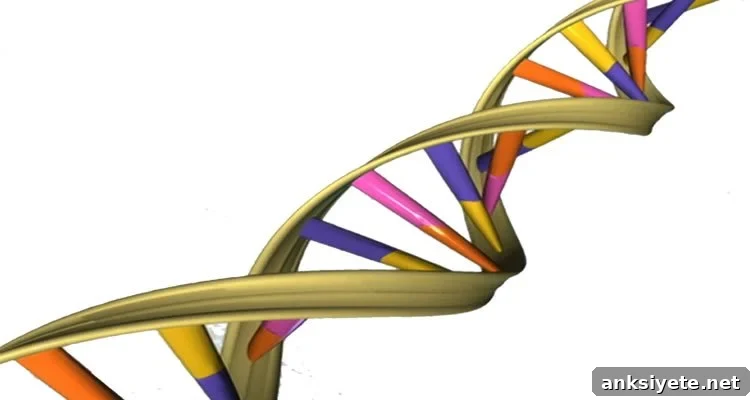
Image Source: The image is credited to NHGRI/NIH and is in the public domain
Original Research: Abstract for “Alterations of Mitochondrial DNA Copy Number and Telomere Length with Early Adversity and Psychopathology” by Audrey R. Tyrka et al., published online in Biological Psychiatry on January 16, 2015 (doi:10.1016/j.biopsych.2014.12.025).