
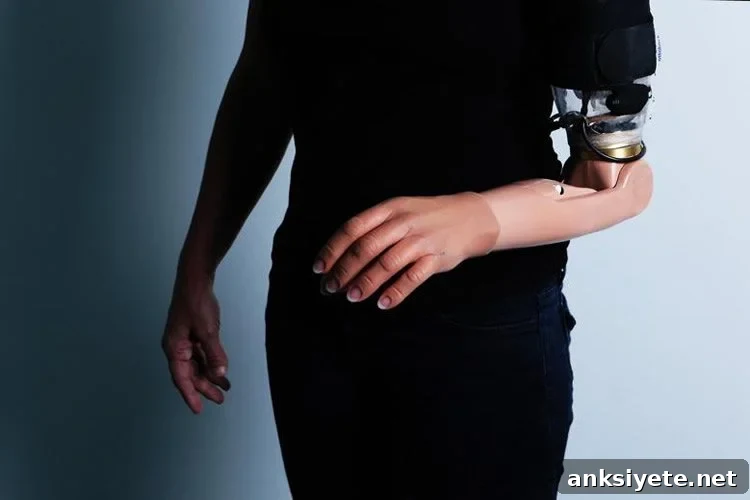
Summary: Using ultra-high field 7 Tesla fMRI, EPFL researchers show how targeted muscle and sensory reinnervation (TMSR) reshapes motor and somatosensory cortical maps in upper-limb amputees. The results indicate that TMSR helps preserve motor and sensory representations and their mutual connectivity, but higher-level multisensory embodiment remains limited—pointing to the need for integrated somatosensory feedback in future prostheses.
Source: EPFL
EPFL study maps brain changes after targeted muscle and sensory reinnervation (TMSR)
Researchers at EPFL’s Center for Neuroprosthetics used functional MRI at 7 Tesla to investigate how the brain reorganizes following targeted muscle and sensory reinnervation (TMSR), a surgical technique that reroutes residual limb nerves to intact muscles and skin so amputees can control advanced prostheses and receive touch sensations. The study offers the first detailed, high-resolution neuroimaging view of how TMSR affects primary motor (M1) and primary somatosensory (S1) cortex maps and their functional connections.
What is TMSR and why it matters
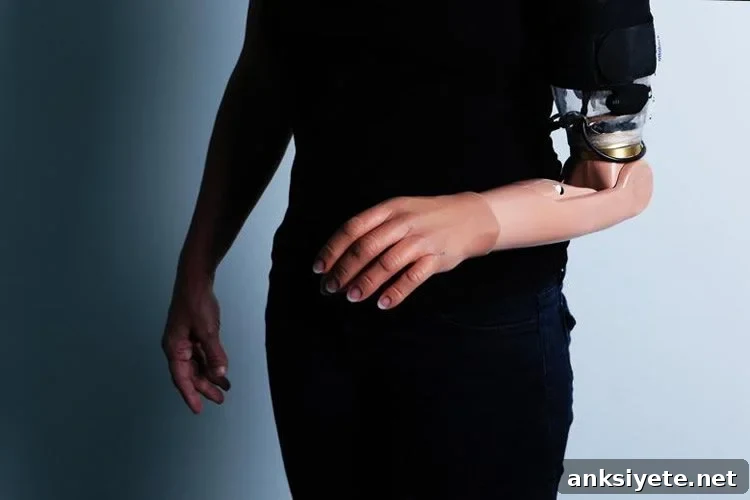
TMSR involves transferring motor and sensory nerve endings from an amputated limb to new muscle and skin targets. Electromyographic signals from the reinnervated muscles are decoded to drive myoelectric prostheses, enabling refined motor control. Sensory feedback is achieved by stimulating the reinnervated skin, which can produce perceived touch on the missing limb. Because these interventions change the peripheral inputs and outputs available to the brain, understanding how cortical motor and sensory maps adapt is essential to improving prosthetic function and the wearer’s sense of embodiment.
Methods and participants
The team studied three upper-limb amputee patients who had undergone TMSR and were experienced users of advanced prosthetic devices. For comparison, data were also considered from amputee patients who used conventional prostheses and from healthy control subjects. Using ultra-high field 7T functional MRI allowed the researchers to resolve cortical activity with exceptional spatial detail for both M1 and S1.
Key findings
- Motor cortex (M1) representations of the missing limb in TMSR patients were similar in extent, strength, and topography to those of healthy controls. These M1 maps differed from those observed in amputees who had not received TMSR, indicating a distinct impact of the surgical procedure on motor cortical organization.
- Somatosensory cortex (S1) maps in TMSR patients preserved the original topographical organization of the missing hand and fingers, although activation strength was reduced relative to healthy subjects. The study detected mapped responses to phantom fingers when the reinnervated skin regions on the chest or residual limb were stimulated.
- Functional connectivity between the upper limb representations in M1 and S1 was comparable to healthy controls in TMSR patients, but reduced in non-TMSR amputees. This suggests that TMSR helps maintain strong sensorimotor cortical links that are otherwise degraded after amputation.
- However, connections between primary sensorimotor regions and higher-level fronto-parietal areas involved in multisensory integration and embodiment were weak in both TMSR and non-TMSR patients compared with healthy controls. TMSR did not restore normal connectivity with these higher-order regions.
Implications for prosthetic design and rehabilitation
The findings show that TMSR can partially counteract maladaptive cortical plasticity after limb loss, particularly within primary motor and somatosensory cortex and between these regions. This preservation likely supports improved motor control of TMSR-enabled prostheses and helps reestablish somatosensory representations of the missing limb. At the same time, the persistent reduction in connectivity with fronto-parietal multisensory networks suggests that current TMSR approaches do not fully restore the brain’s multisensory encoding that underlies the feeling that a limb is truly one’s own.
Accordingly, the authors recommend further engineering advances—especially systematic integration of real-time somatosensory feedback that is temporally and functionally linked to prosthetic hand movements—to promote multisensory embodiment and enable prostheses that both move and feel more like natural limbs.
Study significance
This work represents the first detailed neuroimaging investigation of cortical maps in amputees fitted with TMSR-based bionic limbs and demonstrates that ultra-high field 7T fMRI is especially well suited to resolve changes in M1 and S1 after limb loss and surgical nerve rerouting. By revealing which aspects of cortical organization and connectivity are preserved and which remain impaired, the study provides concrete targets for improving neuroprosthetic technology and rehabilitation strategies.
Contributors and funding
Collaborating institutions included University Hospital Lausanne (CHUV), The Gonda Multidisciplinary Brain Research Center (Bar-Ilan University), Foundation Campus Biotech Geneva, EPFL Biomedical Imaging Research Center, Spinoza Centre for Neuroimaging, Clinique Romande de Réadaptation – SUVA, Centro Protesi INAIL, Rehabilitation Institute of Chicago, and University Hospital Geneva (HUG).
Funding was provided by the Swiss National Science Foundation and the Bertarelli Foundation.
Original research
The results are based on the study “Upper limb cortical maps in amputees with targeted muscle and sensory reinnervation” published in the journal Brain. The research team included Andrea Serino, Michel Akselrod, Roy Salomon, Roberto Martuzzi, Maria Laura Blefari, Elisa Canzoneri, Giulio Rognini, Wietske van der Zwaag, Maria Iakova, François Luthi, Amedeo Amoresano, Todd Kuiken, and Olaf Blanke.