Summary: Researchers have identified sensory neurons that relay information about stress and metabolism from adipose (fat) tissue back to the brain.
Source: Scripps Research Institute
How does fat communicate with the brain? For decades, scientists assumed that hormones released into the bloodstream were the primary way adipose tissue signaled metabolic state and stress to the brain.
New research from Scripps Research, published in Nature, now shows that a distinct population of sensory neurons actively carries information from adipose tissue directly to the brain.
“These neurons reveal that the brain is actively monitoring fat tissue, not just passively receiving circulating hormones,” says co-senior author Li Ye, PhD, the Abide-Vividion Chair in Chemistry and Chemical Biology and an associate professor of neuroscience at Scripps Research. “This changes how we think about neural control of metabolism.”
“This finding adds to growing evidence that sensory neurons play vital roles in health and disease across the body,” adds co-senior author Ardem Patapoutian, PhD, Nobel laureate and Howard Hughes Medical Institute investigator.
Adipose tissue stores energy as fat and releases it when the body requires fuel. It also produces hormones and signaling molecules that regulate appetite and metabolic processes. In conditions such as diabetes, fatty liver disease, atherosclerosis and obesity, adipose signaling and energy storage are often disrupted.
Scientists previously observed nerve fibers within fat, but most believed these fibers were primarily part of the sympathetic nervous system—the circuitry that activates fat breakdown during stress or exercise. Distinguishing sensory from sympathetic fibers in deep adipose tissue proved difficult because conventional tools for studying neurons in the skin or brain are not effective in obscured, deep tissues.
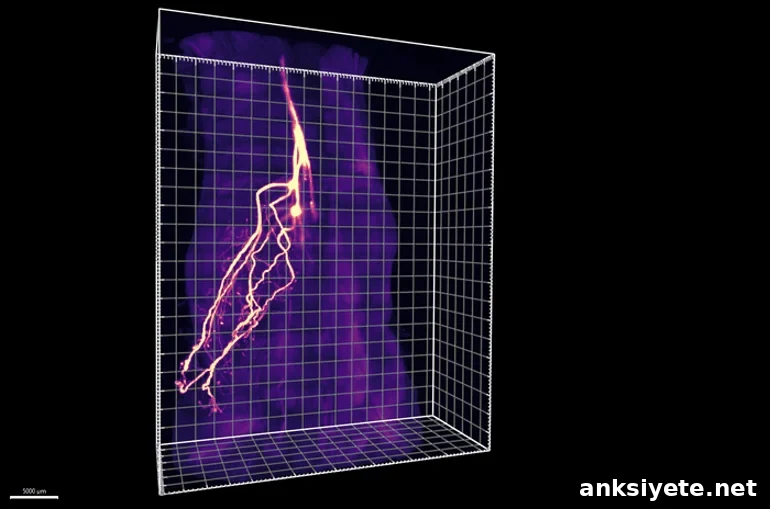
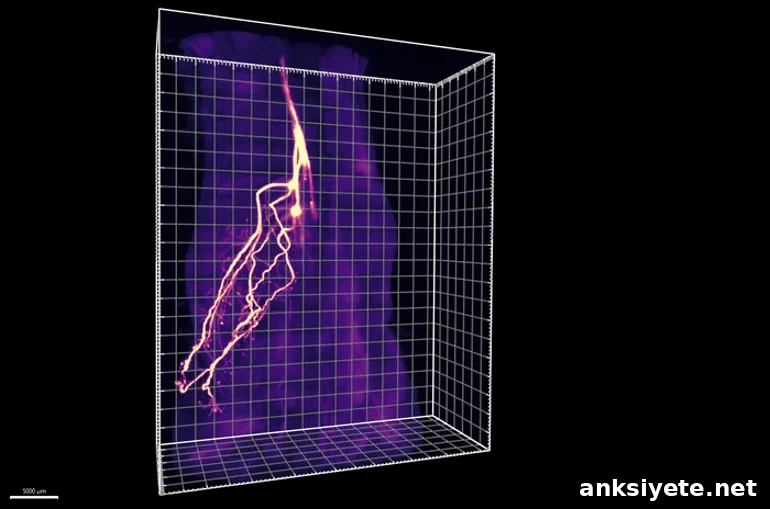
To overcome these limitations, the Scripps team developed two new techniques. The first, an imaging method called HYBRiD, clears mouse tissues to transparency and lets researchers trace neurons as they travel into adipose tissue.
Using HYBRiD, the investigators found that nearly half of the nerves in fat are not sympathetic fibers but originate from dorsal root ganglia—the sensory neuron hubs that convey signals to the central nervous system.
To test function, the researchers created a second tool called ROOT (retrograde vector optimized for organ tracing). ROOT is a targeted viral approach that can selectively eliminate small groups of sensory neurons connected to adipose tissue, enabling the team to observe the consequences of removing sensory input from fat.
“These experiments were only possible because we combined new imaging and targeted manipulation tools,” says Yu Wang, a graduate student in the Ye and Patapoutian laboratories and first author of the study. “When we began, there weren’t effective methods to answer these questions.”
When the team used ROOT to block sensory signaling from adipose tissue, they observed striking changes. Without sensory input, sympathetic-driven programs that convert white fat to thermogenic brown or beige fat became overactive. The affected animals developed enlarged fat pads enriched in beige adipocytes—cells that burn fat and sugar to produce heat—and exhibited higher body temperatures under neutral environmental conditions.
These results support a model in which sensory and sympathetic innervation of adipose tissue have complementary, opposing roles: sympathetic neurons act like a gas pedal to stimulate fat burning and beige-fat formation, while sensory neurons function as a brake, restraining those same programs to maintain metabolic balance.
“This work shows the brain sends more nuanced instructions to fat than we previously thought,” says Li. “Sensory and sympathetic circuits together help fine-tune adipose tissue function, acting like gas and brake pedals for metabolic activity.”
The researchers do not yet know the exact molecular signals these sensory neurons detect in adipose tissue. Future studies will investigate what the neurons sense, how their activity influences whole-body energy homeostasis, and whether similar sensory innervation patterns exist in other internal organs.
Funding: Additional authors on the paper “The role of somatosensory innervation of adipose tissue” include Verina Leung, Yunxiao Zhang, Victoria S. Nudell, Meaghan Loud, M. Rocio Servin-Vences, Dong Yang, Kristina Wang (Scripps Research), and Maria Dolores Moya-Garzon, Veronica L. Li, and Jonathan Z. Long (Stanford University).
Support for the research came from the Howard Hughes Medical Institute; the National Institutes of Health (including grants R35 NS105067, NIH Director’s New Innovator Award DP2DK128800, NIDDK K01DK114165); the Whitehall Foundation; the Baxter Foundation; a Helen Dorris Scholars fellowship; a Damon Runyon–Merck fellowship (DRG-2405-20); and a Fundacion Alfonso Martin Escudero postdoctoral fellowship.
About this neuroscience research news
Author: Press Office
Source: Scripps Research Institute
Contact: Press Office – Scripps Research Institute
Image: The image is credited to Scripps Research Institute
Original Research: Open access.
“The role of somatosensory innervation of adipose tissue” by Li Ye et al. Nature
Abstract
The role of somatosensory innervation of adipose tissue
Adipose tissues communicate with the central nervous system to help maintain whole-body energy balance. The prevailing view has emphasized circulating hormones from fat conveying metabolic state to the brain, which then controls adipocyte function via noradrenergic sympathetic output. At the same time, somatosensory neurons from dorsal root ganglia are known to innervate adipose tissue.
Progress has been limited by the lack of genetic and viral tools to target these sensory neurons selectively. In this study, the authors developed organ-specific viral, genetic and imaging approaches in mice that allow visualization and manipulation of sensory axons from their dorsal root ganglia cell bodies to subcutaneous adipocytes, defining the anatomical basis of sensory innervation of fat.
Functionally, selective ablation of adipose sensory neurons enhanced transcriptional programs for lipid synthesis and thermogenesis, producing larger fat pads with increased beige adipocyte content and elevated body temperature at thermoneutrality. These phenotypes depended on intact sympathetic signaling, supporting a model in which beige-fat-innervating sensory neurons act as a brake on sympathetic-driven adipocyte programs.
These findings highlight a significant role for dorsal root ganglia innervation in adipose tissue and open avenues to study sensory innervation across other internal, interoceptive systems.