
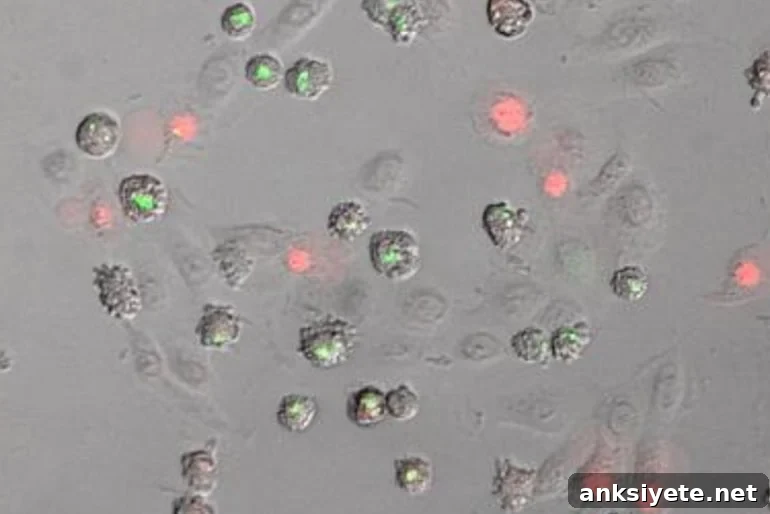
Summary: UV exposure and certain mosquito-transmitted viruses activate the inflammasome sensor NLRP1 via the p38 signaling pathway, driving inflammatory responses in the skin.
Source: University of Bonn
The skin, our body’s largest organ, acts as a frontline barrier against environmental stressors and pathogens. When that barrier is damaged—by excessive UV exposure or by infections—painful inflammation can follow, as commonly experienced after sunburn. Recent research has clarified molecular steps that link such damage to inflammation.
“In our study we examined the cellular events that translate environmental stress into inflammatory signaling,” says Prof. Dr. Florian Schmidt, head of a research group at the Institute of Innate Immunity, University Hospital Bonn.
UV-induced ribotoxic stress initiates a signaling cascade
Ultraviolet (UV) light carries high energy and can damage cellular components when it reaches the skin. That damage can impair normal protein production carried out by ribosomes. When ribosome function is disturbed, cells launch a defensive program known as the ribotoxic stress response. This response is known to activate a family of stress-responsive kinases, including the MAP kinase p38.
Schmidt and colleagues demonstrate that activated p38 directly modifies NLRP1, a sensor protein expressed in human keratinocytes that functions as a molecular switch for initiating inflammation in the skin. Phosphorylation of NLRP1 by p38 promotes the assembly of NLRP1-containing inflammasomes—large multiprotein complexes that control the maturation and release of pro-inflammatory signals.
Inflammasomes are key effectors of the innate immune system. Once formed, they activate enzymes that convert pro-inflammatory cytokines into their active forms. They also trigger the formation of pores in the cell membrane, enabling release of these cytokines and other intracellular danger signals. The pore formation process culminates in a form of inflammatory cell death, releasing intracellular contents into surrounding tissue and amplifying the immune response.
Viruses can activate the same p38–NLRP1 axis
Importantly, p38 activation in the skin is not limited to responses to UV damage. The researchers found that certain mosquito-borne viruses, including alphaviruses such as chikungunya virus and Semliki Forest virus, can also activate NLRP1 via p38. These viral infections appear to stimulate p38 through ZAKα and possibly other upstream kinases, indicating multiple routes to the same inflammatory hub.
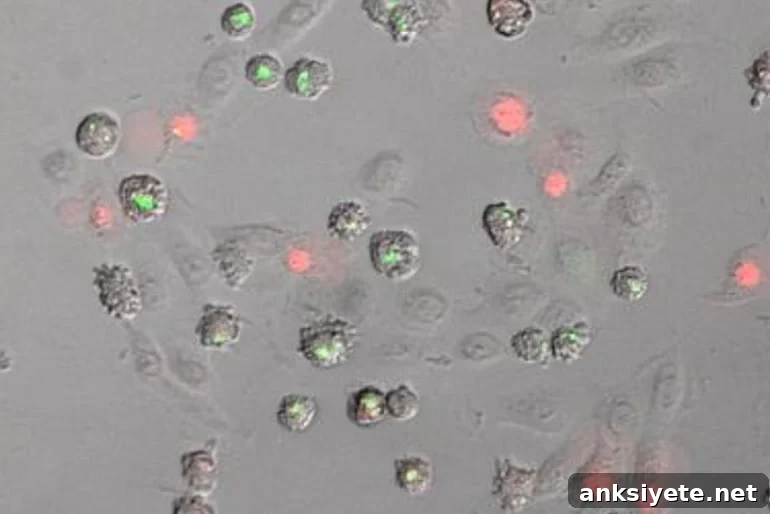
The team found that p38 acts as an information hub in skin cells, integrating diverse stress signals. Not every signal automatically leads to inflammasome assembly—activation requires a sufficient number and intensity of inputs to cross a detection threshold. This threshold helps prevent unnecessary tissue damage, since inflammasome-driven inflammation can cause extensive local cell death and tissue loss when uncontrolled.
In some conditions—such as severe sunburn or certain autoimmune disorders—this control can fail, producing excessive inflammasome activation and tissue damage. Because p38 sits upstream of NLRP1 activation in the pathways examined, targeting p38 could offer a strategy to selectively dampen overactive inflammatory responses in the skin without broadly suppressing immunity.
Collaborating institutions:
This study involved researchers from the University Hospital Bonn and the University of Bonn, together with collaborators at the University of Melbourne (Australia) and Boston Children’s Hospital (USA).
About this inflammation research news
Author: Svenja Ronge
Source: University of Bonn
Contact: Svenja Ronge – University of Bonn
Image: Credit: AG Schmidt / University of Bonn
Original Research: Open access. “P38 kinases mediate NLRP1 inflammasome activation after ribotoxic stress response and virus infection” by Florian I. Schmidt. Journal of Experimental Medicine.
Abstract
P38 kinases mediate NLRP1 inflammasome activation after ribotoxic stress response and virus infection
Inflammasomes detect intracellular signs of infection or cellular damage and initiate inflammatory programs. The NLRP1 sensor is expressed in human keratinocytes and orchestrates inflammatory responses in the skin. This study shows that a range of stress signals prompt human NLRP1 inflammasome assembly by activating MAP kinase p38. The ribotoxic stress response to UV light and to certain microbial molecules triggers p38 activation specifically through the upstream kinase ZAKα, while infection with arthropod-borne alphaviruses activates p38 via ZAKα and potentially additional MAP3Ks.
Mechanistically, p38 directly phosphorylates NLRP1; phosphorylation of serine 107 in the linker region is critical for this activation pathway. Following phosphorylation, NLRP1 undergoes ubiquitination of its PYD domain, N-terminal degradation, and nucleation of inflammasomes by the remaining UPA-CARD fragment. Other routes of NLRP1 activation—such as nanobody-mediated ubiquitination, viral protease cleavage, or inhibition of DPP9—operate independently of p38. Altogether, these findings position p38 activation as a central signaling hub that integrates multiple cellular stress inputs relevant to skin inflammation and controls NLRP1 inflammasome activation.