
Summary: Researchers report that applying transcranial alternating current stimulation (tACS) during sleep can accelerate learning, improve memory consolidation, and enhance skill acquisition.
Source: HRL Laboratories.
HRL Laboratories, in collaboration with the University of New Mexico, published the first study demonstrating that closed-loop transcranial alternating current stimulation (tACS) during sleep improves people’s ability to accurately identify hidden targets in new visual scenes. The approach reduced the typical overnight decline in performance for novel scenes by about 48%.
“This technique is intended to accelerate learning, memory, and skill acquisition,” said Dr. Praveen Pilly, HRL’s principal investigator and the study’s last author. “We targeted slow-wave oscillations—low-frequency electrical rhythms that occur during stages 2 and 3 of non-REM sleep. By continuously monitoring ongoing oscillations and delivering tACS that matched their frequency and phase in the slow-wave band, we created a closed-loop stimulation system. While others have discussed similar concepts, our team is the first to publish results using a closed-loop slow-wave tACS method.”
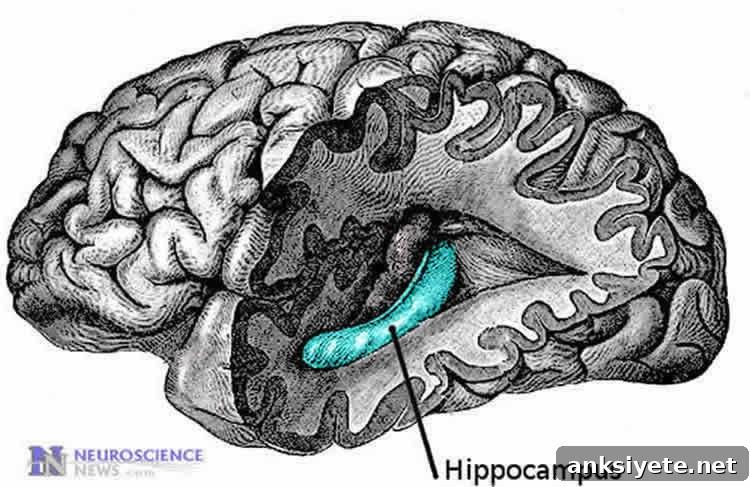
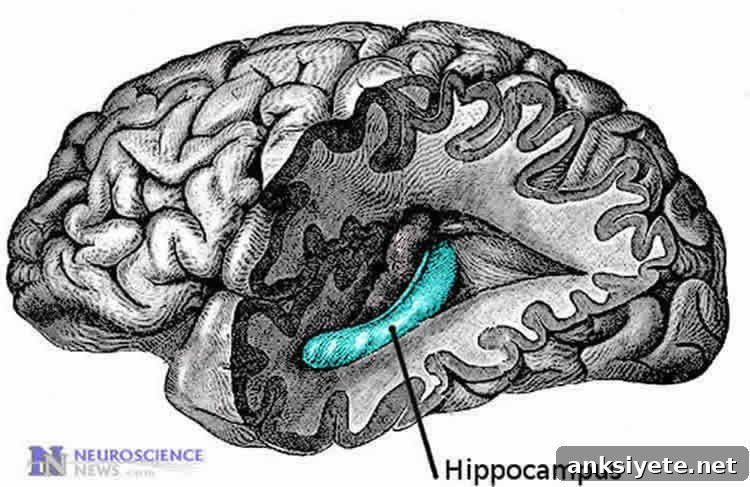
The rationale behind targeting slow-wave oscillations is grounded in current understanding of memory consolidation. New sensory information is first encoded in the hippocampus for short-term storage. During sleep, these fragile hippocampal traces are transferred to the cerebral cortex, where they are integrated with existing knowledge and consolidated into longer-lasting, more generalized representations. Enhancing slow-wave activity during sleep may therefore improve retention and generalization of newly learned information, strengthening memory for longer periods. This study represents the first closed-loop electrical stimulation experiment focused on hippocampus-dependent memories, advancing tACS research toward practical applications for memory enhancement.
“Our primary behavioral test was a target detection task,” explained Dr. Nicholas Ketz, lead author. “Participants viewed complex scenes with subtle visual cues that indicated whether a target represented a potential threat or a non-threatening element. Some cues were very subtle and differentiating threatening from non-threatening scenes required training to recognize those cues.”
Participants either received active tACS during overnight sleep or a sham (no stimulation) condition. Their task performance was measured before and after sleep to determine whether stimulation produced persistent improvements.
“A critical element of the design was inclusion of both exact repetitions of training images and novel viewpoints of the same scenes,” Ketz said. “For example, a scene in which a target is discovered under a rock might be presented again identically, and later shown from a different angle where the same rock and target are visible but from a new vantage point. This distinction allowed us to test whether memories were specific to the exact image or had been generalized. Memory consolidation should preferentially support generalized representations that enable adaptation rather than only recognizing the identical item. We also identified stimulation-induced biomarkers in sleep EEG across the scalp within the slow-wave band that correlated with overnight changes in performance for novel scenes.”
The experiment used a within-subjects, counterbalanced design: each participant completed both active and sham nights on separate visits, separated by an adaptation night. This design reduced variability in performance estimates, albeit at the cost of requiring more participant time—a reason such protocols are relatively rare. The research team included Aaron Jones, Dr. Natalie Bryant, and Dr. Vincent Clark from the University of New Mexico, who assisted with behavioral design, data analysis, and data collection.
Funding: Supported by BTO and DARPA.
Source: Michele Durant – HRL Laboratories
Publisher: Organized by NeuroscienceNews.com.
Image Source: NeuroscienceNews.com image is in the public domain.
Original Research: Abstract for “Closed-loop slow-wave tACS improves sleep dependent long-term memory generalization by modulating endogenous oscillations” by Nicholas Ketz, Aaron Jones, Natalie Bryant, Vincent P. Clark and Praveen K. Pilly in Journal of Neuroscience. Published July 23, 2018.
doi: 10.1523/JNEUROSCI.0273-18.2018
Abstract
Closed-loop slow-wave tACS improves sleep-dependent long-term memory generalization by modulating endogenous oscillations
Sleep-dependent processes contribute to long-term memory retention and generalization, and these processes correlate with neural oscillatory activity measurable as changes in electrical potential. The causal role and specificity of these slow oscillations remain incompletely understood. In this study, we tested whether augmenting endogenous slow-wave (SW) oscillations in humans with closed-loop tACS could enhance consolidation of recent experiences into long-term memory. Sixteen participants (three female) were trained before sleep on a target detection task that required identifying hidden targets in complex visual scenes. During post-training sleep, a closed-loop system detected endogenous slow waves and delivered tACS that matched the dominant oscillation’s phase and frequency in the 0.5–1.2 Hz range. Performance was reassessed the following day using images identical to training (“Repeated”) and images rendered from training scenes but with novel viewpoints (“Generalized”). Active SW tACS enhanced post- versus pre-sleep target detection accuracy for the Generalized images relative to sham nights, with no significant effect for Repeated images. A frequency-agnostic clustering analysis of stimulation-induced spectral changes in scalp EEG showed that the behavioral improvement correlated with a transient increase and subsequent decrease in measured SW-band power, and with increased coupling between slow waves and spindle amplitude. These findings indicate that targeting endogenous SW oscillations can enhance consolidation by improving generalization over simple recognition.
SIGNIFICANCE STATEMENT
This human study shows that a closed-loop, noninvasive brain stimulation method can augment endogenous slow oscillations during sleep to improve consolidation of recent experiences into long-term memory. Transient slow oscillatory tACS, triggered by endogenous slow oscillations and matched in frequency and phase, increased slow-wave power and coupling with sleep spindles. These electrophysiological changes correlated with overnight improvements in generalization on a target detection task. The study also provides evidence for a tACS-induced refractory period following the induced increase: slow-wave power temporarily decreased relative to sham, but still maintained a positive relationship with behavioral gains.