
New York University biologists have identified a mechanism that helps explain how the diversity of neurons that make up the visual system is generated.
Researchers at New York University have uncovered a regulatory process that coordinates the timing of neuron production and the survival of those neurons to create the rich diversity of cell types found in the visual system. Claude Desplan, Professor of Biology at NYU and senior author of the study, describes the work as revealing how both when cells are born and whether they live or die are governed together to produce distinct neural subtypes used for vision.
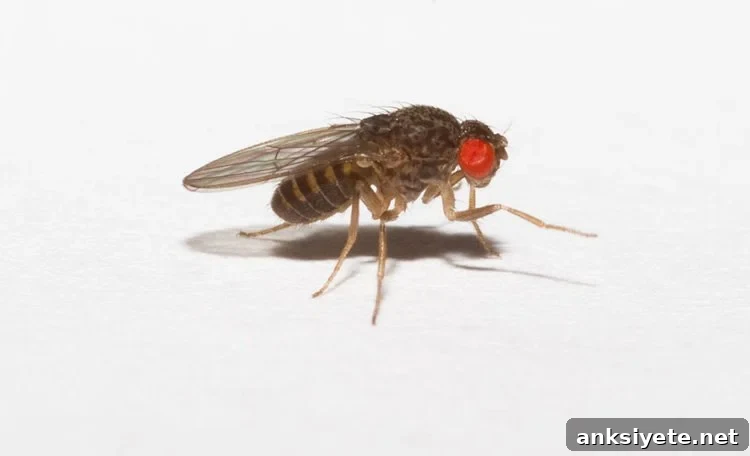
The paper, published in the journal Cell, reports on experiments carried out in the fruit fly Drosophila and clarifies how temporal patterning within neural progenitors generates multiple aspects of neuronal diversity. The laboratory team included postdoctoral researchers Claire Bertet, Xin Li, Ted Erclik, Matthieu Cavey, and Brent Wells, who all contributed to the experimental and analytical work underlying the study.
Neurogenesis—the process by which neurons are produced from progenitor or stem-like cells—is a central theme in developmental neurobiology. One major challenge in the field is explaining how a relatively small pool of progenitor cells can produce the many distinct neuronal, glial, and supporting cell types that make up a mature central nervous system. Temporal patterning is a core strategy used across species: progenitors change the suite of transcription factors they express over time, and each temporal window biases progenitors to produce specific neural identities.
Using the Drosophila visual system as a model, the NYU team extended the classical view of temporal patterning. Their findings show that temporal transcription factors do more than assign identity; they also set whether newly formed neurons survive or are eliminated and control how progenitors divide to produce different numbers of offspring. In short, temporal patterning in neuroblasts (neural progenitors) coordinates three linked parameters: cell identity, cell number, and cell survival. By doing so, it sculpts the cellular composition of the adult visual circuitry.
The study provides experimental evidence that the sequential expression of temporal factors triggers distinct developmental programs. In some temporal windows, progenitors produce neurons that are programmed to survive and integrate into circuits; in other windows, progenitors generate cells that are fated to die unless specific survival signals intervene. Temporal cues also influence whether progenitors divide asymmetrically or symmetrically, thereby adjusting the numbers of each neuronal subtype. This integrated control mechanism helps explain how relatively simple temporal changes can yield complex and reproducible patterns of neuronal diversity.
Beyond clarifying mechanisms in fruit flies, these results have broader relevance for understanding how temporal patterning contributes to neural diversity across species. Temporal transcriptional programs are conserved concepts in many animals, and the coupling of identity specification with survival and proliferation control offers a plausible strategy for producing precise cell complements in developing brains. Insights from this work may inform future studies on brain development, regeneration, and disorders in which cell-type composition is altered.
Funding and acknowledgements
The research received support in part from the National Institutes of Health (grant R01 EY017916). The authors thank colleagues and technical staff who contributed to experiments and analysis. The full author list on the Cell paper includes Claire Bertet, Xin Li, Ted Erclik, Matthieu Cavey, Brent Wells, and Claude Desplan.
Contact and source information
Contact: James Devitt, NYU
Source: NYU press release and the Cell article: “Temporal Patterning of Neuroblasts Controls Notch-Mediated Cell Survival through Regulation of Hid or Reaper” by Claire Bertet, Xin Li, Ted Erclik, Matthieu Cavey, Brent Wells, and Claude Desplan. Published online August 28, 2014. DOI: 10.1016/j.cell.2014.07.045.