
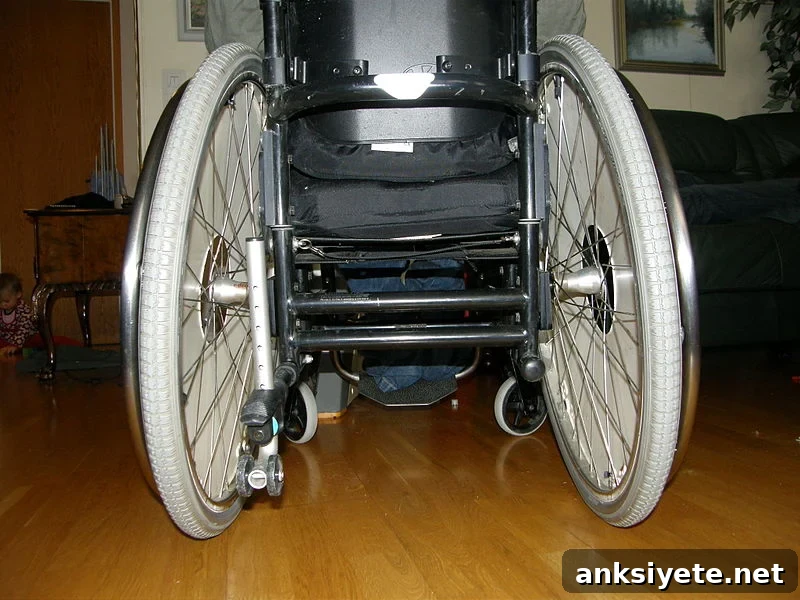
People with spinal cord injuries strongly incorporate wheelchairs into their sense of body, rather than viewing them merely as extensions of immobile limbs.
Research led by Mariella Pazzaglia and colleagues at Sapienza University and IRCCS Fondazione Santa Lucia in Rome, published in PLOS ONE, indicates that the human brain can incorporate assistive devices such as wheelchairs into its representation of the body. The study, supported by the International Foundation for Research in Paraplegie, explored how people with spinal cord injury experience their wheelchairs in relation to their bodily self.
Participants who relied on wheelchairs after spinal cord injury perceived the boundaries of their bodies in a more flexible, plastic way that included the wheelchair as part of their bodily space. This association between self and tool did not depend strongly on how long ago the injury occurred or on how long the participants had been using a wheelchair. However, people with injuries confined to the lower spinal cord — who retained voluntary control of their upper bodies — showed a particularly strong tendency to incorporate the wheelchair into their body representation compared with individuals whose injuries affected both upper and lower body function.
These findings suggest that wheelchairs are not simply perceived as passive extensions of non-functioning limbs. Instead, they can become tangible, functional substitutes for impaired body parts and effectively act as part of the functional self. As Pazzaglia and colleagues put it, the experienced corporeal awareness of the wheelchair emerges not merely as an added tool but as a substituted, integrated component of the person’s body image and action capabilities.
The study builds on earlier research showing that prosthetic limbs and other assistive devices can be integrated into body representation. Previously, it was unclear whether this integration resulted primarily from prolonged use and training or from changes in sensory input after injury. The authors’ results favor the interpretation that altered sensory signals and the brain’s continuous updating of bodily information play a central role: the nervous system appears able to remap body boundaries to include functionally relevant external devices, like wheelchairs, when those devices reliably mediate interaction with the environment.
This adaptive capacity has direct implications for rehabilitation and assistive technology design. If the brain can incorporate tools into the body schema as substitutes for lost function, then rehabilitation approaches and device development that emphasize meaningful sensorimotor coupling between user and device may enhance embodiment and functional outcomes. Training, sensory feedback, and ergonomic design that support a seamless relationship between user and wheelchair could therefore strengthen the device’s status as part of the self and improve mobility, independence, and quality of life for people with spinal cord injury.
Beyond practical rehabilitation, these results contribute to our understanding of human body representation and plasticity in adulthood. The brain’s ability to update its internal model of the body to include non-biological parts highlights a flexible and ongoing process of self-construction that responds to changes in bodily capabilities and sensory inputs. This flexibility may be an important target for interventions that aim to maximize functional recovery and user satisfaction with assistive technologies.
Notes about this neurology research
Citation: Pazzaglia M, Galli G, Scivoletto G, Molinari M (2013) A Functionally Relevant Tool for the Body following Spinal Cord Injury. PLOS ONE 8(3): e58312. doi:10.1371/journal.pone.0058312
Financial disclosure: The research was funded by the International Foundation for Research in Paraplegie (IRP, P133) and by an EU Information and Communication Technologies grant (VERE project, FP7-ICT-2009-5, Prot. Num. 257695). The funders did not influence study design, data collection and analysis, the decision to publish, or the preparation of the manuscript.
Competing interest statement: The authors have declared that no competing interests exist.
Contact: Jyoti Madhusoodanan – Public Library of Science
Source: Public Library of Science press release
Image source: The wheelchair image used in the article is in the public domain.
Original research: Full open-access research article: “A Functionally Relevant Tool for the Body following Spinal Cord Injury” by Mariella Pazzaglia, Giulia Galli, Giorgio Scivoletto, and Marco Molinari in PLOS ONE. Published online March 6, 2013. doi:10.1371/journal.pone.0058312