
Summary: Researchers have demonstrated that MR-guided focused ultrasound can safely and reversibly open the blood-brain barrier in people with Alzheimer’s disease, offering a non-invasive route to deliver therapies to the brain.
Source: University of Ontario
Focused ultrasound safely opens the blood-brain barrier in Alzheimer’s patients
In the first peer-reviewed report of its kind, researchers at the University of Toronto and Sunnybrook Health Sciences Centre have shown that magnetic resonance (MR)-guided focused ultrasound can be used to safely, reversibly and non-invasively open the blood-brain barrier (BBB) in patients with early to moderate Alzheimer’s disease. The study is published in Nature Communications under the title “Blood–brain barrier opening in Alzheimer’s disease using MR-guided focused ultrasound.”
Lead author Nir Lipsman, an assistant professor in the department of surgery and director of the Harquail Centre for Neuromodulation at Sunnybrook, describes the work as “a critical first step.” The trial tested safety and feasibility rather than delivering drug therapies, using low-frequency ultrasound waves combined with intravenously injected microbubbles to transiently open the BBB in a targeted area of the frontal lobe.
The BBB is a protective layer around the brain’s small blood vessels that blocks toxins and infectious agents from entering neural tissue. While essential for brain health, the BBB also prevents many therapeutic agents — including large molecules such as antibodies and potential cell therapies — from reaching diseased brain tissue. By demonstrating that the BBB can be opened safely and reversibly in humans with Alzheimer’s, the team has created a potential pathway for delivering treatments that were previously unable to cross into the brain.
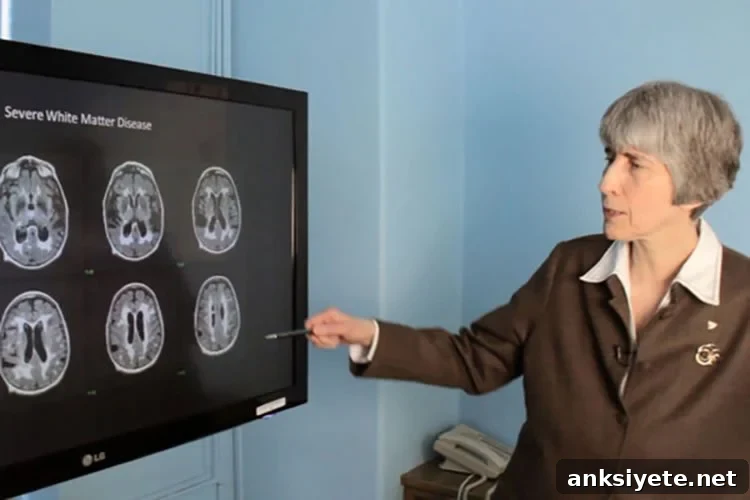
Co-principal investigator Professor Sandra Black, a professor of neurology at the University of Toronto and Sunnybrook, highlights the clinical potential of this approach: “While it is still early in development, in the future focused ultrasound may provide a non-invasive, effective way of delivering large molecules such as antibodies or even stem cells directly to the brain to help patients with Alzheimer’s. We are pioneering exciting, potentially transformative treatment options for patients.”
The Phase I trial enrolled five patients with early to moderate Alzheimer’s disease. In each participant, the focused ultrasound successfully opened the BBB within the targeted volume, and the opening was reversible and repeatable. Importantly, there were no serious clinical or radiographic adverse events attributed to the procedure, and no clinically significant worsening on cognitive measures at three months compared to baseline.
Prior work at Sunnybrook demonstrated the technique’s safety in a different context: in 2015 the team used focused ultrasound to open the BBB to test delivery of chemotherapy directly into a patient’s brain tumor. For this Alzheimer’s study, the investigators did not administer any drugs; the aim was to assess the method’s safety and practicality for potential future therapeutic delivery.
Development of the focused ultrasound technology has been a long-standing collaboration. Kullervo Hynynen, a professor of medical biophysics and director of physical sciences at Sunnybrook Research Institute, worked closely with INSIGHTEC, a medical technology company focused on incisionless surgery, over nearly two decades to refine the system used in this trial.
Alzheimer’s disease is the most common neurodegenerative disorder, progressively impairing memory and cognitive function. It affects millions worldwide: more than 6.4 million people in North America and at least 44 million people globally are living with Alzheimer’s or another form of dementia. New delivery strategies for potential treatments are urgently needed.
Based on the positive safety and feasibility findings from this Phase I study, the research team plans to proceed to a Phase II trial, expected to begin in the fall. Future trials will explore the technique’s utility for delivering therapeutic agents across the BBB and assess clinical benefits over longer follow-up periods.
Source: University of Ontario
Publisher: Organized by NeuroscienceNews.com
Image Source: Image adapted from the University of Ontario news release
Original Research: Open access research titled “Blood–brain barrier opening in Alzheimer’s disease using MR-guided focused ultrasound” by Nir Lipsman, Ying Meng, Allison J. Bethune, Yuexi Huang, Benjamin Lam, Mario Masellis, Nathan Herrmann, Chinthaka Heyn, Isabelle Aubert, Alexandre Boutet, Gwenn S. Smith, Kullervo Hynynen & Sandra E. Black in Nature Communications. Published July 25, 2018.
DOI: 10.1126/sciadv.aar8590
Abstract (summary)
Magnetic resonance-guided focused ultrasound combined with intravenously injected microbubbles has previously been shown in animal models to transiently open the blood–brain barrier and reduce Alzheimer’s-related pathology such as beta-amyloid and tau. In this Phase I safety trial, focused ultrasound was used to open the BBB in five patients with early to moderate Alzheimer’s disease. In all participants, the targeted BBB region was safely, reversibly, and repeatedly opened without serious clinical or radiographic adverse events. There was no clinically meaningful decline in cognitive scores at three months compared to baseline. Beta-amyloid deposition at the target site was confirmed prior to treatment using [18F]-florbetaben PET. Exploratory analyses did not show group-level changes in amyloid following sonication. These safety and feasibility results support continued investigation of MR-guided focused ultrasound as a potential method to deliver therapies and as a novel treatment approach for Alzheimer’s disease.