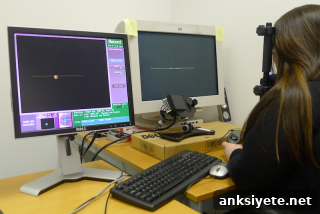
Eye movement study reveals impaired reading fluency in people with schizophrenia
New research from McGill University in Montreal provides robust evidence that individuals with schizophrenia experience disruptions in reading fluency. By tracking eye movements while participants read simple sentences, the study reveals patterns that explain why some people with the disorder read more slowly and less efficiently than their peers.
Previous research had largely concluded that basic reading ability remained intact in schizophrenia, but those studies typically relied on single-word reading tests. Such tests fail to capture the dynamic process of fluent reading, which depends on how readers move their eyes across lines of text, predict upcoming words, and integrate context. The McGill team focused on natural sentence reading and eye movement behavior to reveal deficits that single-word tests miss.
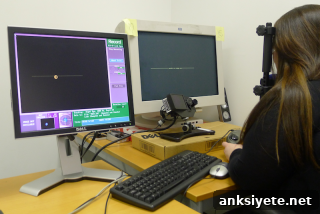
The study was led by Ph.D. candidate Veronica Whitford along with psychology professors Debra Titone and Gillian A. O’Driscoll. Their paper, first published online and now appearing in the Journal of Experimental Psychology: General, analyzes eye movement measures that serve as objective indicators of reading difficulty.
Eye movement metrics reveal how much effort readers invest when encountering challenging passages. Typical signs of difficulty include shorter saccades (smaller jumps from one word to the next), longer fixations on individual words, increased regressions (going back to re-read earlier words), and reduced ability to preview upcoming words. These behaviors signal slower, more effortful processing and less efficient planning of eye movements, all of which impair reading fluency.
In the McGill study, 20 outpatients with schizophrenia were compared to 16 non-psychiatric participants matched for gender, age, and family social status. The results showed clear group differences. Compared with the healthy comparison group, people with schizophrenia read at a slower pace, made smaller eye movements, spent more time fixating on single words, and performed more regressions. They were also less efficient at using information about upcoming words to plan their eye movements, a key component of fluent reading.
The researchers examined two specific contributors to these reading problems: phonological processing (the ability to break words into sound components) and general oculomotor control (the skill of guiding eye movements in non-reading tasks). Analyses indicated that individual differences in both phonological processing and oculomotor control helped explain the observed reading impairments. In other words, both linguistic processing and the mechanics of eye movement play a role in reduced reading fluency among people with schizophrenia.
These findings have important clinical and practical implications. Whitford notes that combining objective measures of reading difficulty with other clinical information, such as family history, could help identify people in the early stages of schizophrenia. Earlier detection would, in turn, create opportunities for timely intervention. Improving reading fluency could also have direct benefits for everyday functioning: the researchers observed a strong relationship between reading skill and the ability to live independently, work, and manage daily tasks.
Debra Titone emphasizes that targeted interventions to improve reading—addressing both phonological skills and oculomotor control—might enhance the capacity of people with schizophrenia to function in society. Rehabilitation efforts that include reading training could therefore be an important component of broader therapeutic programs aimed at increasing independence and quality of life.
Notes about this schizophrenia research
Other co-authors on the study include Christopher C. Pack of the Montreal Neurological Institute and Ridha Joober and Ashok Malla of McGill’s Department of Psychiatry and the Douglas Mental Health University Institute. The research used gaze-contingent methods to monitor reading behavior and eye movements while participants read sentences, enabling precise assessment of how phonological processing and oculomotor control relate to reading fluency.
Contact: Chris Chipello – McGill University
Source: McGill University press release
Image Source: Image adapted from McGill press release and is credited to Debra Titone.
Original Research: Abstract for “Reading impairments in schizophrenia relate to individual differences in phonological processing and oculomotor control: Evidence from a gaze-contingent moving window paradigm” by Veronica Whitford, Gillian A. O’Driscoll, Christopher C. Pack, Ridha Joober, Ashok Malla, and Debra Titone in Journal of Experimental Psychology: General. Published online February 2013.