
Using mobile phones, laptops and other media devices at the same time may be associated with changes in brain structure, according to new research from the University of Sussex.
A study published on 24 September reports that adults who frequently engage in media multitasking—consuming two or more media formats simultaneously—show lower grey-matter density in a specific brain region than people who use single devices less often. The finding links high levels of concurrent media use with measurable differences in brain anatomy.
The research builds on earlier work that connected heavy media-multitasking with reduced attentional control in distracting situations and with increased emotional difficulties, including higher rates of depression and anxiety. However, the investigators emphasize that their results describe an association, not proof of cause and effect. They recommend longitudinal studies to determine whether extensive media multitasking drives structural brain changes, or whether preexisting differences in brain anatomy make some individuals more prone to multitasking behaviors.
Researchers at the University of Sussex’s Sackler Centre for Consciousness used structural magnetic resonance imaging (MRI) to examine the brains of 75 adult participants. All participants completed a detailed questionnaire about their media consumption habits, covering mobile phones, laptops and computers, television, and printed media. The study quantified each person’s level of media multitasking using a Media Multitasking Index (MMI).
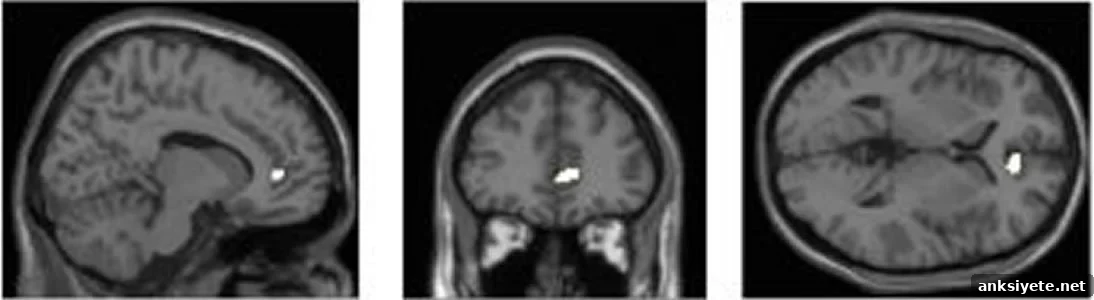
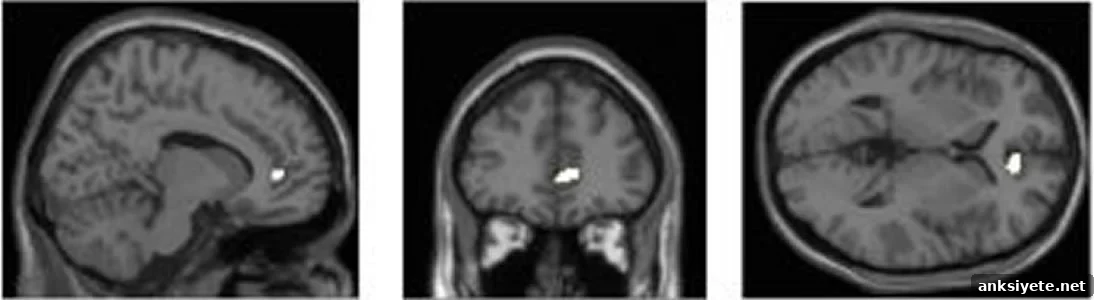
After accounting for personality traits and other individual differences, the analysis revealed that higher MMI scores were linked to smaller grey-matter density in the anterior cingulate cortex (ACC). The ACC is a brain region known to play a central role in cognitive control, attention regulation, and socio-emotional processing. The authors suggest that structural differences in the ACC may help explain why heavy media multitaskers often show weaker performance on tasks requiring sustained attention and greater difficulty handling emotional and social challenges.
Neuroscience has shown that brain structure is adaptable: prolonged exposure to novel environments and repeated experiences can reshape neural pathways, alter synapses, and even change cortical maps. For example, learning new skills or intensive practice—such as juggling or the spatial navigation required of taxi drivers—has been associated with increases in grey-matter density in task-relevant brain areas. The current study places media multitasking within this broader context of experience-dependent brain plasticity, while cautioning that the direction of the relationship remains unresolved.
Kep Kee Loh, one of the study authors, explains that both causal directions are plausible. Individuals who naturally have lower grey-matter density in the ACC might find it harder to exert cognitive control and therefore turn to simultaneous media consumption more often. Conversely, sustained exposure to environments that encourage frequent multitasking could potentially induce structural changes in the ACC over time. The researchers stress that only follow-up, longitudinal research can determine which explanation accounts for the observed association.
Contact: Jacqui Bealing – University of Sussex
Source: University of Sussex press release
Image Source: Image credited to Kep Kee Loh & Ryota Kanai, adapted from the University of Sussex press release
Original Research: Open-access research titled “High media multi-tasking is associated with smaller gray-matter density in the anterior cingulate cortex” by Kep Kee Loh and Dr Ryota Kanai, published in PLOS ONE (doi:10.1371/journal.pone.0106698).
Higher Media Multi-Tasking Activity Is Associated with Smaller Gray-Matter Density in the Anterior Cingulate Cortex
Media multitasking—the simultaneous use of multiple media forms—is increasingly common and has been linked to poorer performance on cognitive control tasks and greater socio-emotional difficulties. To investigate potential neural correlates, the present study examined associations between individuals’ media multitasking activity and brain structure using voxel-based morphometry (VBM). Results showed that participants with higher Media Multitasking Index (MMI) scores had reduced gray-matter density in the anterior cingulate cortex (ACC). Functional connectivity between this ACC region and the precuneus also correlated negatively with MMI. These findings suggest a structural and connectivity-based correlate that may underlie the decreased cognitive control and socio-emotional regulation observed in heavy media multitaskers. Because the study is cross-sectional, it cannot determine causality; longitudinal research will be required to clarify the direction of the relationship.
“High media multi-tasking is associated with smaller gray-matter density in the anterior cingulate cortex” by Kep Kee Loh and Dr Ryota Kanai, PLOS ONE, doi:10.1371/journal.pone.0106698.