
Genetic Mutation Identified as a Cause of Cerebellar Ataxia in Humans, Mice, and Dogs
Summary: A new study identifies a mutation in the CAPN1 gene as an additional cause of cerebellar ataxia across species.
Source: Cell Press
A mutation in the CAPN1 gene has been identified as a cause of cerebellar ataxia in humans and mice, and it is also associated with ataxia in Parson Russell Terrier dogs. Published June 16 in Cell Reports, the study shows that the mutation impairs the function of the enzyme calpain-1, disrupts normal cerebellar development, and leads to motor coordination deficits.
Cerebellar ataxia is a disorder of the cerebellum that interferes with coordinated muscle movements. Researchers led by Michel Baudry, a neurobiologist at Western University of Health Sciences, and Henry Houlden, a neurologist at University College London, examined how CAPN1 mutations affect cerebellar development and function. Their work links a loss of calpain-1 activity with increased neuronal death during early development and long-term deficits in motor coordination.
Calpain enzymes, especially the two principal isoforms calpain-1 and calpain-2, play roles in synaptic plasticity, learning, memory, and neurodegenerative processes. Previous pharmacological research often used inhibitors that affect both isoforms, making it difficult to distinguish their individual roles. About eight years ago, Baudry’s group obtained mice genetically engineered to lack only calpain-1, which allowed the team to study the specific contributions of this isoform.
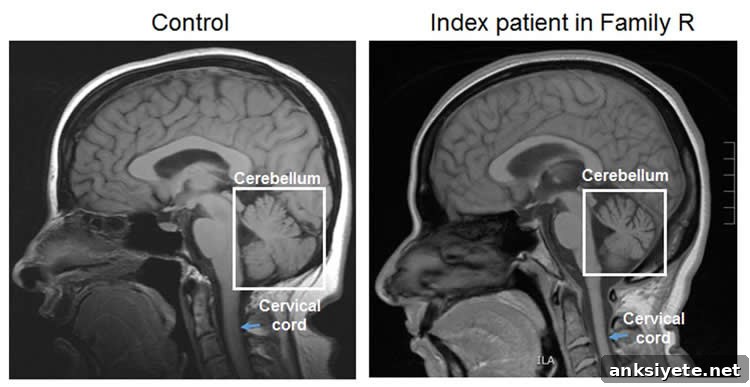
The human genetics team led by Houlden identified multiple families with CAPN1 mutations associated with cerebellar ataxia and limb spasticity. After demonstrating that these mutations disrupt calpain-1 function, the teams compared clinical findings in humans with observations in the calpain-1 knockout mice. Together the human and animal data support CAPN1 mutation as an additional genetic cause of ataxia.
To evaluate motor function, researchers placed calpain-1 knockout mice on a rotating rod and measured their balance. The knockout animals exhibited a mild form of cerebellar ataxia. Further anatomical and cellular analyses revealed that during the first postnatal week the knockout mice experienced substantially higher rates of neuronal apoptosis in the cerebellum than control mice, along with delays or failures in synapse maturation and a reduced number of cerebellar granule cells.
The investigators identified a key molecular mechanism: calpain-1 normally cleaves and inactivates the phosphatase PHLPP1, which otherwise suppresses the pro-survival Akt signaling pathway. In the absence of calpain-1, PHLPP1 persists, Akt activation is reduced, and developing granule cells are more likely to undergo apoptosis. Pharmacological activation of Akt during the early postnatal period, or genetic deletion of PHLPP1, prevented excessive granule cell death in calpain-1 knockout mice and restored both granule cell density and motor coordination in adults.
These findings establish that calpain-1 has a neuroprotective role during cerebellar development by limiting postnatal apoptosis via PHLPP1 degradation and Akt pathway activation. The study explains how loss-of-function CAPN1 mutations produce developmental cerebellar abnormalities that lead to ataxia, and it connects the genetic findings across species including a known mutation in Parson Russell Terrier dogs.
From a therapeutic perspective, the new data clarify why non-selective calpain inhibitors may have limited clinical benefit: inhibiting calpain-1 could block a protective function, while selective inhibition of calpain-2 may be the appropriate target for neuroprotection in neurodegenerative conditions. Michel Baudry and collaborators are pursuing development of calpain-2 selective inhibitors as potential neuroprotective agents under a new venture named NeurAegis.
Source: Joseph Caputo – Cell Press
Image Source: Image credited to Wang et al., Cell Reports 2016.
Original Research: Wang Y., Hersheson J., Lopez D., Hammer M., Liu Y., Lee K.-H., Pinto V., Seinfeld J., Wiethoff S., Sun J., Amouri R., Hentati F., Baudry N., Tran J., Singleton A. B., Coutelier M., Brice A., Stevanin G., Durr A., Bi X., Houlden H., Baudry M. “Defects in the CAPN1 Gene Result in Alterations in Cerebellar Development and Cerebellar Ataxia in Mice and Humans.” Cell Reports. Published online June 16, 2016. doi:10.1016/j.celrep.2016.05.044
Defects in the CAPN1 Gene Result in Alterations in Cerebellar Development and Cerebellar Ataxia in Mice and Humans
Highlights
• Null CAPN1 (calpain-1) mutations cause cerebellar ataxia in humans and mice.
• Ataxia arises from altered cerebellar development and impaired adult cerebellar function.
• Calpain-1 regulates PHLPP1 cleavage and Akt activation to limit postnatal apoptosis.
• Pharmacologic or genetic activation of Akt can reverse developmental abnormalities and improve motor coordination.
Summary
A missense CAPN1 mutation in Parson Russell Terriers is associated with spinocerebellar ataxia. This study reports that homozygous or heterozygous CAPN1 loss-of-function mutations in humans lead to cerebellar ataxia and limb spasticity in multiple independent families. Calpain-1 knockout mice display a mild ataxia caused by abnormal cerebellar development, including increased neuronal apoptosis, reduced granule cell numbers, and altered synaptic transmission. The excess apoptosis results from failure to cleave PHLPP1, thereby inhibiting Akt pro-survival signaling in developing granule cells. Neonatal treatment with an indirect Akt activator or genetic removal of PHLPP1 prevented the increased granule cell apoptosis and restored both granule cell density and motor function in adult mice. These findings identify CAPN1 mutations as an additional cause of ataxia in mammals and highlight a specific molecular pathway that may be targeted for future therapies.