
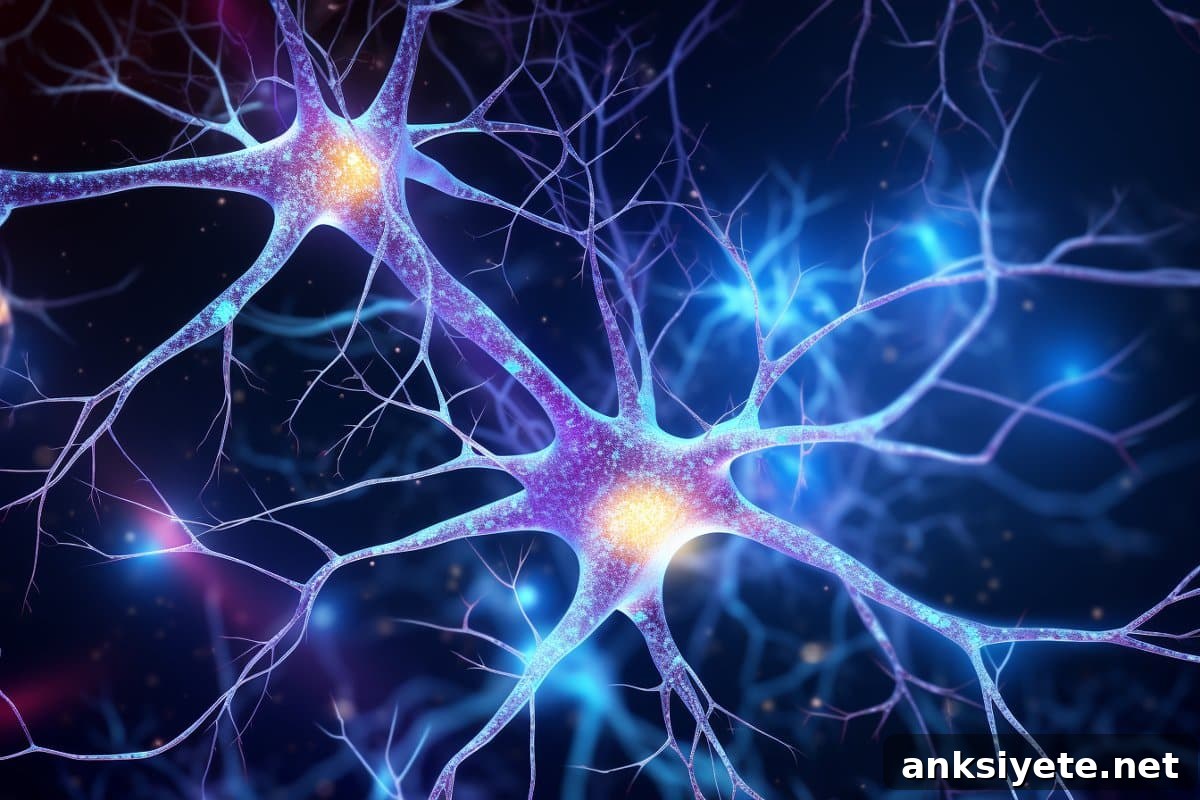
Summary: Researchers have made a significant advance in understanding neuronal variability by showing how dendrites—the antenna-like extensions of neurons—actively regulate the variability of neuronal responses. This discovery clarifies a fundamental mechanism of brain computation and offers practical insights for neuroscience and artificial intelligence (AI) development.
The study clarifies how neurons process fluctuating inputs and suggests new directions for AI designers seeking to emulate brain-like computation.
Key Facts:
- The research demonstrates that dendritic inputs, rather than inputs to the cell body alone, are a primary determinant of a neuron’s response variability—a factor linked to synaptic plasticity and learning.
- Zachary Friedenberger provided crucial mathematical development that enabled efficient modeling of neuronal networks with active dendrites.
- The findings deliver testable predictions about biological computation that are relevant to both experimental neuroscientists and AI researchers.
Source: University of Ottawa
Dr. Richard Naud of the University of Ottawa’s Faculty of Medicine led a study that sheds new light on how single neurons control the variability of their outputs.
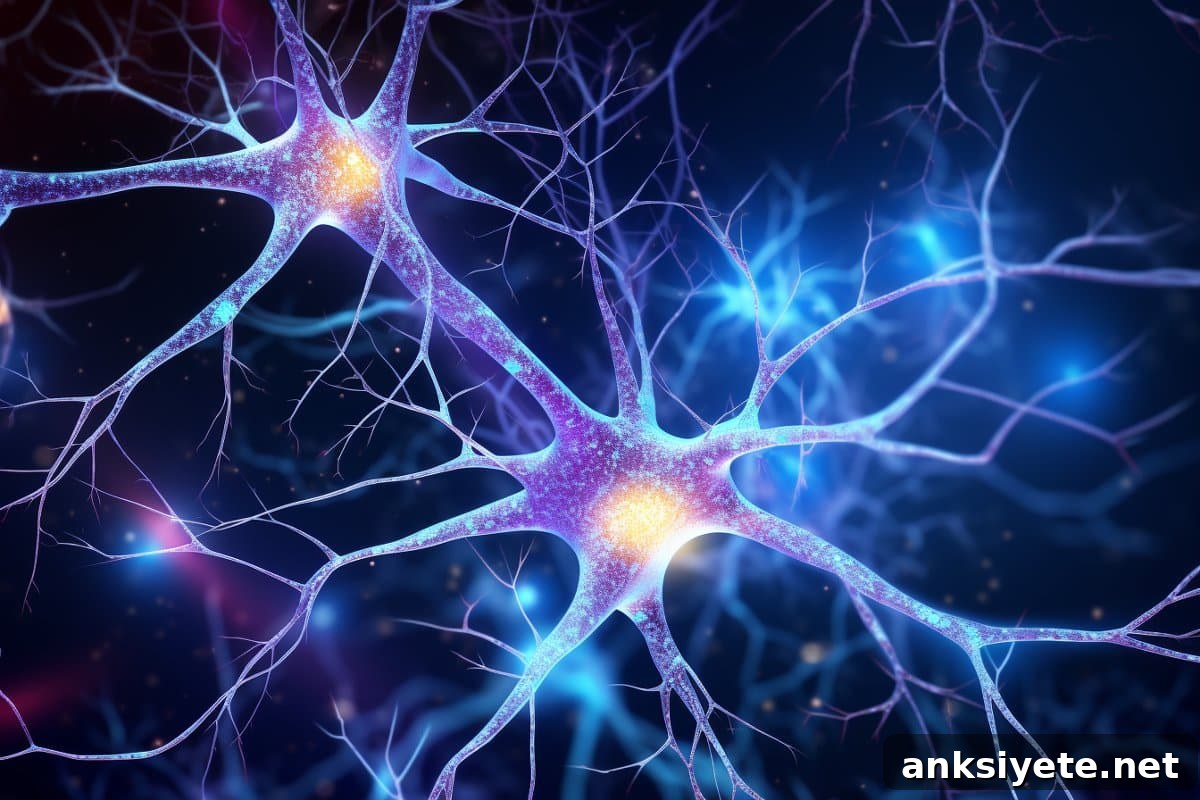
Published in Nature Computational Science, the paper addresses a central puzzle in neuroscience known as “response variability”—the observation that neurons with similar inputs can produce markedly different outputs. By combining theoretical analysis with data validation, the authors show that dendritic activity is a powerful regulator of spiking variability and that this regulation has consequences for learning, memory, and network dynamics.
The study establishes that while the average intensity of a neuron’s firing is driven mainly by inputs to the soma (the cell body), the trial-to-trial variability of that firing is strongly shaped by inputs arriving on dendrites. In other words, dendrites act as an independent control knob for the dispersion of interspike intervals, a quantity that affects synaptic plasticity and how neuronal populations encode information.
“The intensity of a neuron’s response is controlled by inputs to its core, but the variability of a neuron’s response is controlled by the inputs to its little antennas—the dendrites,” explains Dr. Naud, Associate Professor in the Department of Cellular and Molecular Medicine and the Department of Physics at the University of Ottawa. “This study clarifies how single neurons use dendritic inputs to modulate response variability.”
Dr. Naud and his team adapted an existing mathematical framework, previously applied to the soma, to include dendritic dynamics. Zachary Friedenberger, a PhD student in the Department of Physics and a member of Dr. Naud’s lab, implemented the theoretical advances and derived analytical results that made it feasible to predict network behavior without relying solely on costly, long-running stochastic simulations.
The model combines cable theory, which describes how electrical signals propagate along dendrites, with renewal theory, which characterizes the timing statistics of neuronal spikes. This hybrid approach revealed three operating regimes for neurons—one mean-driven and two fluctuation-driven regimes—and showed how dendritic inputs can shift a neuron between these regimes, thereby controlling interspike interval dispersion.
Model predictions were validated against in vivo electrophysiological recordings and held across a wide range of parameter settings, reinforcing the generality of the results. A peer reviewer highlighted that the theoretical analysis “provides key insight into biological computation and will be of interest to a broad audience of computational and experimental neuroscientists.”
Beyond basic neuroscience, the findings have practical implications for AI. Understanding how dendritic computations shape variability and learning in biological systems may inspire algorithmic mechanisms for controlling variability and plasticity in artificial networks, improving robustness and learning performance.
About this neuroscience and AI research news
Author: Paul Logothetis
Source: University of Ottawa
Contact: Paul Logothetis – University of Ottawa
Image: Image credited to Neuroscience News
Original Research: Closed access.
“Dendritic excitability controls overdispersion” by Richard Naud et al., Nature Computational Science
Abstract
Dendritic excitability controls overdispersion
The brain is an intricate network of communicating neurons whose input–output relationships remain only partially understood. The role of active dendrites in shaping spiking responses, in particular, has been difficult to characterize because detailed models are often too complex for analytic treatment and require lengthy stochastic simulations.
By combining cable theory with renewal theory, the authors derive a concise description of how input fluctuations transmitted to dendrites shape the collective response of neuronal ensembles with active dendrites. They find that dendritic inputs can strongly modulate interspike interval dispersion. This effect reflects three basic operating regimes of neurons—one mean-driven and two fluctuation-driven regimes—and is robust across a broad range of dendritic properties.
Model predictions are confirmed with experimental recordings, and the results have implications for the role of spike-time dispersion in learning mechanisms and attractor dynamics. These insights advance our understanding of biological computation and suggest avenues for incorporating dendrite-like variability control into artificial neural systems.