
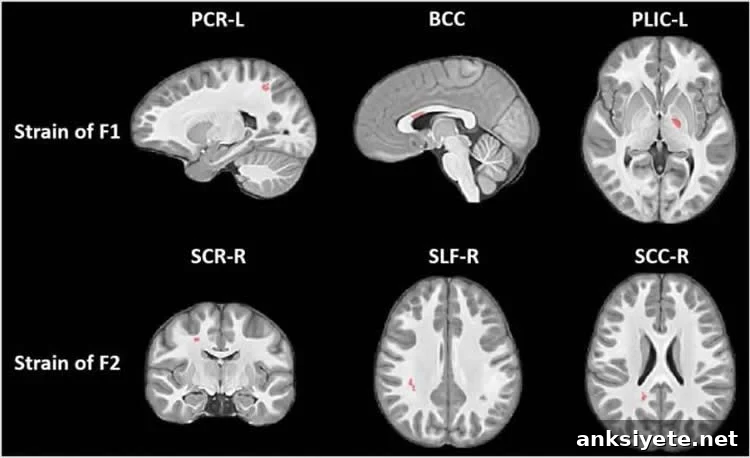
Summary: New research indicates that repeated blows to the head sustained while playing youth football can affect brain development. The study found measurable changes to nerve fiber bundles in the corpus callosum.
Source: RSNA
MRI reveals structural brain changes in youth football players after repeated head impacts
Magnetic resonance imaging (MRI) scans show that repetitive blows to the head can produce measurable changes in the brains of youth football players, according to a study presented at the Radiological Society of North America (RSNA) annual meeting.
In recent years, football has come under closer scrutiny because of concerns about the long-term consequences of repeated head impacts. While players who display signs of concussion are typically removed from play, many impacts are subconcussive — below the threshold for a clinical concussion and often without immediate symptoms. Scientists are increasingly worried that repeated subconcussive impacts experienced in practices and games may affect the developing brains of young athletes.
“The years from about age 9 to 12 are a critical window for brain development,” said lead author Jeongchul Kim, Ph.D., of Wake Forest School of Medicine. “During this period, functional regions of the brain are becoming more integrated. Even relatively small, repeated impacts could put young players at risk of altered development.”
The research team used a novel MRI-based technique designed to assess mechanical strain along white matter tracts — the bundles of nerve fibers that transmit signals between different brain regions. Instead of relying solely on conventional structural imaging, the method quantifies deformation of fiber bundles, detecting elongation or contraction that can result from external forces.
The study followed 26 male youth football players with an average age of 12. Each player received MRI scans before the season began and again roughly three months after the season ended. For comparison, the investigators scanned 22 boys of similar age who did not participate in contact sports on the same schedule.
Analysis revealed changes concentrated in the corpus callosum, the major fiber tract that links the left and right cerebral hemispheres. The corpus callosum plays a central role in integrating cognitive, motor and sensory information across both sides of the brain. In the football group, some regions of the corpus callosum showed signs of axial strain (relative contraction), while other clusters displayed radial strain (relative expansion).
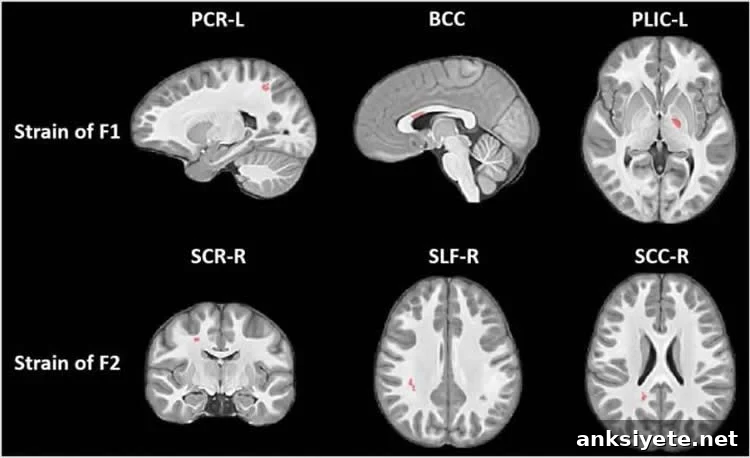
“The body of the corpus callosum functions like a structural bridge between the left and right hemispheres,” Dr. Kim explained. “When that bridge is exposed to repetitive forces, it can respond in complex ways — some regions compress while others stretch — similar to how a bridge can twist under wind stress.”
These findings suggest that repetitive subconcussive impacts during participation in youth contact sports may lead to subtle but measurable changes in crucial white matter structures at a time when the brain is undergoing significant maturation. However, Dr. Kim emphasized that additional research is necessary to confirm and extend these results. His team plans to continue longitudinal follow-up of the players to determine whether the observed deformations progress, resolve, or relate to functional outcomes over time.
The broader objective of this line of research is to inform evidence-based guidelines for safer youth football play. Advanced imaging techniques such as MRI may help clinicians assess whether and when an athlete can safely return to play following head trauma. In addition, complementary imaging modalities that detect inflammation — for example, positron emission tomography (PET) — may prove useful in identifying biological responses to repetitive impacts.
“Early detection of brain changes is important,” Dr. Kim said. “Identifying alterations at an early stage may enable interventions that protect long-term brain health in young athletes.”
Co-authors of the study include Youngkyoo Jung, Ph.D., Richard A. Barcus, Joel Stitzel, Jillian Urban, Elizabeth M. Davenport, Ph.D., Alexander K. Powers, M.D., Joseph A. Maldjian, M.D., and Christopher T. Whitlow, M.D., Ph.D.
Source: Linda Brooks – RSNA
Publisher: Organized by NeuroscienceNews.com
Image Source: Image credit: RSNA
Original Research: Presented at the 104th Scientific Assembly and Annual Meeting of the Radiological Society of North America (RSNA).
Suggested citation examples:
- MLA: RSNA. “Youth Football Changes Nerve Fibers in Brain.” NeuroscienceNews, 29 November 2018.
- APA: RSNA (2018, November 29). Youth Football Changes Nerve Fibers in Brain. NeuroscienceNews. Retrieved November 29, 2018.
- Chicago: RSNA. “Youth Football Changes Nerve Fibers in Brain.” (accessed November 29, 2018).