Neuroscience researchers have identified a new molecular pathway that appears to contribute to Parkinson’s disease. The pathway centers on polyamines—small, naturally occurring molecules that the study shows can promote the accumulation of toxic proteins inside neurons. The work also points to existing drugs that lower polyamine levels as potential candidates to slow disease progression and suggests avenues for early detection.
New pathway identified in Parkinson’s through brain imaging
Finding highlights potential repurposing of existing drugs to slow progression and suggests biomarkers for earlier diagnosis
A team led by investigators at Columbia University Medical Center has uncovered a novel mechanism linking polyamines to Parkinson’s disease and demonstrated proof-of-concept that lowering polyamine levels can reduce neuronal toxicity in animal models. While elevated polyamine levels had been observed in Parkinson’s patients before, this study—published online in Proceedings of the National Academy of Sciences—identifies how polyamines become elevated and how they help drive the disease process.
The research combines high-resolution brain imaging, molecular profiling of human brain tissue, experimental work in yeast and mice, and genetic analysis of patients. Together these approaches converged on a single enzyme, SAT1, which helps break down polyamines. Reduced SAT1 activity appears to allow polyamine buildup, which in turn promotes the accumulation of other toxic proteins that damage neurons.
Importantly, the investigators report that drugs known to reduce polyamine levels protected neurons in a mouse model of Parkinson’s disease. These polyamine-lowering compounds were developed decades ago when researchers explored polyamine pathways as a target in cancer, and several have already completed Phase 1 and Phase 2 safety trials. The central remaining question is whether these drugs, or modified versions of them, can cross the blood–brain barrier to act directly in the brain. If so, oral or otherwise easily administered treatments that slow protein accumulation and neuronal loss could become feasible.
“The most exciting thing about the finding is that it opens up the possibility of using a whole class of drugs that is already available,” said Scott A. Small, MD, senior author and Herbert Irving Associate Professor of Neurology in the Sergievsky Center and the Taub Institute at Columbia University Medical Center. He also noted that because polyamines are detectable in blood and cerebrospinal fluid, the pathway could yield biomarkers useful for earlier diagnosis or disease monitoring.
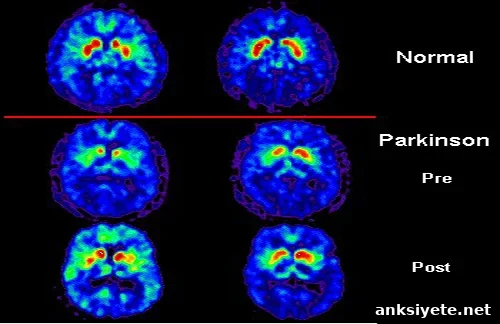
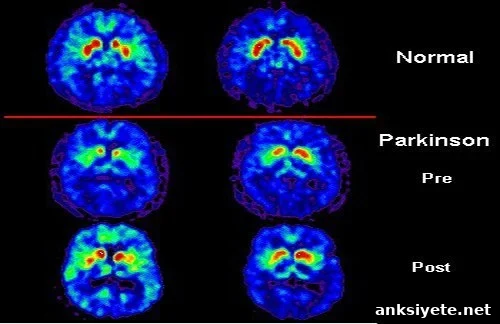
Imaging played a critical role in guiding the molecular discovery. Using high-resolution functional magnetic resonance imaging (fMRI), postdoctoral researcher Nicole Lewandowski, PhD, identified a specific region of the brainstem that showed consistently reduced activity in patients with Parkinson’s compared with healthy controls. An adjacent brainstem region remained unaffected, providing a built-in control for comparison. Guided by these imaging results, the team analyzed postmortem brain tissue from Parkinson’s patients to search for molecular differences that could explain the imaging contrast.
Among the proteins they examined, SAT1 emerged as a compelling candidate because of its role in polyamine metabolism. The hypothesis that SAT1 and polyamines contribute to Parkinson’s disease was then tested in three complementary experimental systems—yeast, mice, and humans.
In yeast, experiments showed that elevated polyamine levels accelerate the accumulation and toxicity of a Parkinson’s-associated protein in living cells, shortening cell survival. Genetic screens in yeast also identified additional genes involved in polyamine transport that modify this toxicity, reinforcing the central role of polyamine regulation.
In mouse models, investigators manipulated SAT1 activity and treated animals with drugs that increase SAT1 activity or otherwise lower polyamine levels. These interventions reduced the accumulation of toxic proteins and decreased neuronal damage in brain regions affected by Parkinson’s disease, supporting the therapeutic potential of targeting the polyamine pathway.
Genetic studies in human patients provided further corroboration. Columbia geneticists examined the SAT1 gene in nearly 100 Parkinson’s patients and performed additional genotyping in about 800 more subjects (389 Parkinson’s patients and 408 controls) enrolled in a genetic epidemiology study. They discovered a rare SAT1 variant present only in patients and not in controls. Although the variant was uncommon, its exclusive occurrence in cases strengthens the link between polyamine pathway defects and Parkinson’s disease.
Moving forward, Dr. Small and colleagues are testing whether current polyamine-lowering drugs can cross the blood–brain barrier or can be modified to do so. Demonstrating brain penetration would support clinical testing to see if reducing polyamine levels in people can slow progression of Parkinson’s disease.
This research was supported in part by the National Institute of Neurological Disorders and Stroke, the Parkinson’s Disease Foundation, and Columbia’s Irving Institute for Clinical and Translational Research (CTSA).
Authors of the paper include Nicole M. Lewandowski, Shulin Ju, Miguel Verbitsky, Barbara Ross, Melissa L. Geddie, Edward Rockenstein, Anthony Adame, Alim Muhammad, Jean Paul Vonsattel, Dagmar Ringe, Lucien Cote, Susan Lindquist, Eliezer Masliah, Gregory A. Petsko, Karen Marder, Lorraine N. Clark, and Scott A. Small.
Affiliations: Taub Institute for Research on Alzheimer’s Disease and the Aging Brain; Center for Human Genetics; Departments of Cellular, Molecular, and Biophysical Studies; Neurology; Pathology; and Psychiatry, Columbia University College of Physicians and Surgeons, New York, NY 10032.
The Taub Institute is a multidisciplinary center that brings together researchers and clinicians to investigate Alzheimer’s, Parkinson’s, and other age-related brain diseases with the goal of finding ways to prevent and treat these disorders. The institute works closely with the Gertrude H. Sergievsky Center to integrate epidemiology, genetics, and clinical investigation across all stages of neurological disease.
Columbia University Medical Center is a major center for basic, translational, and clinical research, medical and health sciences education, and patient care. The medical center includes the College of Physicians and Surgeons, the Mailman School of Public Health, the College of Dental Medicine, the School of Nursing, and biomedical departments of the Graduate School of Arts and Sciences.
Contact: Karin Eskenazi
Source: Columbia University Medical Center