
Summary: A specialized group of taste cells appears to play an active role in the mouth’s immune surveillance, detecting and responding to harmful microbes. These findings may guide new approaches to prevent or treat taste loss associated with infections, aging, obesity, and chemotherapy-induced changes to the oral microbiome.
Source: University of Nebraska–Lincoln
Taste cells are continuously exposed to the diverse microbial community of the mouth, yet their role in coordinating immune responses has been little explored.
A collaborative study led by researchers at the University of Nebraska–Lincoln and partner institutions has discovered that type II taste cells—a subset responsible for detecting sweet, umami and certain bitter flavors—also carry out immune surveillance functions similar to Microfold (M) cells found in gut and tonsil tissue.
Published in PLOS Biology, the three-year study suggests that these taste cells help sample oral microbes and relay information to local immune cells. This mechanism may be important for maintaining oral health and could explain how disruptions in the oral microbiome contribute to taste dysfunction.
In mucosa-associated lymphoid tissues such as Peyer’s patches and tonsils, M cells sample microbes through a process called transcytosis and deliver them to underlying immune cells, enabling targeted immune responses. The research team investigated whether taste cells use a related pathway.
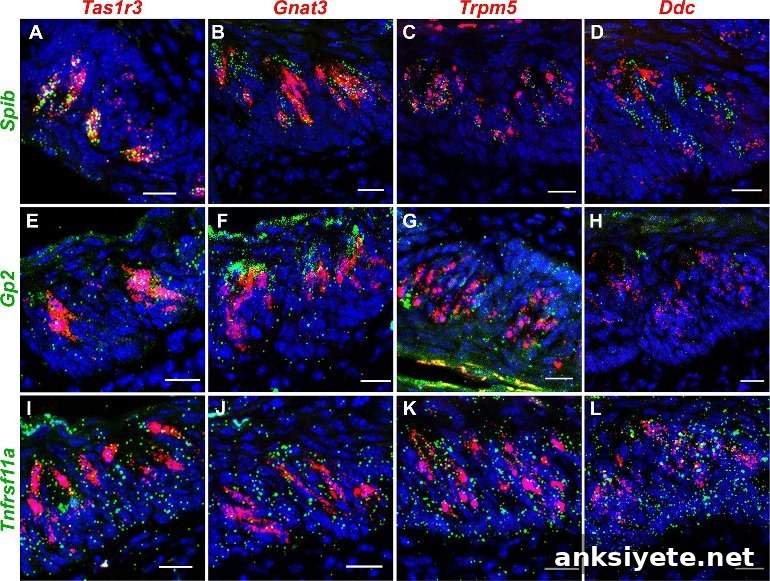
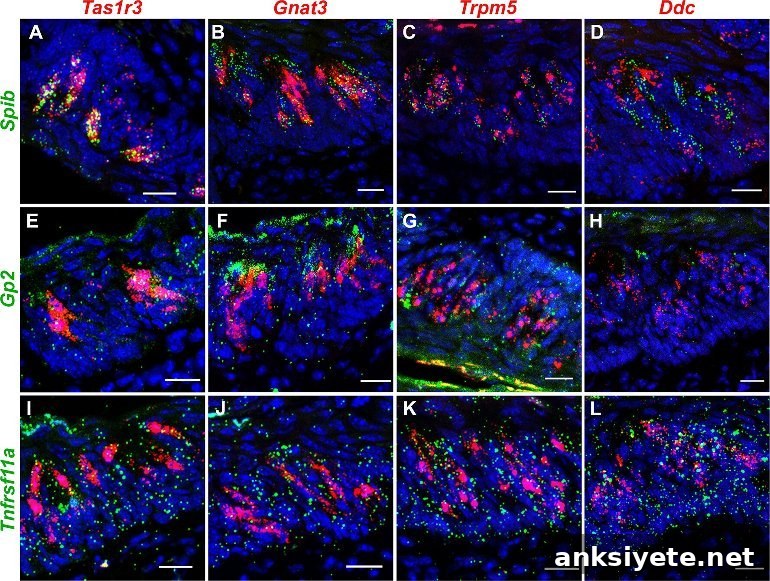
The investigators focused on Spib, a transcription factor required for M cell development. They found that Spib is expressed in type II taste cells and examined whether these taste cells share M cell–like immune functions.
Using mouse models, the team showed that RANKL (receptor activator of nuclear factor kappa-B ligand), a growth factor that drives M cell differentiation through Spib, also stimulates M cell–like behavior in taste tissue. When RANKL was administered, taste papillae and cultured taste organoids from wild-type mice increased expression of M cell marker genes and showed a proliferation of M cell–like cells.
Mice lacking Spib (Spib knockout animals) failed to mount this RANKL-driven response in taste tissue. Their taste papillae displayed reduced expression of NF-κB pathway components and lower baseline levels of several proinflammatory cytokines, and they recruited fewer immune cells to the taste papillae. Interestingly, these knockout mice showed an increased preference for sweet and umami tastants, despite no change in the overall proportions of taste cell subtypes.
Like bona fide M cells, taste cells from wild-type mice—but not from Spib knockout mice—took up fluorescently labeled microbeads, demonstrating their capacity for transcytosis and suggesting a direct role in sampling microbes from the oral cavity. Paradoxically, when challenged with lipopolysaccharide (LPS), Spib knockout mice mounted a stronger cytokine response than wild-type animals, indicating that Spib helps regulate balanced immune signaling in taste tissue.
“This study breaks new ground by demonstrating that type II taste cells function like M cells in responding to the microbiota,” said Sunil Sukumaran, assistant professor of nutrition and health and corresponding author of the study. “M cells are key to maintaining a healthy microbiota in the gut, and our finding suggests that type II taste cells do the same in the oral cavity, in addition to their established role in taste perception.”
The researchers note that this novel M cell–like pathway in taste tissue could be relevant to several clinical problems where taste loss is common, including viral infections such as COVID-19, age-related decline in taste, obesity-related changes to taste function, and taste disturbance caused by chemotherapy. Understanding how taste cells interact with the oral microbiome and local immune cells may open new avenues for preventing or treating infection-associated taste disorders.
About this immune system and taste research news
Author: Kelcey Buck
Source: University of Nebraska–Lincoln
Contact: Kelcey Buck – University of Nebraska–Lincoln
Image: The image is credited to the researchers
Original Research: Open access.
“Type II taste cells participate in mucosal immune surveillance” by Yumei Qin et al. PLOS Biology
Abstract
Type II taste cells participate in mucosal immune surveillance
The oral microbiome is second only to the gut in microbial diversity and abundance, but its influence on taste cells has been understudied. Single-cell RNA sequencing reveals that mouse type II taste cells—particularly sweet and umami receptor cells expressing Tas1r3—carry a gene expression profile similar to Microfold (M) cells, which are central to immune surveillance in mucosa-associated lymphoid tissue.
Administration of the growth factor RANKL (TNFSF11) dramatically increased expression of M cell markers and expanded M cell–like cells in mouse taste papillae and in cultured taste organoids from wild-type animals. In contrast, taste papillae and organoids from Spib knockout mice did not respond to RANKL. Spib-deficient taste tissue showed lower expression of NF-κB signaling components and fewer proinflammatory cytokines at baseline, and it attracted fewer immune cells.
Despite these changes, Spib knockout mice displayed an exaggerated cytokine response to lipopolysaccharide and an increased behavioral attraction to sweet and umami stimuli, while the relative proportions of taste cell subtypes remained unchanged. Wild-type taste cells, but not Spib-deficient cells, readily internalized fluorescent microbeads, supporting their role in microbial sampling. These results indicate that taste cells participate in mucosal immune surveillance and may adjust taste signaling in response to microbial cues and infection.